THE ADVENTURE COLLECTIVE® · Independent discovery and booking for outdoor travel

Explore Tamgaly-Tas’s rare Buddhist petroglyphs and the film-built Castle of Nomads on a full-day guided loop from Almaty. This 8–10 hour tour blends riverside walks, a ridge viewpoint, and a picnic inside the reconstructed nomad city.
Explore Tamgaly-Tas’s rare Buddhist petroglyphs and the film-built Castle of Nomads on a full-day guided loop from Almaty. This 8–10 hour tour blends riverside walks, a ridge viewpoint, and a picnic inside the reconstructed nomad city.
A wind off the Ili River cools the sun-baked cliff face as visitors step onto a narrow riverside ledge and come face-to-face with centuries of carved images. The rock paintings at Tamgaly-Tas sit low on dark stone, figures frozen in motion; across the river the modern wooden towers of the Castle of Nomads rise like a staged village, their timbers creaking in the same wind that shaped the valley.
Verified experiences and guided adventures in the surrounding area.
Operated by Explore Kazakhstan · Kapchagay, Almaty Region
A wind off the Ili River cools the sun-baked cliff face as visitors step onto a narrow riverside ledge and come face-to-face with centuries of carved images. The rock paintings at Tamgaly-Tas sit low on dark stone, figures frozen in motion; across the river the modern wooden towers of the Castle of Nomads rise like a staged village, their timbers creaking in the same wind that shaped the valley.
Tamgaly-Tas preserves Buddhist and Tibetan iconography tied to Dzungar Lamaism from the 17th–18th centuries, carved into limestone veneers that record ritual practice and travelers’ marks. Geologically the site is river-cut limestone and conglomerate; erosion has exposed smooth faces that take petroglyphs well but remain fragile. The Castle of Nomads was erected as a film set for the 2005 movie “Nomad,” now repurposed as an interpretive site and picnic spot that fits the open steppe around the Ili.
Expect an 8–10 hour day: an approximately three-hour guided walking loop along the river with a steep scramble to a ridge for panoramas, then a short drive to the reconstructed city for a guided hour and lunch. Guides explain iconography, local Kazakh nomadic culture, and sensible behavior around sacred art.
Practical tips: bring sun protection and at least 2 liters of water, comfortable hiking shoes with grip for limestone steps, and a light wind layer. Photography is allowed but avoid touching carvings. Plan for dusty access roads and sun-heavy afternoons; mornings are cooler and best for crisp photos and calmer light.
easy.
8–10 hours.
Suitable for travelers in average fitness who can handle several hours of walking and one short steep scramble.
The tour runs about 8–10 hours and includes transport in an air-conditioned vehicle, an English-speaking guide, bottled water and lunch, plus admission and a walking tour of both sites.
The operator lists the tour as suitable for all fitness levels; however, there is a 20–30 minute uneven section and a short climb to a ridge that may be challenging—wheelchair access is limited at carved panels.
Yes—photography is allowed, but do not touch carvings or use flash close to soot-darkened panels; follow guide instructions to preserve the art.
The drive from Almaty is typically around 1.5–2 hours by road; the tour provides round-trip transport in an air-conditioned vehicle.
Tamgaly-Tas contains Tibetan and Buddhist petroglyphs linked to Dzungar Lamaism (17th–18th centuries); the Castle of Nomads is a modern film set repurposed for cultural visits.
Rock art is highly sensitive—avoid touching and stay on designated paths; ongoing tourism requires visitor restraint to limit erosion and vandalism.
Explore Kazakhstan operates guided outdoor trips and adventures with an emphasis on safety, stewardship, and memorable experiences.
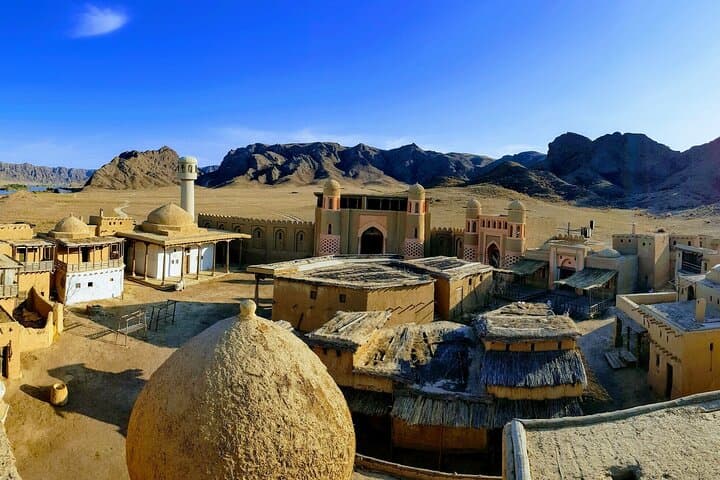
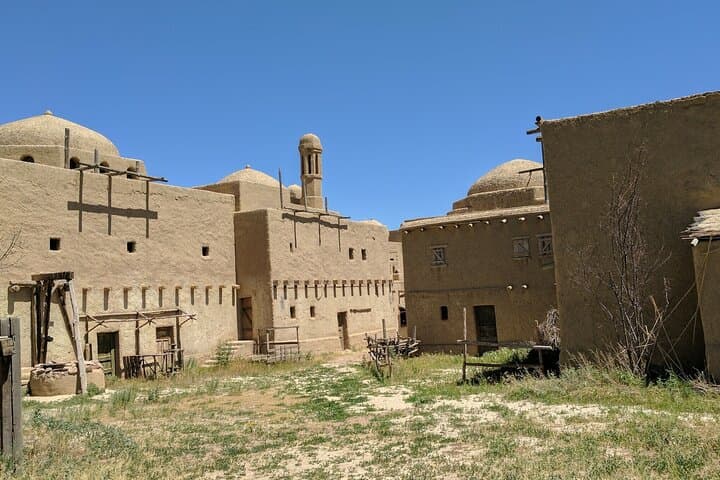
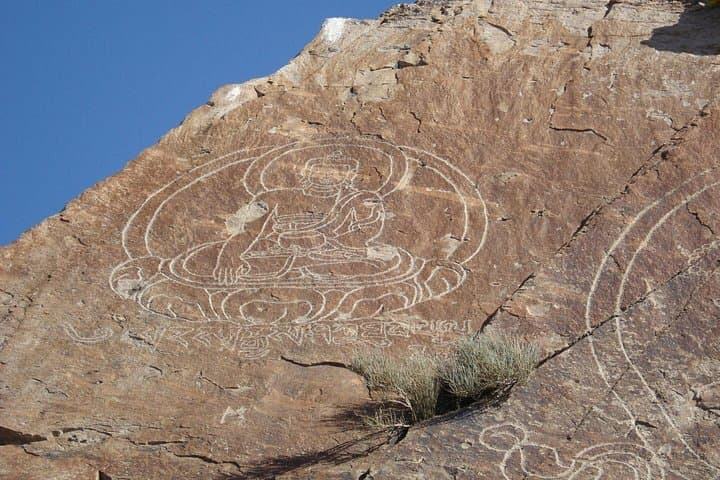
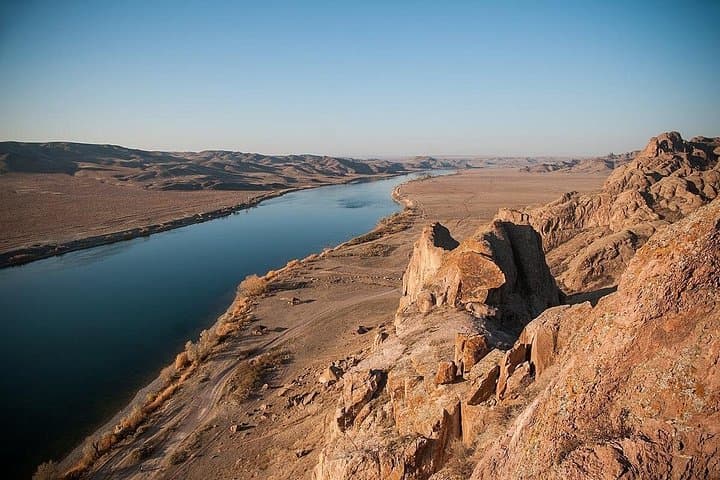
A wind off the Ili River cools the sun-baked cliff face as visitors step onto a narrow riverside ledge and come face-to-face with centuries of carved images. The rock paintings at Tamgaly-Tas sit low on dark stone, figures frozen in motion; across the river the modern wooden towers of the Castle of Nomads rise like a staged village, their timbers creaking in the same wind that shaped the valley.
A wind off the Ili River cools the sun-baked cliff face as visitors step onto a narrow riverside ledge and come face-to-face with centuries of carved images. The rock paintings at Tamgaly-Tas sit low on dark stone, figures frozen in motion; across the river the modern wooden towers of the Castle of Nomads rise like a staged village, their timbers creaking in the same wind that shaped the valley.
Tamgaly-Tas preserves Buddhist and Tibetan iconography tied to Dzungar Lamaism from the 17th–18th centuries, carved into limestone veneers that record ritual practice and travelers’ marks. Geologically the site is river-cut limestone and conglomerate; erosion has exposed smooth faces that take petroglyphs well but remain fragile. The Castle of Nomads was erected as a film set for the 2005 movie “Nomad,” now repurposed as an interpretive site and picnic spot that fits the open steppe around the Ili.
Expect an 8–10 hour day: an approximately three-hour guided walking loop along the river with a steep scramble to a ridge for panoramas, then a short drive to the reconstructed city for a guided hour and lunch. Guides explain iconography, local Kazakh nomadic culture, and sensible behavior around sacred art.
Practical tips: bring sun protection and at least 2 liters of water, comfortable hiking shoes with grip for limestone steps, and a light wind layer. Photography is allowed but avoid touching carvings. Plan for dusty access roads and sun-heavy afternoons; mornings are cooler and best for crisp photos and calmer light.