THE ADVENTURE COLLECTIVE® · Independent discovery and booking for outdoor travel

Join an expert naturalist for a protected night walk on a Pacific nesting beach north of Tamarindo. Learn turtle biology and conservation while viewing leatherbacks, green turtles, or olive ridleys under strict no-flash guidelines.
Join an expert naturalist for a protected night walk on a Pacific nesting beach north of Tamarindo. Learn turtle biology and conservation while viewing leatherbacks, green turtles, or olive ridleys under strict no-flash guidelines.
The night opens like a dark page along a broad Pacific beach north of Tamarindo: a low tide reveals a cold, wet apron of sand, and the guide’s red beam sketches a slow silhouette inching toward the dunes.
Verified experiences and guided adventures in the surrounding area.
Operated by Discover Tamarindo · Tamarindo, Guanacaste
The night opens like a dark page along a broad Pacific beach north of Tamarindo: a low tide reveals a cold, wet apron of sand, and the guide’s red beam sketches a slow silhouette inching toward the dunes.
On this guided turtle-watch, experienced naturalists lead small groups onto the shore to observe nesting behavior—often leatherbacks, green sea turtles, or olive ridleys—while enforcing strict no-flash, no-touch rules that keep the encounter quiet and respectful. The coastline here is part of a broader volcanic and coastal plain shaped by uplifted beaches and offshore reefs; sand composition and currents dictate where turtles can dig and lay.
Local history and conservation are part of the narrative. Las Baulas National Marine Park and nearby refuges were set aside in the 1990s to protect imperiled leatherbacks and the communities that depend on sustainable tourism. Guides are typically from local towns and combine natural history with cultural context—how fishing, seasonal rains, and tourism interact with nesting cycles.
Practically speaking, expect 3–4 hours away from Tamarindo with a 40-minute transfer to the nesting beach, a night walk on uneven sand, and close-range viewing without physical contact. Bring a headlamp with a red filter, wear closed-toe shoes, and layer for wind and spray. Photography without flash is allowed; respect the guide’s instructions—turtle nesting is unpredictable and weather-dependent, so sightings aren’t guaranteed but the learning and stewardship-focused experience reliably delivers meaning and perspective.
moderate.
3–4 hours.
Participants should be able to walk on uneven sand for up to an hour at night and climb small dunes; a moderate level of fitness is required.
Tours typically last 3–4 hours including transfer time; the guided beach walk itself is usually 30–60 minutes depending on turtle activity and conditions.
No—nesting is natural and unpredictable; you may observe nesting or emergences, but sightings cannot be guaranteed and depend on tides, sand conditions, and turtle behavior.
Not recommended for pregnant travelers, people with serious heart or back conditions, or those unable to walk on uneven terrain for short periods; infants may require specialized seats for transfers.
No—touching is prohibited and guides enforce viewing distances and no-flash rules to minimize disturbance and comply with conservation regulations.
Las Baulas National Marine Park and nearby protections were established in the early 1990s to safeguard leatherback nesting beaches and support local conservation efforts.
Tours operate under strict no-touch, no-flash protocols and rely on local guide knowledge; supporting licensed guides and minimizing beach impact helps protect nesting success.
Discover Tamarindo operates guided outdoor trips and adventures with an emphasis on safety, stewardship, and memorable experiences.
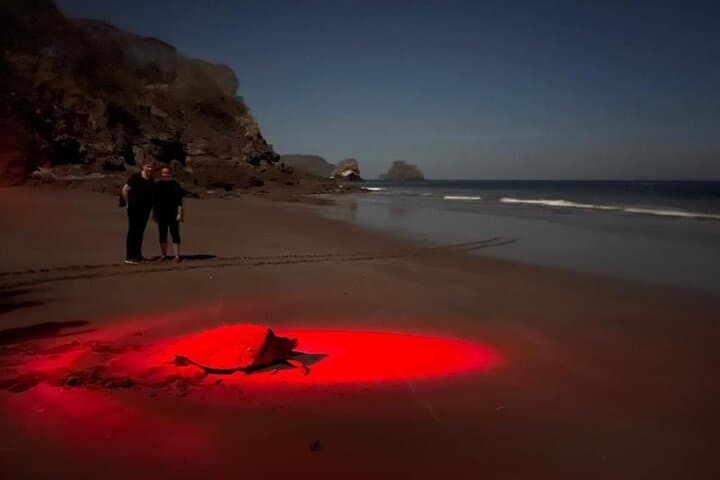
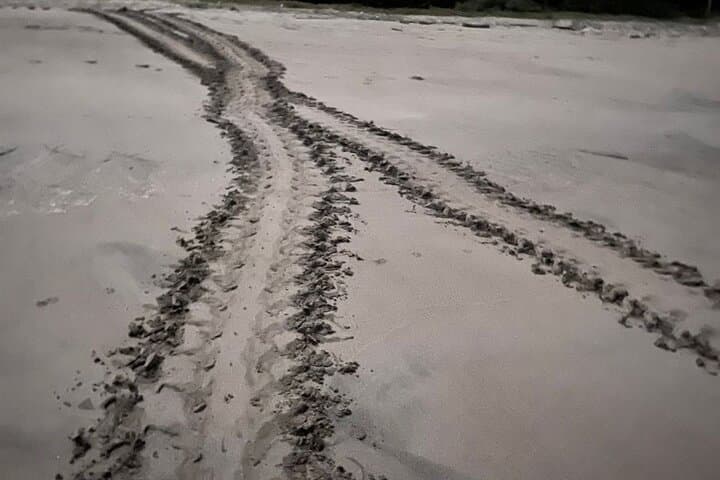
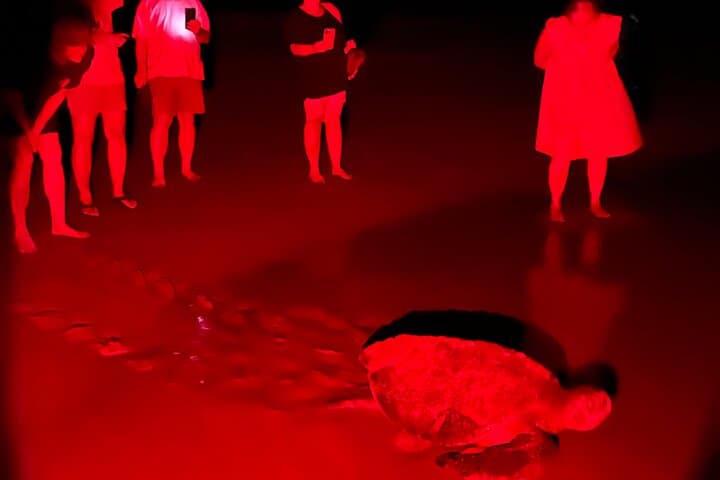

The night opens like a dark page along a broad Pacific beach north of Tamarindo: a low tide reveals a cold, wet apron of sand, and the guide’s red beam sketches a slow silhouette inching toward the dunes.
The night opens like a dark page along a broad Pacific beach north of Tamarindo: a low tide reveals a cold, wet apron of sand, and the guide’s red beam sketches a slow silhouette inching toward the dunes.
On this guided turtle-watch, experienced naturalists lead small groups onto the shore to observe nesting behavior—often leatherbacks, green sea turtles, or olive ridleys—while enforcing strict no-flash, no-touch rules that keep the encounter quiet and respectful. The coastline here is part of a broader volcanic and coastal plain shaped by uplifted beaches and offshore reefs; sand composition and currents dictate where turtles can dig and lay.
Local history and conservation are part of the narrative. Las Baulas National Marine Park and nearby refuges were set aside in the 1990s to protect imperiled leatherbacks and the communities that depend on sustainable tourism. Guides are typically from local towns and combine natural history with cultural context—how fishing, seasonal rains, and tourism interact with nesting cycles.
Practically speaking, expect 3–4 hours away from Tamarindo with a 40-minute transfer to the nesting beach, a night walk on uneven sand, and close-range viewing without physical contact. Bring a headlamp with a red filter, wear closed-toe shoes, and layer for wind and spray. Photography without flash is allowed; respect the guide’s instructions—turtle nesting is unpredictable and weather-dependent, so sightings aren’t guaranteed but the learning and stewardship-focused experience reliably delivers meaning and perspective.