THE ADVENTURE COLLECTIVE® · Independent discovery and booking for outdoor travel

Throttle up and leave the pavement for a 3‑hour ATV tour into the dry forests above Tamarindo. Expect dusty trails, lookout views of Tamarindo Bay, and likely sightings of monkeys and iguanas.
Throttle up and leave the pavement for a 3‑hour ATV tour into the dry forests above Tamarindo. Expect dusty trails, lookout views of Tamarindo Bay, and likely sightings of monkeys and iguanas.
The morning air in Guanacaste bites with sun and dust as a line of Honda semi-automatic ATVs idles at the Huacas meeting point. Helmets click into place, guides run through a short safety drill, and the machines hum uphill into a dry tropical forest where monkeys and iguanas watch from the canopy. The ride alternates between packed dirt service roads and narrower off‑trail tracks that kick up clouds of red soil, opening occasionally onto rocky lookouts that frame Tamarindo Bay.
Verified experiences and guided adventures in the surrounding area.
Operated by Native's Way Costa Rica · Tamarindo, Guanacaste
The morning air in Guanacaste bites with sun and dust as a line of Honda semi-automatic ATVs idles at the Huacas meeting point. Helmets click into place, guides run through a short safety drill, and the machines hum uphill into a dry tropical forest where monkeys and iguanas watch from the canopy. The ride alternates between packed dirt service roads and narrower off‑trail tracks that kick up clouds of red soil, opening occasionally onto rocky lookouts that frame Tamarindo Bay.
This coast of Costa Rica sits on the Nicoya Peninsula, an area shaped by volcanic uplift and long erosion that left low mountains, seasonal rivers, and the distinctive dry forest biome — one of the country’s most distinctive habitats. Local communities moved from ranching and small-scale agriculture toward tourism in recent decades, and ATVs offer a hands-on way to see how the forest transitions to coastal scrub and beach terraces.
Riders should expect 3 hours total, with roughly two hours of driving through mixed terrain and short stops at viewpoints. The route is engaging but not technical; attention to throttle control, following the guide’s line, and respecting wildlife are key. Wear closed-toe shoes, bring a refillable water bottle, and be ready to get dirty — a bandana helps with dust between gusts. Drivers must be 16+ with a valid license; passenger options are available for families. Morning slots are drier and offer clearer views; afternoons can be cooler but dustier. The experience balances adrenaline and scenery: fast stretches give way to silent forest pockets where the wildlife momentarily calls the shots.
moderate.
3 hours.
Light-to-moderate fitness — ability to sit and steady yourself on an ATV for 1–2 hours is required.
Yes — drivers must be at least 16 years old and present a valid driver's license; passengers can ride as non-driving companions.
Tours operate year-round; wet-season trails become muddier and slower — guides may alter routes for safety but refunds follow the operator’s cancellation policy.
Pickup and drop-off from select hotels in Tamarindo, Langosta, Conchal, Flamingo and surrounding areas is included; some remote pickup points incur an extra fee.
Children can ride as passengers but drivers must meet the age and licensing requirements; UTVs are recommended for families with very young children.
The Nicoya Peninsula’s dry forest was historically used for cattle grazing and small farms; tourism infrastructure expanded in recent decades, shifting local economies toward guided outdoor activities.
Stick to marked tracks and avoid approaching wildlife — dry tropical forests are fragile and taking established routes helps limit erosion and habitat disturbance.
Native's Way Costa Rica operates guided outdoor trips and adventures with an emphasis on safety, stewardship, and memorable experiences.
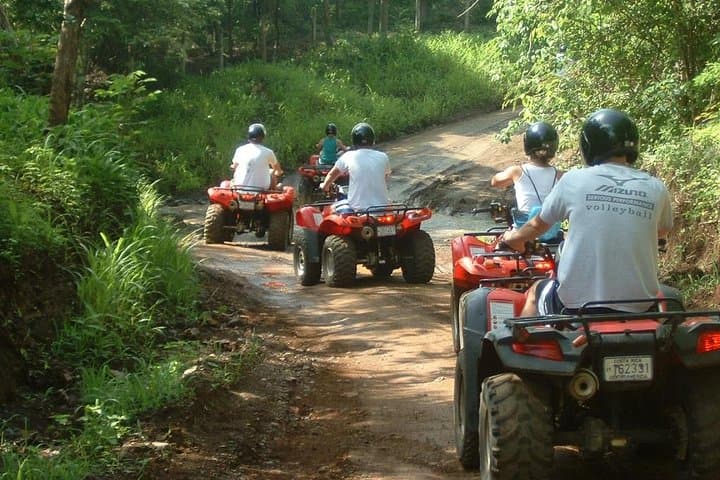
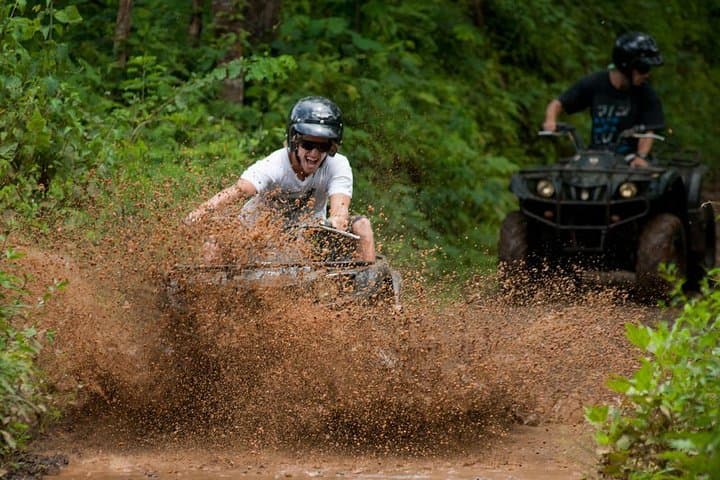
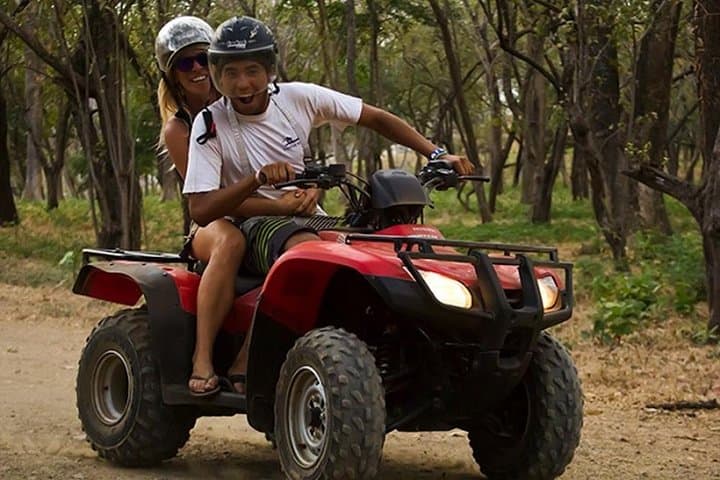
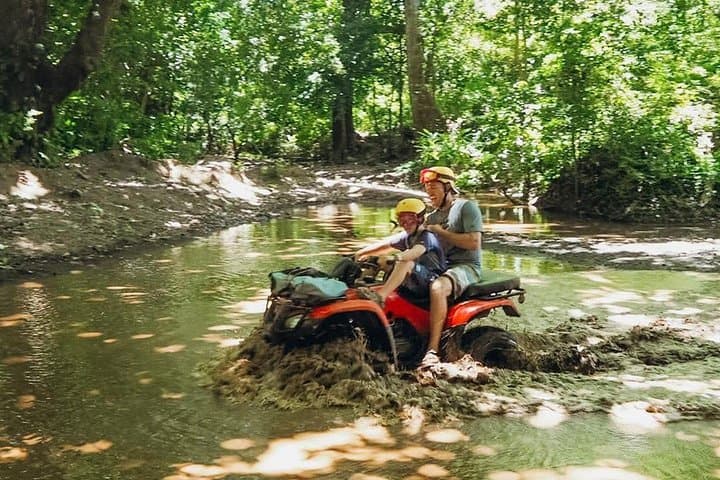
The morning air in Guanacaste bites with sun and dust as a line of Honda semi-automatic ATVs idles at the Huacas meeting point. Helmets click into place, guides run through a short safety drill, and the machines hum uphill into a dry tropical forest where monkeys and iguanas watch from the canopy. The ride alternates between packed dirt service roads and narrower off‑trail tracks that kick up clouds of red soil, opening occasionally onto rocky lookouts that frame Tamarindo Bay.
The morning air in Guanacaste bites with sun and dust as a line of Honda semi-automatic ATVs idles at the Huacas meeting point. Helmets click into place, guides run through a short safety drill, and the machines hum uphill into a dry tropical forest where monkeys and iguanas watch from the canopy. The ride alternates between packed dirt service roads and narrower off‑trail tracks that kick up clouds of red soil, opening occasionally onto rocky lookouts that frame Tamarindo Bay.
This coast of Costa Rica sits on the Nicoya Peninsula, an area shaped by volcanic uplift and long erosion that left low mountains, seasonal rivers, and the distinctive dry forest biome — one of the country’s most distinctive habitats. Local communities moved from ranching and small-scale agriculture toward tourism in recent decades, and ATVs offer a hands-on way to see how the forest transitions to coastal scrub and beach terraces.
Riders should expect 3 hours total, with roughly two hours of driving through mixed terrain and short stops at viewpoints. The route is engaging but not technical; attention to throttle control, following the guide’s line, and respecting wildlife are key. Wear closed-toe shoes, bring a refillable water bottle, and be ready to get dirty — a bandana helps with dust between gusts. Drivers must be 16+ with a valid license; passenger options are available for families. Morning slots are drier and offer clearer views; afternoons can be cooler but dustier. The experience balances adrenaline and scenery: fast stretches give way to silent forest pockets where the wildlife momentarily calls the shots.