THE ADVENTURE COLLECTIVE® · Independent discovery and booking for outdoor travel

Spend a day crossing Vietnam’s lowland karst from Quang Phu Cau’s red-inked incense racks to Tam Coc’s cave-cut river and the ancient temples of Hoa Lu. This compact small-group tour pairs close-up craft culture with a gentle sampan passage through limestone peaks.
Spend a day crossing Vietnam’s lowland karst from Quang Phu Cau’s red-inked incense racks to Tam Coc’s cave-cut river and the ancient temples of Hoa Lu. This compact small-group tour pairs close-up craft culture with a gentle sampan passage through limestone peaks.
The morning light on the road south from Hanoi flattens the rice paddies into sheets of green, and by the time you arrive the air tastes faintly of spice—hand-rolled incense hanging in red bundles across a village lane. Quang Phu Cau is a working craft village: rows of drying sticks, women and men rolling and arranging them, and a local rhythm that reveals how incense ties into domestic worship and community economy.
Verified experiences and guided adventures in the surrounding area.
Operated by Authentic Hanoi Homestay & Travel · Ninh Binh, Ninh Binh
The morning light on the road south from Hanoi flattens the rice paddies into sheets of green, and by the time you arrive the air tastes faintly of spice—hand-rolled incense hanging in red bundles across a village lane. Quang Phu Cau is a working craft village: rows of drying sticks, women and men rolling and arranging them, and a local rhythm that reveals how incense ties into domestic worship and community economy.
A short drive deeper into lowland karst country brings you to Tam Coc, where narrow sampans glide under three cave mouths carved by centuries of river. The limestone towers here are fractured, steep-sided remnants of an uplifted seabed; stalactites and stalagmites thread the dim cave interiors and rice fields press close to the water’s edge. The day folds into a visit to Hoa Lu, the 10th–11th century capital where modest stone temples commemorate early Vietnamese dynasties and the landscape still carries echoes of political consolidation and regional trade.
Practically: expect a 1.5–2 hour transfer from Hanoi (traffic dependent), mostly flat walking, and several short, unpaved stretches around villages and riverbanks. The sampan ride is low-impact but involves low gunwales and occasional bending; local rowers use foot- or hand-paddling techniques. Bring sun protection and a small amount of Vietnamese dong for markets and tips; dress modestly for temple visits. Best times to visit are the shoulder seasons when paddies are green or golden after harvest—midsummer can be hot, monsoon months bring heavier river flows. The tour is accessible for most fitness levels and delivers a concentrated mix of culture, geology, and hands-on local life within a single day.
easy.
6–7 hours.
Suitable for most fitness levels; requires getting on/off small boats and short walks on uneven village paths.
The sampan passage typically lasts about 45–90 minutes, navigating three primary cave sections and river scenery—duration varies by pace and conditions.
Yes—most operators pick up and return guests from hotels in Hanoi’s Old Quarter; confirm your exact pickup point when booking.
Local sampans are traditionally rowed or paddled by a local operator; this is quiet and low-impact but involves low gunwales and close proximity to water.
Yes—the itinerary is categorized as easy, but children and older guests should be comfortable boarding small boats and doing short walks on uneven ground.
Hoa Lu was Vietnam’s capital in the 10th–11th centuries under the Dinh and early Le dynasties and retains small temple complexes honoring early monarchs.
The area’s karst ecosystems and rice paddies are sensitive to water quality and waste; favor operators who limit plastic and use local rowers rather than motorized boats.
Authentic Hanoi Homestay & Travel operates guided outdoor trips and adventures with an emphasis on safety, stewardship, and memorable experiences.
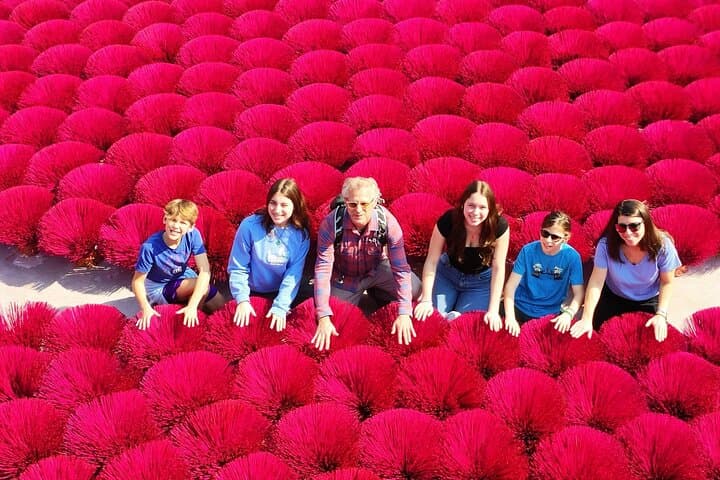
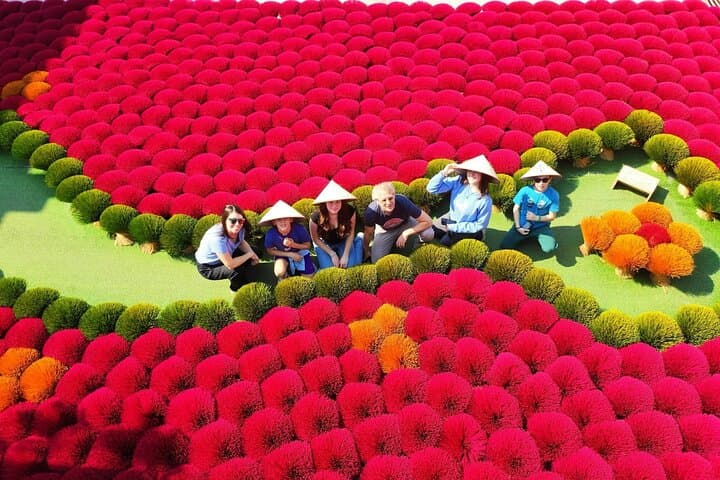
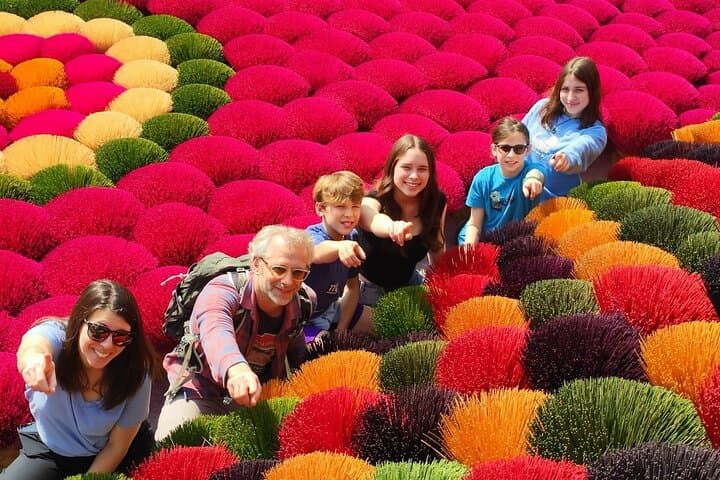
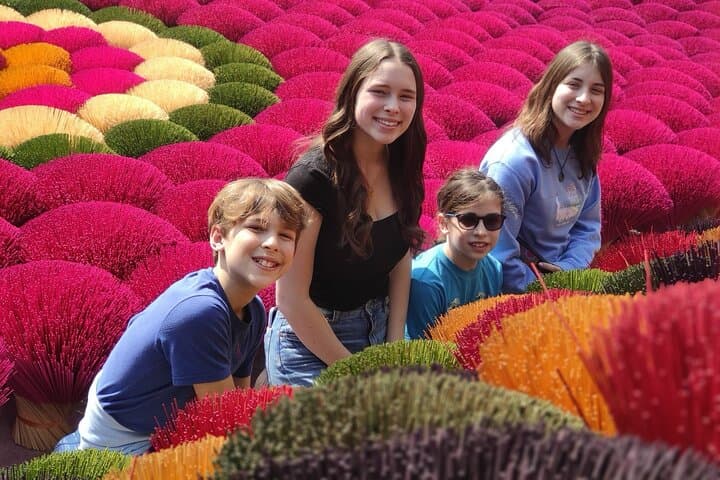
The morning light on the road south from Hanoi flattens the rice paddies into sheets of green, and by the time you arrive the air tastes faintly of spice—hand-rolled incense hanging in red bundles across a village lane. Quang Phu Cau is a working craft village: rows of drying sticks, women and men rolling and arranging them, and a local rhythm that reveals how incense ties into domestic worship and community economy.
The morning light on the road south from Hanoi flattens the rice paddies into sheets of green, and by the time you arrive the air tastes faintly of spice—hand-rolled incense hanging in red bundles across a village lane. Quang Phu Cau is a working craft village: rows of drying sticks, women and men rolling and arranging them, and a local rhythm that reveals how incense ties into domestic worship and community economy.
A short drive deeper into lowland karst country brings you to Tam Coc, where narrow sampans glide under three cave mouths carved by centuries of river. The limestone towers here are fractured, steep-sided remnants of an uplifted seabed; stalactites and stalagmites thread the dim cave interiors and rice fields press close to the water’s edge. The day folds into a visit to Hoa Lu, the 10th–11th century capital where modest stone temples commemorate early Vietnamese dynasties and the landscape still carries echoes of political consolidation and regional trade.
Practically: expect a 1.5–2 hour transfer from Hanoi (traffic dependent), mostly flat walking, and several short, unpaved stretches around villages and riverbanks. The sampan ride is low-impact but involves low gunwales and occasional bending; local rowers use foot- or hand-paddling techniques. Bring sun protection and a small amount of Vietnamese dong for markets and tips; dress modestly for temple visits. Best times to visit are the shoulder seasons when paddies are green or golden after harvest—midsummer can be hot, monsoon months bring heavier river flows. The tour is accessible for most fitness levels and delivers a concentrated mix of culture, geology, and hands-on local life within a single day.