THE ADVENTURE COLLECTIVE® · Independent discovery and booking for outdoor travel

A full-day small-group tour from Hanoi that pairs the limestone drama of Tam Coc with the panoramic climb at Mua Cave and a sunset gathering — a compact introduction to Ninh Binh’s history, geology, and rural life.
A full-day small-group tour from Hanoi that pairs the limestone drama of Tam Coc with the panoramic climb at Mua Cave and a sunset gathering — a compact introduction to Ninh Binh’s history, geology, and rural life.
The boat slips forward under a low limestone arch and the river seems to nudge you deeper into karst teeth and rice-green flats. Morning mist lifts off paddies as your small group disembarks from an air-conditioned limousine and fans out across Hoa Lư’s compact temple courtyards — a tangible remnant of Vietnam’s 10th–11th century rulers.
Verified experiences and guided adventures in the surrounding area.
Operated by Authentic SAPA · Ninh Binh, Ninh Binh Province
The boat slips forward under a low limestone arch and the river seems to nudge you deeper into karst teeth and rice-green flats. Morning mist lifts off paddies as your small group disembarks from an air-conditioned limousine and fans out across Hoa Lư’s compact temple courtyards — a tangible remnant of Vietnam’s 10th–11th century rulers.
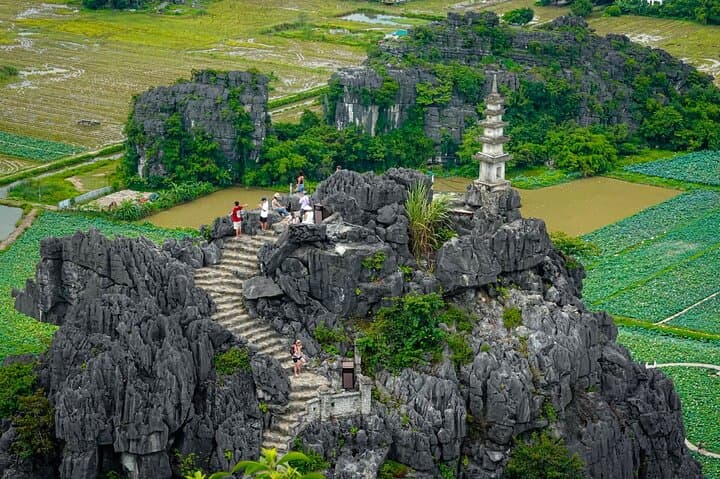
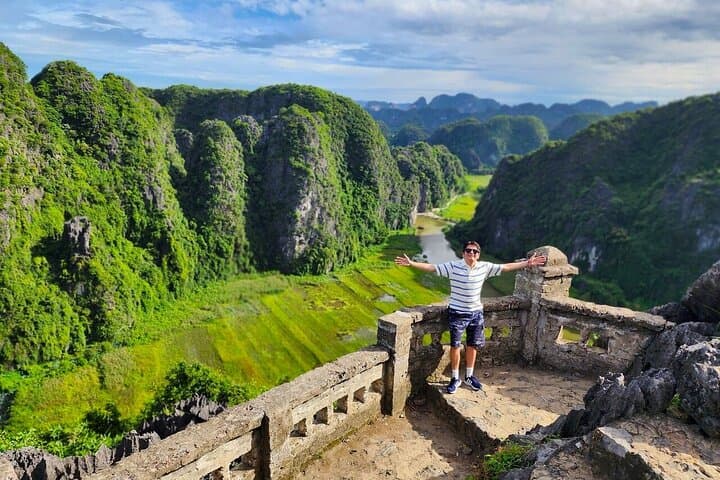
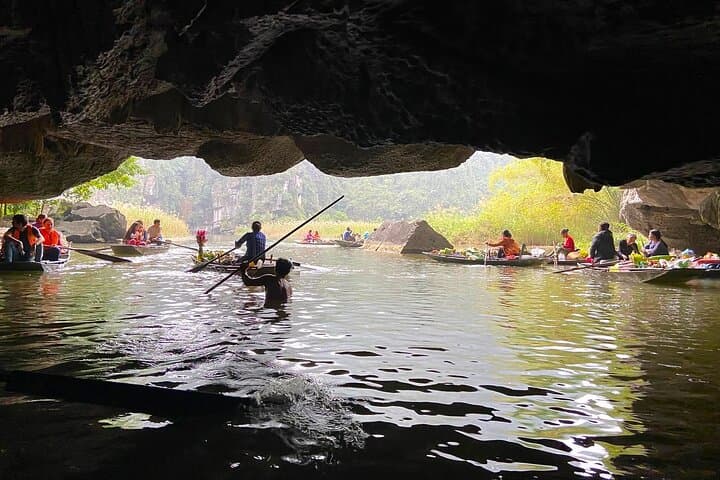
Geology here is blunt and immediate: tower karsts of weathered limestone heave out of flat alluvial plains, sculpted by millennia of river and rain. Tam Coc’s three caves cut by the Ngo Dong River feel like secret doorways through that stone — Hang Ca, Hang Hai and Hang Ba each keep a different hush. Climbing the nearly 500 steps at Hang Múa rewards you with the sweep of rice paddies and a grid of dikes; the viewpoint reads like a map of human farming pressed into dramatic geology.
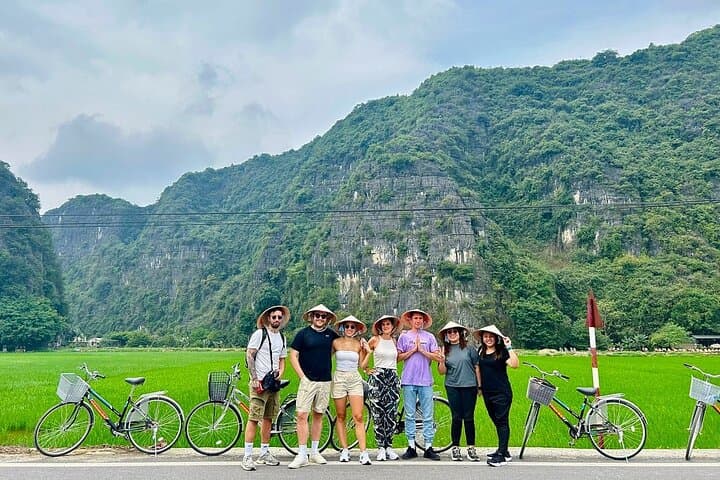
Culture threads through the day: sampan rowers, homestay lunches, and the village rhythms visible from a rented bicycle. The tour mixes easy walking, a short but steep stair ascent, gentle cycling, and a guided boat ride — all doable for most travelers but best approached with steady shoes and sun protection.
Practical guide: start early to beat the heat, carry cash for small purchases and tips, and expect a full 11–12 hour day returning to Hanoi. If rain arrives, the offered raincoat helps; in clear weather aim for the sunset party segment where the light softens the karsts into long silhouettes. Hydrate on the drive, pace the stair climb, and leave time for quiet observation — the landscape rewards slow attention.
moderate.
11–12 hours.
Suitable for travelers in average fitness: includes a long day of travel, a ~500-step ascent, short walks, and light cycling.
The transfer typically takes about 2–2.5 hours each way by limousine van, with one short rest stop en route.
No; the sampan ride is a low-effort, seated experience guided by a rower — suitable for most ages and fitness levels.
The ascent involves nearly 500 stone steps; it’s steep in sections but short — take breaks if needed and wear solid footwear.
Yes; the operator can handle vegetarian, vegan, and gluten-free requests if noted at booking.
Hoa Lư served as Vietnam’s capital in the 10th–11th centuries and preserves scaled-down temples dedicated to the Dinh and Le dynasties.
The area depends on low-impact tourism; favor small-group operators, avoid littering, and respect boat-rower guidance to protect fragile karst and wetland habitats.
Authentic SAPA operates guided outdoor trips and adventures with an emphasis on safety, stewardship, and memorable experiences.
The boat slips forward under a low limestone arch and the river seems to nudge you deeper into karst teeth and rice-green flats. Morning mist lifts off paddies as your small group disembarks from an air-conditioned limousine and fans out across Hoa Lư’s compact temple courtyards — a tangible remnant of Vietnam’s 10th–11th century rulers.
The boat slips forward under a low limestone arch and the river seems to nudge you deeper into karst teeth and rice-green flats. Morning mist lifts off paddies as your small group disembarks from an air-conditioned limousine and fans out across Hoa Lư’s compact temple courtyards — a tangible remnant of Vietnam’s 10th–11th century rulers.
Geology here is blunt and immediate: tower karsts of weathered limestone heave out of flat alluvial plains, sculpted by millennia of river and rain. Tam Coc’s three caves cut by the Ngo Dong River feel like secret doorways through that stone — Hang Ca, Hang Hai and Hang Ba each keep a different hush. Climbing the nearly 500 steps at Hang Múa rewards you with the sweep of rice paddies and a grid of dikes; the viewpoint reads like a map of human farming pressed into dramatic geology.
Culture threads through the day: sampan rowers, homestay lunches, and the village rhythms visible from a rented bicycle. The tour mixes easy walking, a short but steep stair ascent, gentle cycling, and a guided boat ride — all doable for most travelers but best approached with steady shoes and sun protection.
Practical guide: start early to beat the heat, carry cash for small purchases and tips, and expect a full 11–12 hour day returning to Hanoi. If rain arrives, the offered raincoat helps; in clear weather aim for the sunset party segment where the light softens the karsts into long silhouettes. Hydrate on the drive, pace the stair climb, and leave time for quiet observation — the landscape rewards slow attention.