THE ADVENTURE COLLECTIVE® · Independent discovery and booking for outdoor travel

A compact day trip from Hanoi that combines a foot-rowed sampan through Tam Coc’s river caves, cycling past rice fields and a visit to Hoa Lu’s 10th-century temples. Expect nine hours of transport, cultural stops and hands-on rural scenery.
A compact day trip from Hanoi that combines a foot-rowed sampan through Tam Coc’s river caves, cycling past rice fields and a visit to Hoa Lu’s 10th-century temples. Expect nine hours of transport, cultural stops and hands-on rural scenery.
Morning light thins across a flat green plain as you leave Hanoi and head south—buses hum along the highway, then slow as karst towers appear like the ribs of an old ship. By late morning you step into a low wooden sampan and the boatwoman begins to row with her feet; the Ngo Dong River narrows, caves open like doorways through the limestone, and rice fields stretch to the water’s edge.
Verified experiences and guided adventures in the surrounding area.
Operated by Happy Holiday Travel · Tam Coc, Ninh Binh Province
Morning light thins across a flat green plain as you leave Hanoi and head south—buses hum along the highway, then slow as karst towers appear like the ribs of an old ship. By late morning you step into a low wooden sampan and the boatwoman begins to row with her feet; the Ngo Dong River narrows, caves open like doorways through the limestone, and rice fields stretch to the water’s edge.
This landscape is classic northern Vietnam karst: soluble limestone sculpted over millennia into caves, cliffs and narrow valleys. Nearby Hoa Lu was Vietnam’s first unified capital in the 10th century under Dinh and later Le rulers, and the temples and modest stone altars there give a clear, human-scale window into that era. Tam Coc’s villages still run on rice and river—fishermen, grazing water buffalo, and local cooks who serve goat meat and spring rolls for a hearty midday meal.
Practically: plan for a long day—expect roughly nine hours including round-trip transport from Hanoi, a two-hour sampan ride, a short visit to Hoa Lu, and a 1–2 hour cycle through village lanes. Wear grippy shoes for wet gangways, bring sun protection and a refillable bottle, and carry light rain protection in the monsoon months. If you prefer quieter moments, request an earlier departure to avoid the busiest boat slots. Guides and included bike use make the route accessible to most travelers; bring cash for small tips or drinks and a camera with a secure strap—the views change with every bend.
moderate.
9 hours.
Suitable for travelers in average fitness; involves short walks, two-hour seated boat ride and 1–2 hours of casual cycling.
The sampan section typically totals about two hours, covering three caves and scenic stretches between them.
No—bikes are used for gentle village circuits on flat to mildly rolling terrain; basic cycling ability is sufficient.
Yes—bring Vietnamese dong for small purchases, tips, or drinks not included in the tour package.
Pick-up is generally offered from the Old Quarter; if you stay elsewhere you may need to meet at a central point—confirm at booking.
Hoa Lu served as Vietnam’s capital in the 10th century under the Dinh and Le dynasties; the small temple complexes honor those early rulers.
Karst and river habitats are sensitive—avoid littering, minimize plastic use, and follow local guidance to protect cave and rice-plain ecology.
Happy Holiday Travel operates guided outdoor trips and adventures with an emphasis on safety, stewardship, and memorable experiences.
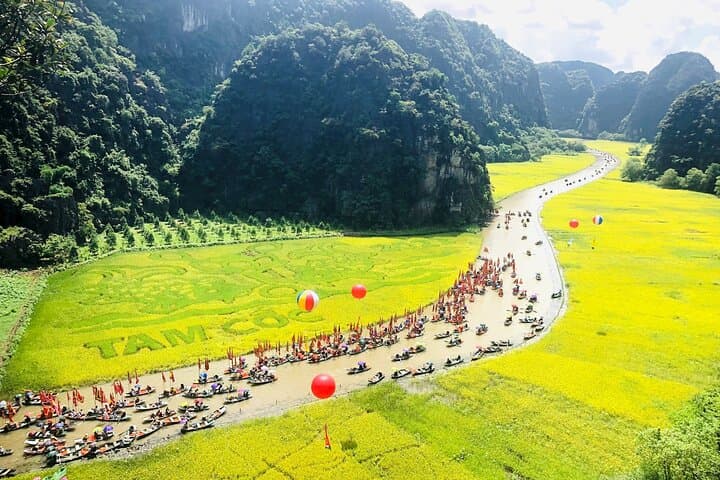
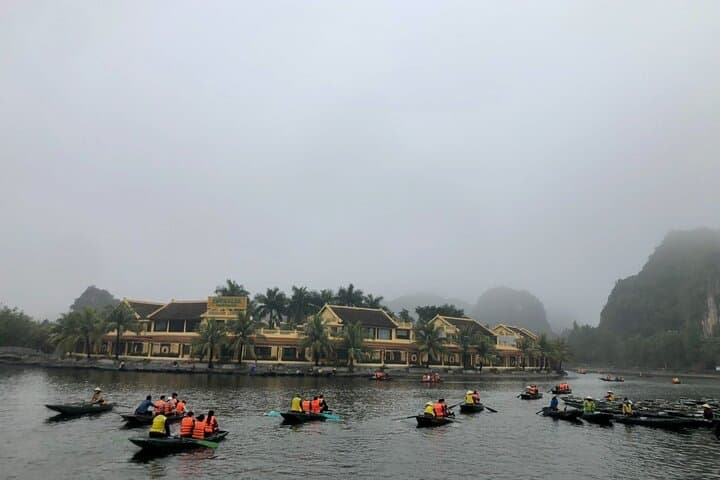
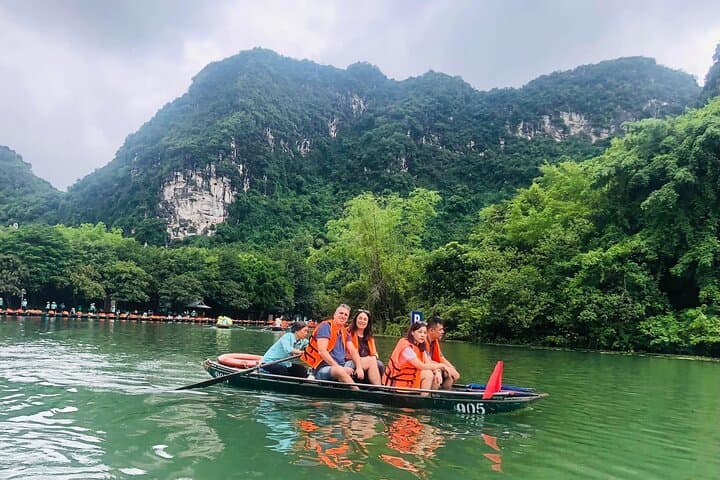

Morning light thins across a flat green plain as you leave Hanoi and head south—buses hum along the highway, then slow as karst towers appear like the ribs of an old ship. By late morning you step into a low wooden sampan and the boatwoman begins to row with her feet; the Ngo Dong River narrows, caves open like doorways through the limestone, and rice fields stretch to the water’s edge.
Morning light thins across a flat green plain as you leave Hanoi and head south—buses hum along the highway, then slow as karst towers appear like the ribs of an old ship. By late morning you step into a low wooden sampan and the boatwoman begins to row with her feet; the Ngo Dong River narrows, caves open like doorways through the limestone, and rice fields stretch to the water’s edge.
This landscape is classic northern Vietnam karst: soluble limestone sculpted over millennia into caves, cliffs and narrow valleys. Nearby Hoa Lu was Vietnam’s first unified capital in the 10th century under Dinh and later Le rulers, and the temples and modest stone altars there give a clear, human-scale window into that era. Tam Coc’s villages still run on rice and river—fishermen, grazing water buffalo, and local cooks who serve goat meat and spring rolls for a hearty midday meal.
Practically: plan for a long day—expect roughly nine hours including round-trip transport from Hanoi, a two-hour sampan ride, a short visit to Hoa Lu, and a 1–2 hour cycle through village lanes. Wear grippy shoes for wet gangways, bring sun protection and a refillable bottle, and carry light rain protection in the monsoon months. If you prefer quieter moments, request an earlier departure to avoid the busiest boat slots. Guides and included bike use make the route accessible to most travelers; bring cash for small tips or drinks and a camera with a secure strap—the views change with every bend.