THE ADVENTURE COLLECTIVE® · Independent discovery and booking for outdoor travel

Spend a full day from Hanoi visiting Quang Phu Cau incense workshops, drifting on a sampan through Tam Coc’s Three Caves, and exploring the temples of Hoa Lu. This practical day trip blends hands-on cultural encounters with calm river scenery and accessible walking.
Spend a full day from Hanoi visiting Quang Phu Cau incense workshops, drifting on a sampan through Tam Coc’s Three Caves, and exploring the temples of Hoa Lu. This practical day trip blends hands-on cultural encounters with calm river scenery and accessible walking.
The morning air tastes of smoke and citrus as you pull away from Hanoi’s Old Quarter and head south toward red-dusted yards of Quang Phu Cau Incense Village. Rows of brightly colored sticks lean against low fences; local artisans bend and tie, their hands a steady rhythm that has shaped village life for generations. By mid-day the limestone karsts of Tam Coc rise like an inland fleet, elbowing through rice fields as the Ngo Dong River threads under low cave mouths.
Verified experiences and guided adventures in the surrounding area.
Operated by Authentic Travel in Vietnam · Ninh Binh, Ninh Binh Province
The morning air tastes of smoke and citrus as you pull away from Hanoi’s Old Quarter and head south toward red-dusted yards of Quang Phu Cau Incense Village. Rows of brightly colored sticks lean against low fences; local artisans bend and tie, their hands a steady rhythm that has shaped village life for generations. By mid-day the limestone karsts of Tam Coc rise like an inland fleet, elbowing through rice fields as the Ngo Dong River threads under low cave mouths.
This route stitches together cultural history and karst geology. Quang Phu Cau preserves a living craft tied to worship and household ritual; Hoa Lu was Vietnam’s 10th–11th century capital under the Dinh and early Le dynasties, its temples offering compact lessons in royal ritual and defensive siting. The karst towers here are chemical-weathered limestone sculpted over millions of years; the river has carved the low, cave-lined passages that earned this area the nickname “Ha Long Bay on land.”
Practically: expect a full 9–10 hour day with roughly 2 hours each way of driving from central Hanoi. The Tam Coc sampan is rowed by a local, typically a 45–60 minute glide through three caves, shallow and placid but requiring careful stepping on and off the boat. Terrain at stops is flat—paddies, village lanes and temple courtyards—so no technical hiking is required.
Bring sun protection, local cash for tips and small purchases, and a light rain layer in summer. Timing matters: early departures beat heat and buses; late afternoons bring long shadows that make the karst shapes sing. For travelers who want an easy, sensory-packed day of river travel, craft culture and compact history, this route delivers a clear, accessible slice of northern Vietnam.
easy.
9–10 hours.
Suitable for travelers in average fitness; involves short flat walks and sitting in a low sampan.
The sampan section typically lasts 45–60 minutes, depending on water level and how many caves you pass through.
Sampans are stable and rowed by experienced locals; watch your step when boarding and remain seated while the boat is moving.
Most tours include a local Vietnamese lunch and can accommodate common dietary requests if noted at booking—confirm any strict restrictions in advance.
Yes—this is a full-day (about 9–10 hour) tour with pickup in Hanoi, transfers to Ninh Binh, activities, and return to the city the same evening.
Hoa Lu served as the political center in the 10th–11th centuries under the Dinh and early Le dynasties; the small stone temples preserve inscriptions and architecture from that formative period.
The karst limestone and rice-pond ecosystems are sensitive—stay on paths, avoid littering, and minimize disturbances to wildlife and village life.
Authentic Travel in Vietnam operates guided outdoor trips and adventures with an emphasis on safety, stewardship, and memorable experiences.
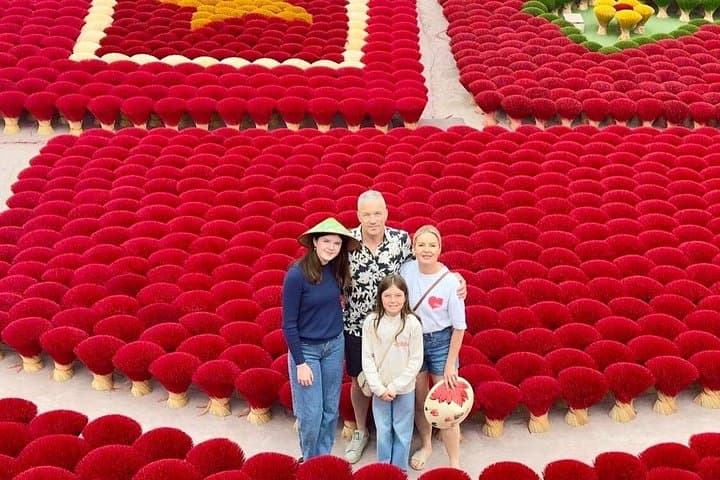
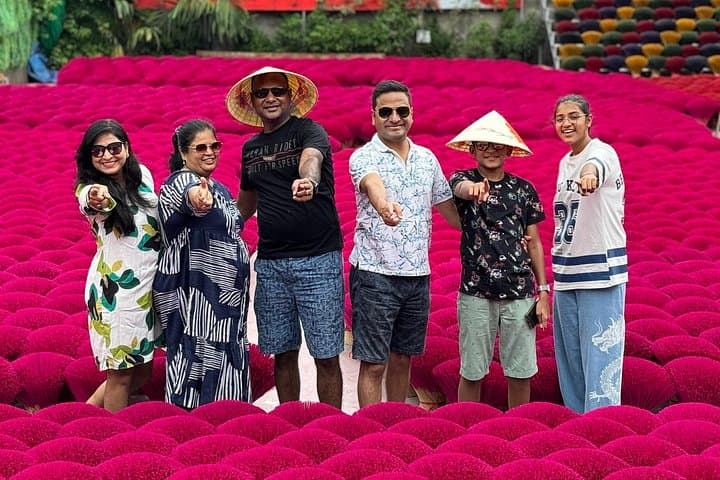
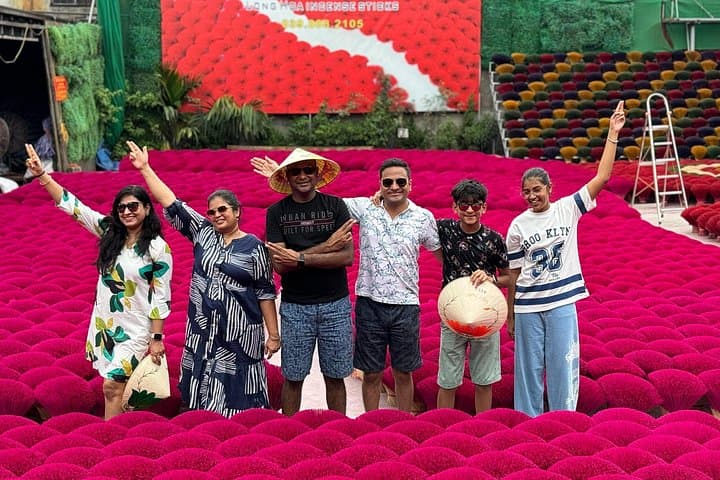

The morning air tastes of smoke and citrus as you pull away from Hanoi’s Old Quarter and head south toward red-dusted yards of Quang Phu Cau Incense Village. Rows of brightly colored sticks lean against low fences; local artisans bend and tie, their hands a steady rhythm that has shaped village life for generations. By mid-day the limestone karsts of Tam Coc rise like an inland fleet, elbowing through rice fields as the Ngo Dong River threads under low cave mouths.
The morning air tastes of smoke and citrus as you pull away from Hanoi’s Old Quarter and head south toward red-dusted yards of Quang Phu Cau Incense Village. Rows of brightly colored sticks lean against low fences; local artisans bend and tie, their hands a steady rhythm that has shaped village life for generations. By mid-day the limestone karsts of Tam Coc rise like an inland fleet, elbowing through rice fields as the Ngo Dong River threads under low cave mouths.
This route stitches together cultural history and karst geology. Quang Phu Cau preserves a living craft tied to worship and household ritual; Hoa Lu was Vietnam’s 10th–11th century capital under the Dinh and early Le dynasties, its temples offering compact lessons in royal ritual and defensive siting. The karst towers here are chemical-weathered limestone sculpted over millions of years; the river has carved the low, cave-lined passages that earned this area the nickname “Ha Long Bay on land.”
Practically: expect a full 9–10 hour day with roughly 2 hours each way of driving from central Hanoi. The Tam Coc sampan is rowed by a local, typically a 45–60 minute glide through three caves, shallow and placid but requiring careful stepping on and off the boat. Terrain at stops is flat—paddies, village lanes and temple courtyards—so no technical hiking is required.
Bring sun protection, local cash for tips and small purchases, and a light rain layer in summer. Timing matters: early departures beat heat and buses; late afternoons bring long shadows that make the karst shapes sing. For travelers who want an easy, sensory-packed day of river travel, craft culture and compact history, this route delivers a clear, accessible slice of northern Vietnam.