THE ADVENTURE COLLECTIVE® · Independent discovery and booking for outdoor travel

Learn Indigenous plant knowledge and stewardship on a guided 90-minute walk through Stanley Park’s forests and around Beaver Lake. Led by a Cultural Land Ambassador, the tour blends storytelling, practical botany, and local history.
Learn Indigenous plant knowledge and stewardship on a guided 90-minute walk through Stanley Park’s forests and around Beaver Lake. Led by a Cultural Land Ambassador, the tour blends storytelling, practical botany, and local history.
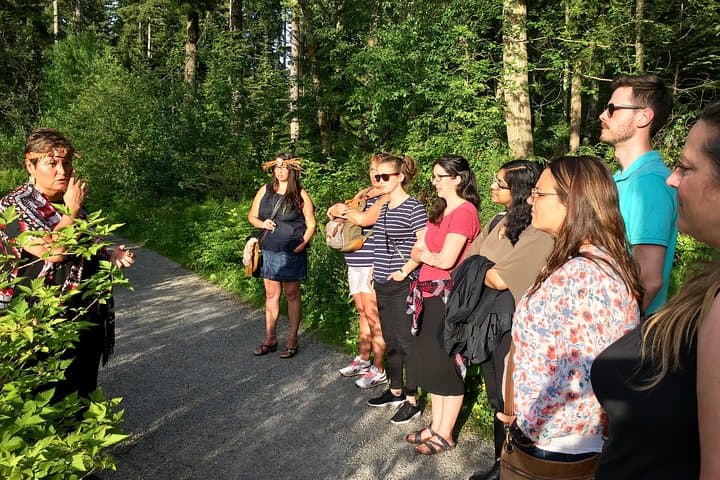
You meet under a round wooden gazebo near the Stanley Park Mini Train, a small crowd hushed by the shade of towering cedars and maples. The guide, introduced as a Cultural Land Ambassador, begins with a land acknowledgment and the steam of Talaysay Hush Tea in hand. The forest opens into a green corridor; the trail curves toward Beaver Lake and the trees seem to lean in, offering stories.
Verified experiences and guided adventures in the surrounding area.
Operated by Talaysay Tours · Vancouver, British Columbia
You meet under a round wooden gazebo near the Stanley Park Mini Train, a small crowd hushed by the shade of towering cedars and maples. The guide, introduced as a Cultural Land Ambassador, begins with a land acknowledgment and the steam of Talaysay Hush Tea in hand. The forest opens into a green corridor; the trail curves toward Beaver Lake and the trees seem to lean in, offering stories.
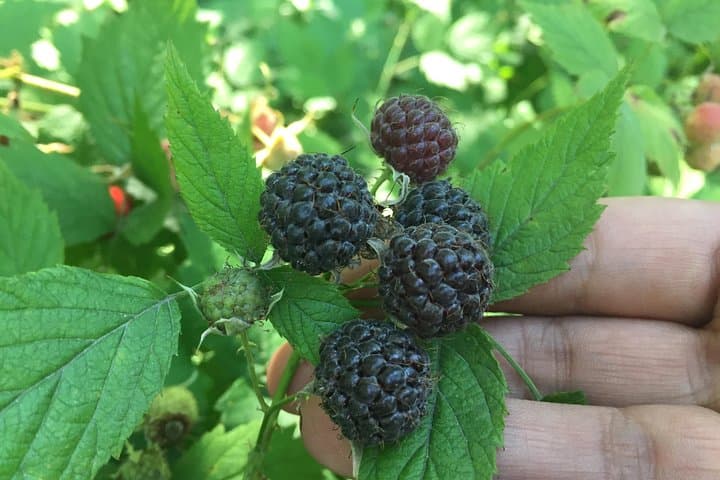
This 90-minute loop is rooted in Coast Salish placekeeping. Guides combine oral histories with practical botany—pointing out plants used for food, medicine and technology—and explain selective harvesting, reciprocity, and how traditional stewardship shaped this coastline. Geologically, Stanley Park sits on glacial deposits and ancient bedrock; Beaver Lake itself is a quiet remnant basin where sediments collect and wildlife gathers.
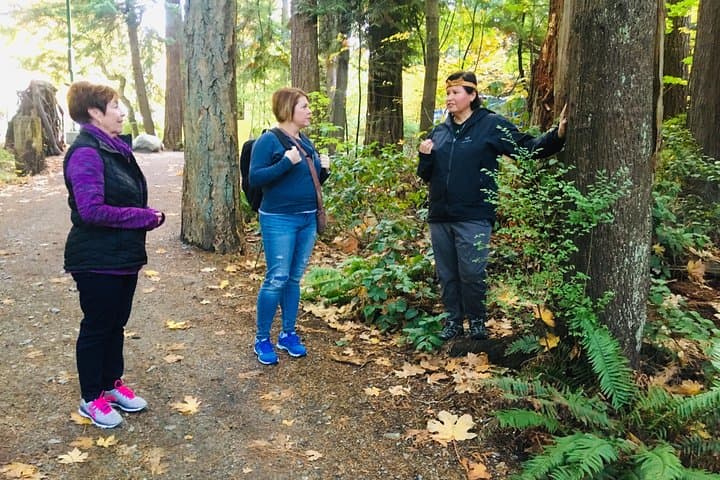
Culturally the walk connects modern Vancouver to millennia of Indigenous occupation; expect references to canoe routes, cedar-tool making, and seasonal practices. The experience is conversational rather than didactic, with regular stops to handle bark, leaves, and to ask questions.
Practically: the path is forest trail and packed dirt with gentle grades—about 1.5–2 hours total including tea and discussion. Wear waterproof layers and sturdy walking shoes; bring water and a small notebook if you want to record plant names. Public transit and parking are nearby at the Bus Loop. The pace is relaxed and accessible to most fitness levels, but the tour asks guests to avoid heavy backpacks and to disclose any mobility issues when booking.
easy.
1.5–2 hours.
Suitable for most adults and older children who can walk on uneven forest paths for up to 90 minutes; not strenuous but requires steady footing.
The guided portion is about 90 minutes and covers a relaxed loop to and around Beaver Lake—roughly 1.5–2 kilometers depending on small route variations.
Yes; the pace is gentle with frequent stops. Guests with serious mobility, spinal, or cardiovascular issues should consult the operator before booking.
Photography for personal use is welcome; guides may allow handling of certain plants during demonstrations—always ask permission first.
Meet at the Stanley Park Bus Loop near the Mini Train and Aquarium parking area; public transit serves the park and there is nearby paid parking.
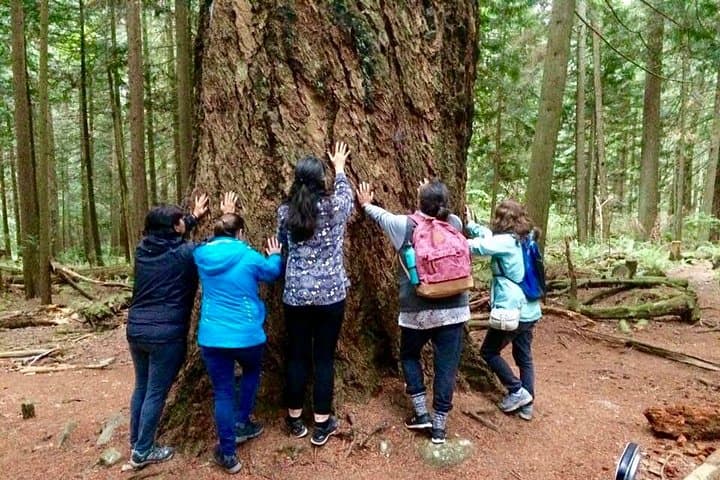
Stanley Park occupies land long stewarded by Coast Salish peoples; the tour highlights how cedar, willow and other species supported transport, shelter and ceremony.
Guides emphasize selective harvesting and reciprocity; visitors are asked not to forage independently and to stick to trails to protect understory habitat.
Talaysay Tours operates guided outdoor trips and adventures with an emphasis on safety, stewardship, and memorable experiences.
You meet under a round wooden gazebo near the Stanley Park Mini Train, a small crowd hushed by the shade of towering cedars and maples. The guide, introduced as a Cultural Land Ambassador, begins with a land acknowledgment and the steam of Talaysay Hush Tea in hand. The forest opens into a green corridor; the trail curves toward Beaver Lake and the trees seem to lean in, offering stories.
You meet under a round wooden gazebo near the Stanley Park Mini Train, a small crowd hushed by the shade of towering cedars and maples. The guide, introduced as a Cultural Land Ambassador, begins with a land acknowledgment and the steam of Talaysay Hush Tea in hand. The forest opens into a green corridor; the trail curves toward Beaver Lake and the trees seem to lean in, offering stories.
This 90-minute loop is rooted in Coast Salish placekeeping. Guides combine oral histories with practical botany—pointing out plants used for food, medicine and technology—and explain selective harvesting, reciprocity, and how traditional stewardship shaped this coastline. Geologically, Stanley Park sits on glacial deposits and ancient bedrock; Beaver Lake itself is a quiet remnant basin where sediments collect and wildlife gathers.
Culturally the walk connects modern Vancouver to millennia of Indigenous occupation; expect references to canoe routes, cedar-tool making, and seasonal practices. The experience is conversational rather than didactic, with regular stops to handle bark, leaves, and to ask questions.
Practically: the path is forest trail and packed dirt with gentle grades—about 1.5–2 hours total including tea and discussion. Wear waterproof layers and sturdy walking shoes; bring water and a small notebook if you want to record plant names. Public transit and parking are nearby at the Bus Loop. The pace is relaxed and accessible to most fitness levels, but the tour asks guests to avoid heavy backpacks and to disclose any mobility issues when booking.