THE ADVENTURE COLLECTIVE® · Independent discovery and booking for outdoor travel

Walk by lantern light through Liverpool’s St. James Cemetery where Victorian monuments, a mysterious spring and theatrical guides bring local ghost stories to life. This 1–1.5 hour tour blends history, geology and folklore for an evening that’s eerie, informative and surprisingly grounded.
Walk by lantern light through Liverpool’s St. James Cemetery where Victorian monuments, a mysterious spring and theatrical guides bring local ghost stories to life. This 1–1.5 hour tour blends history, geology and folklore for an evening that’s eerie, informative and surprisingly grounded.
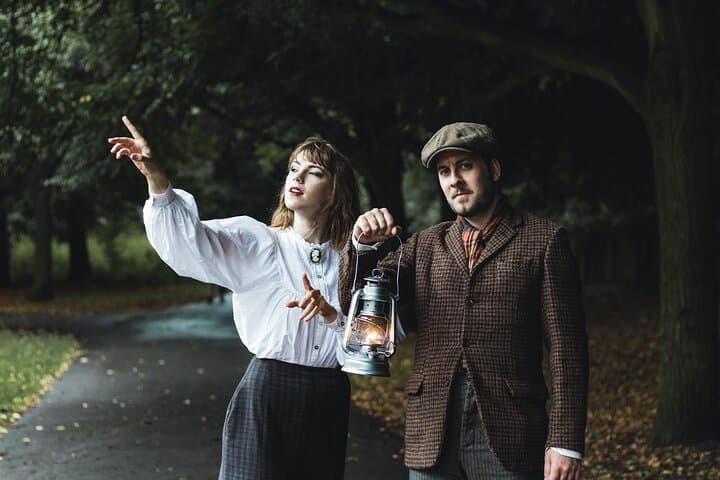
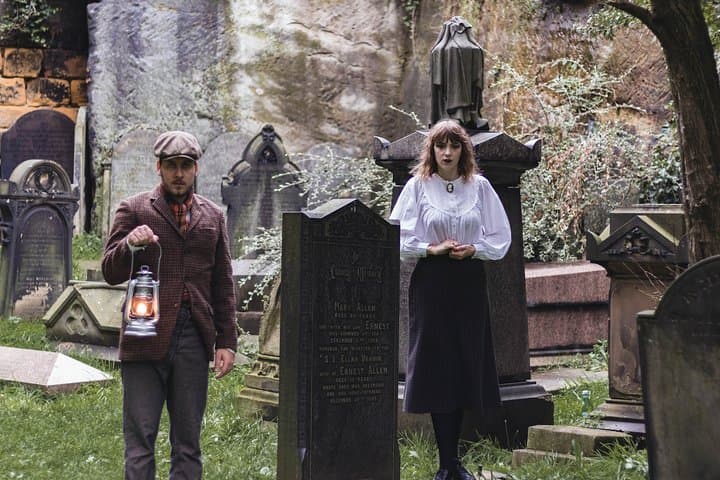
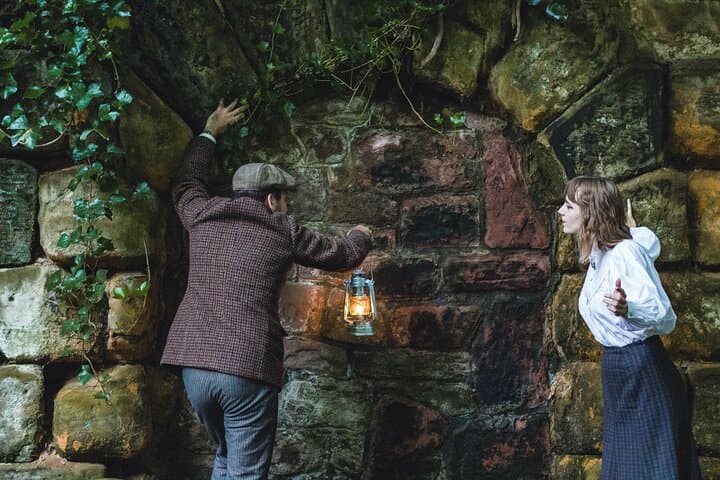
A lantern flickers against wet stone as the group gathers at the base of Liverpool Cathedral, the city’s monumental silhouette watching over narrow paths. The guide’s voice lowers and the cemetery breathes—old inscriptions, leaning headstones and a natural spring that still trickles between flagstones—each feature a waypoint for a story. By lamplight the past feels immediate: footfalls echo, ivy rustles and the air seems to carry voices from another century.
Verified experiences and guided adventures in the surrounding area.
Operated by Danyel J. Roberts · Liverpool, Merseyside
A lantern flickers against wet stone as the group gathers at the base of Liverpool Cathedral, the city’s monumental silhouette watching over narrow paths. The guide’s voice lowers and the cemetery breathes—old inscriptions, leaning headstones and a natural spring that still trickles between flagstones—each feature a waypoint for a story. By lamplight the past feels immediate: footfalls echo, ivy rustles and the air seems to carry voices from another century.
St. James Cemetery was laid out during Liverpool’s rapid 19th-century expansion; its Victorian monuments map the city’s social history. Geological scars from old quarries created dramatic drops and exposed sandstone, shaping viewpoints now framed by cathedral masonry. Local lore layers the space: the mausoleum of William Huskisson, tales of shadow-entities, and a spring once said to have healing properties speak to how place and story entwine.
Expect a guided walking experience of roughly 1–1.5 hours on paved and compacted earth paths with occasional steps and uneven stone. Guides draw on theatrical performance to present historical facts alongside folklore—this is as much local history as it is spectral storytelling. Practical points: wear sturdy shoes, bring a small torch (even with lanterns), and dress for damp Liverpool evenings. The route is family-friendly and wheelchair-accessible in large parts, but surfaces can be slick after rain. Be respectful of gravesites and other visitors; photography is generally permitted but follow guide direction. Arrive early to find the meeting point and to hear the cathedral’s architecture before the lights dim—St. James offers a compact, atmospheric slice of Liverpool’s past when the city itself still felt a little closer to the edge of the map.
easy.
1–1.5 hours.
Suitable for most fitness levels; involves standing and walking on uneven surfaces for about an hour.
Much of the route is wheelchair-accessible and the operation notes accessibility, but contact the operator ahead of time to confirm the exact meeting point and any special arrangements.
Yes; the tour is suitable for families, though content includes ghost stories and some darker historical events—use discretion for very young children.
All sales are final per the tour’s policy and refunds are not provided; the tour may be cancelled by the operator for severe weather or insufficient bookings.
Photography is generally permitted—use common sense, avoid flash in close quarters, and follow your guide’s directions near sensitive memorials.
Established during Liverpool’s 19th‑century growth, St. James contains Victorian-era monuments and the mausoleum of William Huskisson, the MP famously killed in an early railway accident.
Visitors are asked to stay on paths and avoid disturbing graves; small tour groups and guided storytelling help minimize impact while supporting local heritage conservation.
Danyel J. Roberts operates guided outdoor trips and adventures with an emphasis on safety, stewardship, and memorable experiences.

A lantern flickers against wet stone as the group gathers at the base of Liverpool Cathedral, the city’s monumental silhouette watching over narrow paths. The guide’s voice lowers and the cemetery breathes—old inscriptions, leaning headstones and a natural spring that still trickles between flagstones—each feature a waypoint for a story. By lamplight the past feels immediate: footfalls echo, ivy rustles and the air seems to carry voices from another century.
A lantern flickers against wet stone as the group gathers at the base of Liverpool Cathedral, the city’s monumental silhouette watching over narrow paths. The guide’s voice lowers and the cemetery breathes—old inscriptions, leaning headstones and a natural spring that still trickles between flagstones—each feature a waypoint for a story. By lamplight the past feels immediate: footfalls echo, ivy rustles and the air seems to carry voices from another century.
St. James Cemetery was laid out during Liverpool’s rapid 19th-century expansion; its Victorian monuments map the city’s social history. Geological scars from old quarries created dramatic drops and exposed sandstone, shaping viewpoints now framed by cathedral masonry. Local lore layers the space: the mausoleum of William Huskisson, tales of shadow-entities, and a spring once said to have healing properties speak to how place and story entwine.
Expect a guided walking experience of roughly 1–1.5 hours on paved and compacted earth paths with occasional steps and uneven stone. Guides draw on theatrical performance to present historical facts alongside folklore—this is as much local history as it is spectral storytelling. Practical points: wear sturdy shoes, bring a small torch (even with lanterns), and dress for damp Liverpool evenings. The route is family-friendly and wheelchair-accessible in large parts, but surfaces can be slick after rain. Be respectful of gravesites and other visitors; photography is generally permitted but follow guide direction. Arrive early to find the meeting point and to hear the cathedral’s architecture before the lights dim—St. James offers a compact, atmospheric slice of Liverpool’s past when the city itself still felt a little closer to the edge of the map.