THE ADVENTURE COLLECTIVE® · Independent discovery and booking for outdoor travel

Step into an Airbus A320 cockpit and fly over Paris in a private, instructor-led simulator session. Ideal for beginners and aviation enthusiasts, the 45-minute experience includes briefing, hands-on flying, and a pilot diploma.
Step into an Airbus A320 cockpit and fly over Paris in a private, instructor-led simulator session. Ideal for beginners and aviation enthusiasts, the 45-minute experience includes briefing, hands-on flying, and a pilot diploma.
The cockpit door closes and the city noise drops away; cold panels and soft instrument lights replace traffic, and for the next 45 minutes you pilot an airliner over the Paris skyline. A professional instructor briefs you, starts the engines, and hands the yoke to a first-time captain — the artificial horizon steady as you rotate into a simulated climb.
Verified experiences and guided adventures in the surrounding area.
Operated by AviaSim · Paris, Île-de-France
The cockpit door closes and the city noise drops away; cold panels and soft instrument lights replace traffic, and for the next 45 minutes you pilot an airliner over the Paris skyline. A professional instructor briefs you, starts the engines, and hands the yoke to a first-time captain — the artificial horizon steady as you rotate into a simulated climb.
Paris has long been tied to aviation: pioneering flights from Le Bourget, Charles Lindbergh’s 1927 arrival, and the nearby Musée de l'Air et de l'Espace all anchor the city's aeronautical story. Geologically, the simulator sits above Paris's limestone foundations — the same stone quarried to build Haussmann's boulevards — while the activity taps modern aerospace tech rather than wind or weather.
The experience blends culture and craft: French airline procedures, phraseology, and an instructor’s anecdotes about real-world routes give context to the controls. Accessible from age 10, the standard private session runs about 10 minutes of briefing and 35 minutes of hands-on flight; many guests choose to practice takeoffs, instrument approaches, and landings at busy airports.
Practical guidance: arrive 15 minutes early with photo ID; wear comfortable clothes and closed-toe shoes. If you’re prone to motion sickness, opt for the front-row view and ask the instructor to limit abrupt maneuvers. Expect a short debrief and a pilot diploma at the end. Book a private slot to customize weather, time of day, and airport scenarios — it’s low-impact, high-fidelity flying without the fuel burn of an actual training flight.
easy.
45 minutes.
Suitable for most fitness levels; requires basic mobility to enter a cockpit seat.
Participants must be at least 10 years old; minors require an accompanying adult for check-in.
No prior skills are required; sessions are tailored by the instructor for beginners through enthusiasts.
Many centers are wheelchair accessible and list accessibility on booking pages—confirm with the operator ahead of time.
Most operators provide a pilot diploma or certificate of completion after the session; this is a keepsake rather than an official license.
Paris played a central role in early aviation; Le Bourget hosted record flights and the city’s aviation museums preserve that legacy.
Simulator training cuts fuel and emissions compared with live aircraft hours; check whether the center follows e-waste and electronics recycling practices.
AviaSim operates guided outdoor trips and adventures with an emphasis on safety, stewardship, and memorable experiences.
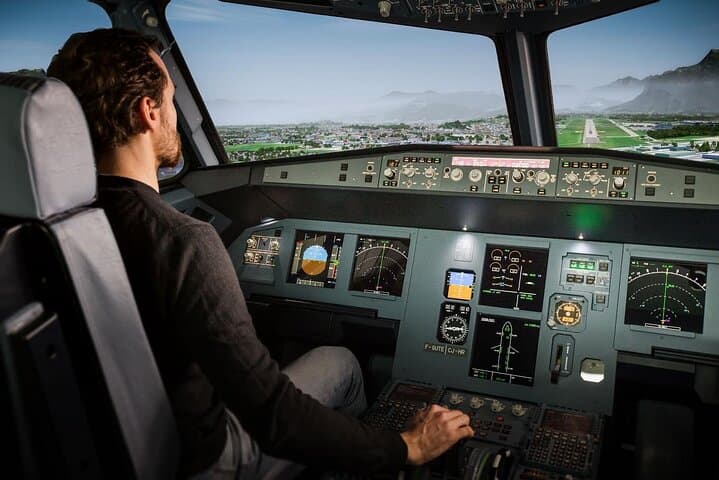
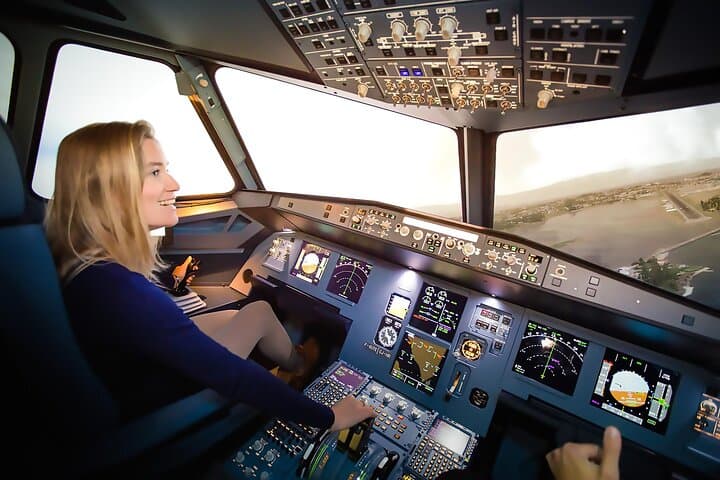
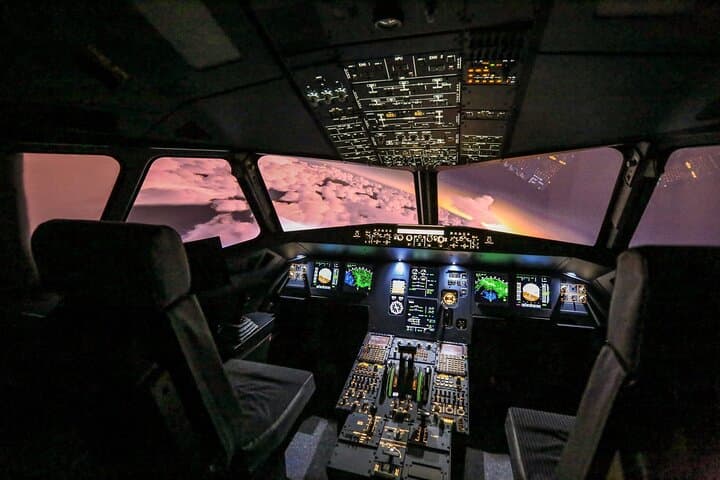
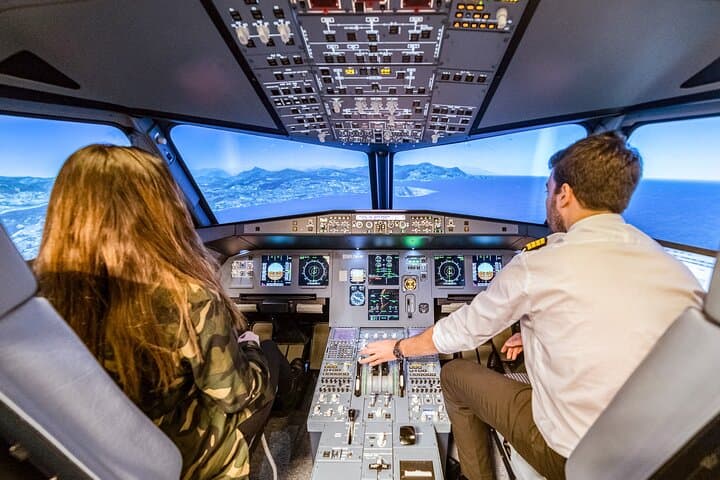
The cockpit door closes and the city noise drops away; cold panels and soft instrument lights replace traffic, and for the next 45 minutes you pilot an airliner over the Paris skyline. A professional instructor briefs you, starts the engines, and hands the yoke to a first-time captain — the artificial horizon steady as you rotate into a simulated climb.
The cockpit door closes and the city noise drops away; cold panels and soft instrument lights replace traffic, and for the next 45 minutes you pilot an airliner over the Paris skyline. A professional instructor briefs you, starts the engines, and hands the yoke to a first-time captain — the artificial horizon steady as you rotate into a simulated climb.
Paris has long been tied to aviation: pioneering flights from Le Bourget, Charles Lindbergh’s 1927 arrival, and the nearby Musée de l'Air et de l'Espace all anchor the city's aeronautical story. Geologically, the simulator sits above Paris's limestone foundations — the same stone quarried to build Haussmann's boulevards — while the activity taps modern aerospace tech rather than wind or weather.
The experience blends culture and craft: French airline procedures, phraseology, and an instructor’s anecdotes about real-world routes give context to the controls. Accessible from age 10, the standard private session runs about 10 minutes of briefing and 35 minutes of hands-on flight; many guests choose to practice takeoffs, instrument approaches, and landings at busy airports.
Practical guidance: arrive 15 minutes early with photo ID; wear comfortable clothes and closed-toe shoes. If you’re prone to motion sickness, opt for the front-row view and ask the instructor to limit abrupt maneuvers. Expect a short debrief and a pilot diploma at the end. Book a private slot to customize weather, time of day, and airport scenarios — it’s low-impact, high-fidelity flying without the fuel burn of an actual training flight.