THE ADVENTURE COLLECTIVE® · Independent discovery and booking for outdoor travel

A full-day coach tour from Nagoya that pairs Takayama’s preserved Edo streets with the UNESCO-listed gassho-zukuri village of Shirakawa-go. Expect market stalls, traditional houses with steep thatch, and a day of easy walks and striking photo opportunities.
A full-day coach tour from Nagoya that pairs Takayama’s preserved Edo streets with the UNESCO-listed gassho-zukuri village of Shirakawa-go. Expect market stalls, traditional houses with steep thatch, and a day of easy walks and striking photo opportunities.
The bus eases out of Nagoya as highway light gives way to rising ridgelines; the mountains here seem to lean in, nudging passengers toward old towns and rice terraces. By midmorning the group is walking Takayama’s Sanmachi Suji, where wooden storefronts and low-arched bridges frame the steady clink of sake barrels and the bright scatter of market stalls.
Verified experiences and guided adventures in the surrounding area.
Operated by Trevopedia Wonders · Shirakawa-go (Ogimachi), Gifu Prefecture
The bus eases out of Nagoya as highway light gives way to rising ridgelines; the mountains here seem to lean in, nudging passengers toward old towns and rice terraces. By midmorning the group is walking Takayama’s Sanmachi Suji, where wooden storefronts and low-arched bridges frame the steady clink of sake barrels and the bright scatter of market stalls.
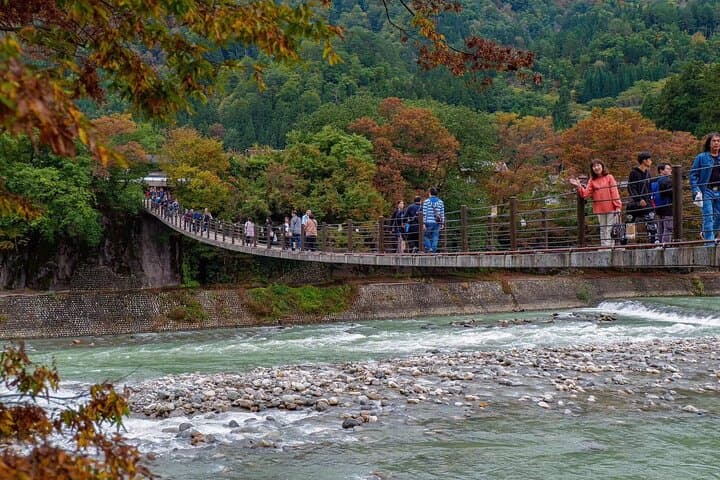
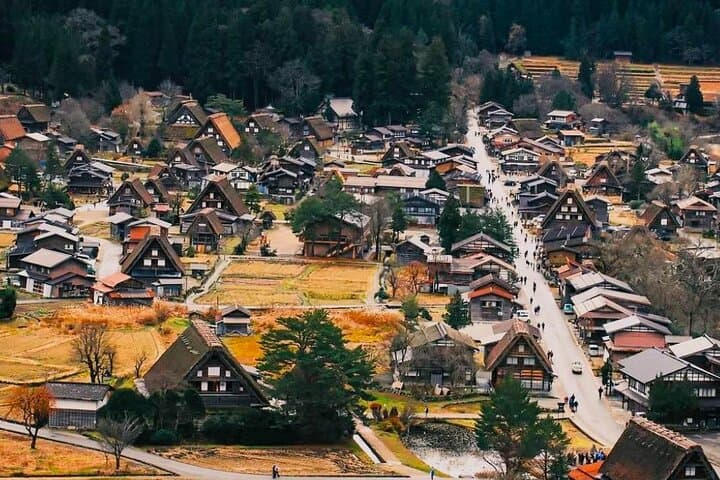
Takayama’s streets preserve Edo-era urban life—timber merchant houses, the stone steps of the Takayama Jinya, and morning markets that hum with seasonal produce and lacquerware. Later the road climbs into a basin of folded volcanic and sedimentary geology that funnels winter snows into the valleys; Shirakawa-go sits in that basin, its gassho-zukuri farmhouses pitched steeply like hands pressed in prayer to shrug off heavy snow.
Visitors can step inside century-old homes, photograph steep thatch against blue sky or muted winter white, and taste Hida beef in town—local cuisine as much a cultural artifact as the architecture. Guides explain construction techniques and the communal practices that kept mountain villages alive through harsh winters.
Practical side: this is a full-day, mostly low-impact tour with several short walks on uneven village paths and cobbled streets—good walking shoes and layers are key. Expect 10–11 hours including transport; bring cash for small museum fees and market purchases, and plan for variable weather—mountain sun can be sharp, and rain or snow changes footing quickly. For photographers and culture seekers the itinerary packs high-return sights into a single, accessible day from Nagoya.
easy.
10–11 hours.
Suitable for most travelers who can handle several short walks and standing; minimal elevation change but uneven surfaces.
The tour is roughly 10–11 hours round-trip from Nagoya and includes round-trip transfers from the designated meet-up point.
No technical hikes—only short walks on cobbled streets and village paths; mobility-friendly options are available but surfaces can be uneven.
Admission is generally not included; small museum fees and donations are usually paid on-site with cash.
Guides speak primarily Japanese and Chinese, with basic English for simple communication according to the operator notes.
Shirakawa-go’s gassho-zukuri farmhouses developed over centuries to shed heavy winter snow; many structures date back 200+ years and reflect communal labor practices.
Controlled tourism and preservation efforts maintain the thatch-roofed houses; visitors are asked to stick to paths, avoid stepping into rice paddies, and respect private homes to reduce wear.
Trevopedia Wonders operates guided outdoor trips and adventures with an emphasis on safety, stewardship, and memorable experiences.


The bus eases out of Nagoya as highway light gives way to rising ridgelines; the mountains here seem to lean in, nudging passengers toward old towns and rice terraces. By midmorning the group is walking Takayama’s Sanmachi Suji, where wooden storefronts and low-arched bridges frame the steady clink of sake barrels and the bright scatter of market stalls.
The bus eases out of Nagoya as highway light gives way to rising ridgelines; the mountains here seem to lean in, nudging passengers toward old towns and rice terraces. By midmorning the group is walking Takayama’s Sanmachi Suji, where wooden storefronts and low-arched bridges frame the steady clink of sake barrels and the bright scatter of market stalls.
Takayama’s streets preserve Edo-era urban life—timber merchant houses, the stone steps of the Takayama Jinya, and morning markets that hum with seasonal produce and lacquerware. Later the road climbs into a basin of folded volcanic and sedimentary geology that funnels winter snows into the valleys; Shirakawa-go sits in that basin, its gassho-zukuri farmhouses pitched steeply like hands pressed in prayer to shrug off heavy snow.
Visitors can step inside century-old homes, photograph steep thatch against blue sky or muted winter white, and taste Hida beef in town—local cuisine as much a cultural artifact as the architecture. Guides explain construction techniques and the communal practices that kept mountain villages alive through harsh winters.
Practical side: this is a full-day, mostly low-impact tour with several short walks on uneven village paths and cobbled streets—good walking shoes and layers are key. Expect 10–11 hours including transport; bring cash for small museum fees and market purchases, and plan for variable weather—mountain sun can be sharp, and rain or snow changes footing quickly. For photographers and culture seekers the itinerary packs high-return sights into a single, accessible day from Nagoya.