THE ADVENTURE COLLECTIVE® · Independent discovery and booking for outdoor travel

Walk 17th-century lanes near the Taj Mahal to meet artisans practicing zardozi, pietra dura and household crafts. This two-hour private tour offers close-up craft demos, local history and direct buying opportunities from workshop masters.
Walk 17th-century lanes near the Taj Mahal to meet artisans practicing zardozi, pietra dura and household crafts. This two-hour private tour offers close-up craft demos, local history and direct buying opportunities from workshop masters.
You step off the main road and into a lane where the city’s pulse slows: the air smells of lime and polish, marble dust settles on your shoes, and a chorus of hammers taps out a steady rhythm. The Taj itself watches from a distance, but the real attraction here is smaller—hands shaping ornament, threads catching light, and workshops that have kept techniques alive for generations.
Verified experiences and guided adventures in the surrounding area.
Operated by Agra Heritage Walks · Agra, Uttar Pradesh
You step off the main road and into a lane where the city’s pulse slows: the air smells of lime and polish, marble dust settles on your shoes, and a chorus of hammers taps out a steady rhythm. The Taj itself watches from a distance, but the real attraction here is smaller—hands shaping ornament, threads catching light, and workshops that have kept techniques alive for generations.
Agra’s crafts grew alongside the Mughal court; pietra dura inlay and zardozi embroidery that helped build the Taj Mahal live on in family workshops whose history stretches back centuries. The lanes follow old trade routes along the Yamuna floodplain, where local marble and imported silks met to meet imperial demand. Cultural cross-pollination shaped carpet patterns, floral garlands and the jewel-like accents sold today.
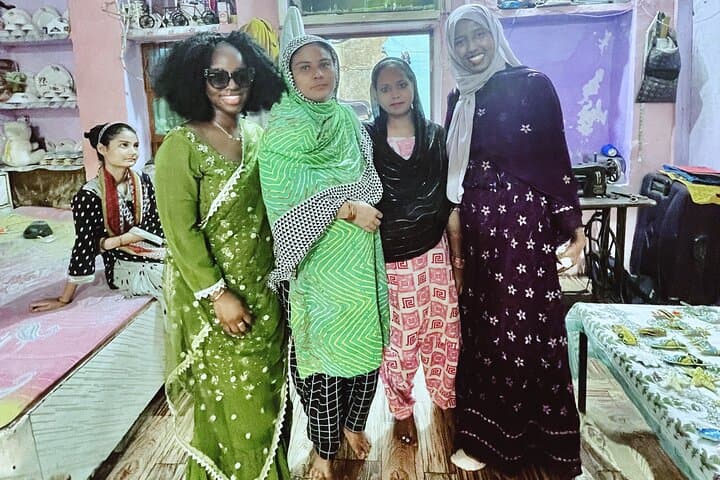
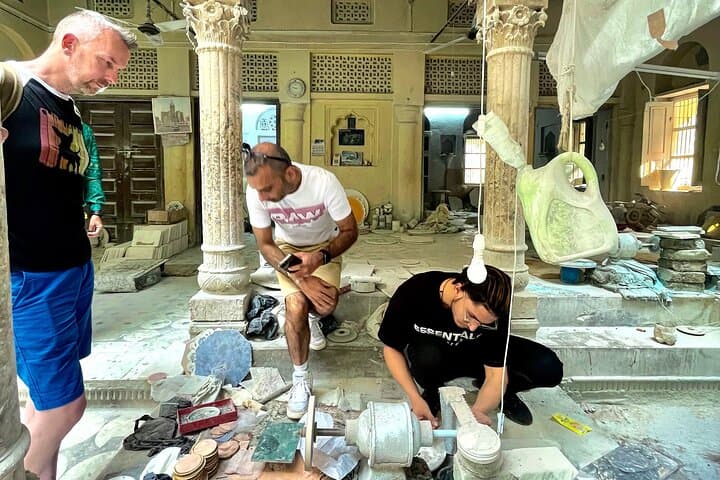
On this two-hour private walk you’ll move through three-generation studios: watch zardozi being stitched, see descendants of Taj artisans in marble inlay shops, and find household carpet looms and fresh-flower garland makers. Guides translate technique into context and advise on fair bargaining—buying here supports livelihoods and keeps craft knowledge in practice.
Practical guidance: wear comfortable closed shoes for uneven alleys, carry small-denomination rupees for direct purchases, and leave large backpacks at your hotel—many workshops are compact. Plan morning or late afternoon to avoid the midday heat and to catch better light for photos. Respect working spaces, ask before photographing, and expect close-up views rather than staged displays—this is craft in action, not a showroom.
easy.
2 hours.
Suitable for most fitness levels; involves standing, short stair steps and walking on narrow lanes.
The tour is approximately two hours and typically begins near the Taj Mahal precinct; your confirmation will specify the exact meeting point.
Yes—this walk is designed for direct purchases; guides can help with fair bargaining and explain the craft’s value.
Children can join, but narrow lanes and steps make strollers impractical—consider a carrier for infants.
Most traditional workshops are in old buildings with steps and narrow doorways and are not wheelchair accessible; check in advance for alternatives.
Agra’s decorative arts flourished under the Mughal court; many inlay and embroidery techniques trace directly to craftspeople who worked on the Taj Mahal.
Buying directly from studios helps sustain traditional skills under pressure from mass-produced souvenirs; visitors should avoid plastic waste and respect workshop materials.
Agra Heritage Walks operates guided outdoor trips and adventures with an emphasis on safety, stewardship, and memorable experiences.


You step off the main road and into a lane where the city’s pulse slows: the air smells of lime and polish, marble dust settles on your shoes, and a chorus of hammers taps out a steady rhythm. The Taj itself watches from a distance, but the real attraction here is smaller—hands shaping ornament, threads catching light, and workshops that have kept techniques alive for generations.
You step off the main road and into a lane where the city’s pulse slows: the air smells of lime and polish, marble dust settles on your shoes, and a chorus of hammers taps out a steady rhythm. The Taj itself watches from a distance, but the real attraction here is smaller—hands shaping ornament, threads catching light, and workshops that have kept techniques alive for generations.
Agra’s crafts grew alongside the Mughal court; pietra dura inlay and zardozi embroidery that helped build the Taj Mahal live on in family workshops whose history stretches back centuries. The lanes follow old trade routes along the Yamuna floodplain, where local marble and imported silks met to meet imperial demand. Cultural cross-pollination shaped carpet patterns, floral garlands and the jewel-like accents sold today.
On this two-hour private walk you’ll move through three-generation studios: watch zardozi being stitched, see descendants of Taj artisans in marble inlay shops, and find household carpet looms and fresh-flower garland makers. Guides translate technique into context and advise on fair bargaining—buying here supports livelihoods and keeps craft knowledge in practice.
Practical guidance: wear comfortable closed shoes for uneven alleys, carry small-denomination rupees for direct purchases, and leave large backpacks at your hotel—many workshops are compact. Plan morning or late afternoon to avoid the midday heat and to catch better light for photos. Respect working spaces, ask before photographing, and expect close-up views rather than staged displays—this is craft in action, not a showroom.