THE ADVENTURE COLLECTIVE® · Independent discovery and booking for outdoor travel

Catch sunrise at the Taj Mahal on a door-to-door day trip from Delhi that continues to Agra Fort and ends in Jaipur by express train. This guided tour combines fast rail travel with focused history and practical logistics for a long, efficient day on the Mughal trail.
Catch sunrise at the Taj Mahal on a door-to-door day trip from Delhi that continues to Agra Fort and ends in Jaipur by express train. This guided tour combines fast rail travel with focused history and practical logistics for a long, efficient day on the Mughal trail.
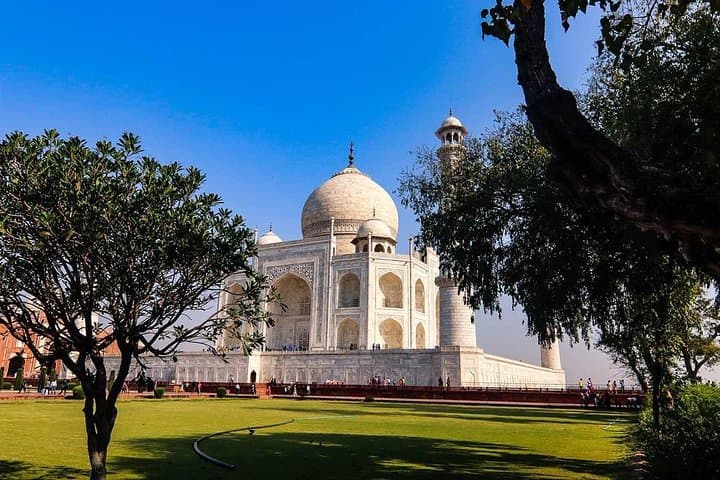
Before dawn the platform hums: fluorescent lights, chai vendors, and the first travelers fastening scarves against the winter chill. A swift AC train carries the group east while the land unfurls—green fields, scattered villages—toward Agra. By sunrise the white marble of the Taj Mahal emerges from mist, its domes catching light like a coin turned toward the sun; the Yamuna flows quietly behind, urging the monument forward.
Verified experiences and guided adventures in the surrounding area.
Operated by Histo Yatra · Agra, Uttar Pradesh
Before dawn the platform hums: fluorescent lights, chai vendors, and the first travelers fastening scarves against the winter chill. A swift AC train carries the group east while the land unfurls—green fields, scattered villages—toward Agra. By sunrise the white marble of the Taj Mahal emerges from mist, its domes catching light like a coin turned toward the sun; the Yamuna flows quietly behind, urging the monument forward.
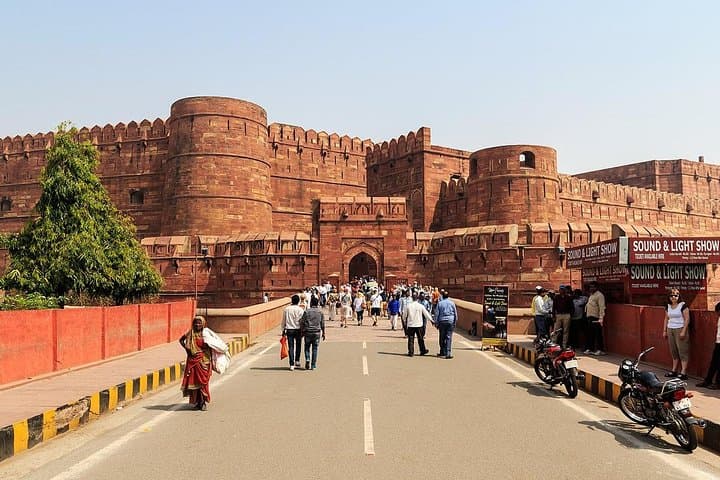
Built by Shah Jahan in the mid-17th century as a mausoleum for Mumtaz Mahal, the Taj sits in a landscape of Mughal forts and gardens. Nearby Agra Fort, raised under Akbar in the 16th century, shows the region’s red-sandstone palette and Indo-Islamic motifs. The marble here comes largely from Makrana; its sheen changes with the angle of light and the city’s air.
Culturally, the day stitches Mughlai cuisine, local bazaars and careful visitor etiquette into a single threaded experience—remove shoes for some interiors and expect security screening at major sites.
Practical guidance is straightforward: this is a long, guided door-to-door day that begins very early and finishes in Jaipur after an afternoon train. Expect 1–2 hours at the Taj, another hour at Agra Fort, a lunch break, and transfers handled by a private AC car and guide. Carry a government ID for train and entrance checks, bring water and sun protection, and plan clothing that’s comfortable and modest. If you choose the tickets-included option, entrance fees are handled; otherwise buy tickets in advance to avoid queues. The rhythm of the day is timed—arrive prepared and the sequence of train, marble, fort and onward drive flows smoothly.
easy.
14 hours.
Suitable for travelers of average fitness; involves moderate walking on uneven surfaces and standing during guided visits.
The itinerary offers a tickets-included option—if selected, Taj and Agra Fort fees are covered; otherwise you’ll need to purchase entrance on arrival or notify the operator in advance.
Typical guided stops last about 60–90 minutes, enough for a guided circuit, photos, and time to absorb the setting before moving on.
Yes—physical demands are low but the day is long with early starts; families and seniors should consider mobility and comfort during transfers and walks.
Yes—the tour provides drop-off to locations in Jaipur as listed, but confirm your preferred endpoint when booking so transfers are coordinated.
The Taj Mahal was completed in 1653 under Shah Jahan as a marble mausoleum; Agra Fort predates it and served as a Mughal stronghold and royal residence from the 16th century.
Air pollution and visitor wear are ongoing concerns; stick to designated paths, avoid touching inlaid marble, and follow local guides’ instructions to reduce impact.
Histo Yatra operates guided outdoor trips and adventures with an emphasis on safety, stewardship, and memorable experiences.
Before dawn the platform hums: fluorescent lights, chai vendors, and the first travelers fastening scarves against the winter chill. A swift AC train carries the group east while the land unfurls—green fields, scattered villages—toward Agra. By sunrise the white marble of the Taj Mahal emerges from mist, its domes catching light like a coin turned toward the sun; the Yamuna flows quietly behind, urging the monument forward.
Before dawn the platform hums: fluorescent lights, chai vendors, and the first travelers fastening scarves against the winter chill. A swift AC train carries the group east while the land unfurls—green fields, scattered villages—toward Agra. By sunrise the white marble of the Taj Mahal emerges from mist, its domes catching light like a coin turned toward the sun; the Yamuna flows quietly behind, urging the monument forward.
Built by Shah Jahan in the mid-17th century as a mausoleum for Mumtaz Mahal, the Taj sits in a landscape of Mughal forts and gardens. Nearby Agra Fort, raised under Akbar in the 16th century, shows the region’s red-sandstone palette and Indo-Islamic motifs. The marble here comes largely from Makrana; its sheen changes with the angle of light and the city’s air.
Culturally, the day stitches Mughlai cuisine, local bazaars and careful visitor etiquette into a single threaded experience—remove shoes for some interiors and expect security screening at major sites.
Practical guidance is straightforward: this is a long, guided door-to-door day that begins very early and finishes in Jaipur after an afternoon train. Expect 1–2 hours at the Taj, another hour at Agra Fort, a lunch break, and transfers handled by a private AC car and guide. Carry a government ID for train and entrance checks, bring water and sun protection, and plan clothing that’s comfortable and modest. If you choose the tickets-included option, entrance fees are handled; otherwise buy tickets in advance to avoid queues. The rhythm of the day is timed—arrive prepared and the sequence of train, marble, fort and onward drive flows smoothly.