THE ADVENTURE COLLECTIVE® · Independent discovery and booking for outdoor travel

A one-day express from Delhi to Agra that packages the Taj Mahal and Agra Fort with train travel, monument fees, and a guided itinerary. Ideal for travelers who want efficient access to UNESCO sites with minimal planning.
A one-day express from Delhi to Agra that packages the Taj Mahal and Agra Fort with train travel, monument fees, and a guided itinerary. Ideal for travelers who want efficient access to UNESCO sites with minimal planning.
You step off the superfast express into Agra's warm air and the Yamuna seems to dare you forward—white marble waiting across a narrow sweep of river and gardens. The first glimpse of the Taj Mahal, framed by a red sandstone gate, pulls every sense taut: the marble reads like liquid light and the call to prayer threads through the morning.
Verified experiences and guided adventures in the surrounding area.
Operated by Exotik Reisen · Agra, Uttar Pradesh
You step off the superfast express into Agra's warm air and the Yamuna seems to dare you forward—white marble waiting across a narrow sweep of river and gardens. The first glimpse of the Taj Mahal, framed by a red sandstone gate, pulls every sense taut: the marble reads like liquid light and the call to prayer threads through the morning.
Built by Emperor Shah Jahan in the 17th century as a mausoleum for Mumtaz Mahal, the Taj sits on floodplain alluvium that keeps the surrounding gardens unusually flat and open. Nearby Agra Fort, a compact citadel of carved halls and ribbed domes, tells the political story—Mughal power centered here until the capital moved to Delhi. Both sites offer clear windows into Mughal architecture: marble inlay, pietra dura, and precise axial gardens.
Expect a paced, itinerary-driven day: early train from Delhi, guided visits with monument fees and return train included, and an optional hotel buffet lunch. Practicalities matter—Taj Mahal is closed Fridays for congregational prayer, security checks are strict, and light shifts the marble’s color through the day. Bring a plan for timing: sunrise gives softer light and fewer crowds; late afternoon highlights warm stone at Agra Fort.
Tips for the trip: carry water, wear sun protection and modest clothing for mosque areas, use comfortable shoes for uneven flagstones, and stow valuables before security. The tour compresses history and landscape into a high-yield day—arrive prepared, and the monuments will repay you with clarity and scale.
easy.
12 hours.
Suitable for most fitness levels; requires the ability to walk on uneven paved and stone surfaces for several hours.
The itinerary runs about 12 hours total, including train travel to and from Delhi and guided time at the monuments.
Yes—this package lists admission fees and return express train tickets as included in the price.
Breakfast on the train and an optional buffet lunch at a 5‑star hotel are included per the itinerary.
The Taj Mahal is closed on Fridays for congregational prayers; plan your trip on another day to visit the mausoleum interior.
The Taj Mahal (completed in 1653) was commissioned by Shah Jahan as a mausoleum for Mumtaz Mahal; Agra Fort was the Mughal administrative center until the capital moved to Delhi in 1638.
Foot traffic and air pollution are ongoing concerns; authorities limit numbers and enforce rules to protect the marble surface and surrounding gardens.
Exotik Reisen operates guided outdoor trips and adventures with an emphasis on safety, stewardship, and memorable experiences.

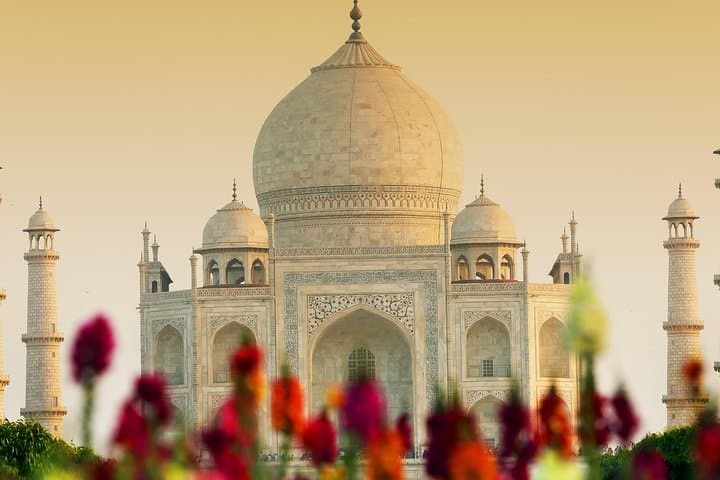
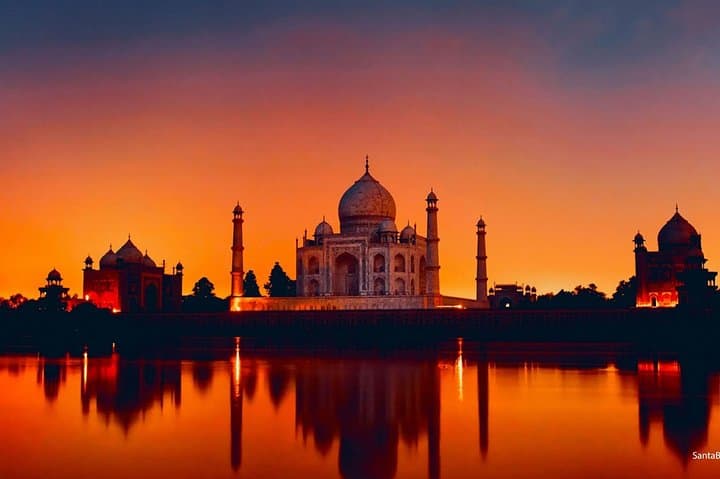

You step off the superfast express into Agra's warm air and the Yamuna seems to dare you forward—white marble waiting across a narrow sweep of river and gardens. The first glimpse of the Taj Mahal, framed by a red sandstone gate, pulls every sense taut: the marble reads like liquid light and the call to prayer threads through the morning.
You step off the superfast express into Agra's warm air and the Yamuna seems to dare you forward—white marble waiting across a narrow sweep of river and gardens. The first glimpse of the Taj Mahal, framed by a red sandstone gate, pulls every sense taut: the marble reads like liquid light and the call to prayer threads through the morning.
Built by Emperor Shah Jahan in the 17th century as a mausoleum for Mumtaz Mahal, the Taj sits on floodplain alluvium that keeps the surrounding gardens unusually flat and open. Nearby Agra Fort, a compact citadel of carved halls and ribbed domes, tells the political story—Mughal power centered here until the capital moved to Delhi. Both sites offer clear windows into Mughal architecture: marble inlay, pietra dura, and precise axial gardens.
Expect a paced, itinerary-driven day: early train from Delhi, guided visits with monument fees and return train included, and an optional hotel buffet lunch. Practicalities matter—Taj Mahal is closed Fridays for congregational prayer, security checks are strict, and light shifts the marble’s color through the day. Bring a plan for timing: sunrise gives softer light and fewer crowds; late afternoon highlights warm stone at Agra Fort.
Tips for the trip: carry water, wear sun protection and modest clothing for mosque areas, use comfortable shoes for uneven flagstones, and stow valuables before security. The tour compresses history and landscape into a high-yield day—arrive prepared, and the monuments will repay you with clarity and scale.