THE ADVENTURE COLLECTIVE® · Independent discovery and booking for outdoor travel

A full-day private drive from Delhi to Agra that puts the Taj Mahal and Agra Fort within reach in one long, richly detailed day. Expect early starts, a multi-hour drive, and expert guiding through two of India’s premier UNESCO sites.
A full-day private drive from Delhi to Agra that puts the Taj Mahal and Agra Fort within reach in one long, richly detailed day. Expect early starts, a multi-hour drive, and expert guiding through two of India’s premier UNESCO sites.
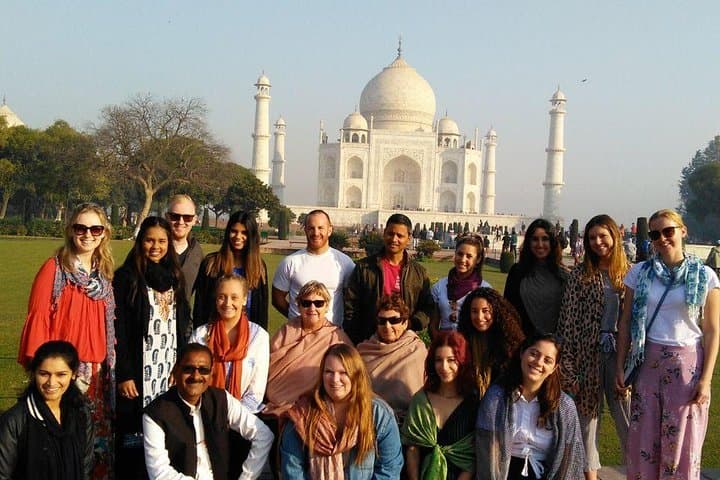
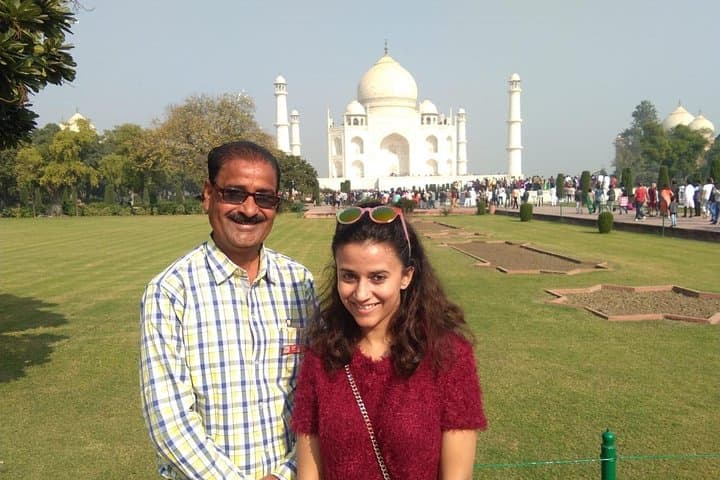
Dawn on the Yamuna Expressway is a long ribbon of asphalt cutting through mustard fields and scrub; your private car hums east and the pale silhouette of the Taj appears on the horizon like a promise. By mid-morning the marble begins to change with the light — warm cream, then clean white — and the sound of the city gives way to the measured hush inside the garden complex.
Verified experiences and guided adventures in the surrounding area.
Operated by INDIA TRIP DESIGNER India · Agra, Uttar Pradesh
Dawn on the Yamuna Expressway is a long ribbon of asphalt cutting through mustard fields and scrub; your private car hums east and the pale silhouette of the Taj appears on the horizon like a promise. By mid-morning the marble begins to change with the light — warm cream, then clean white — and the sound of the city gives way to the measured hush inside the garden complex.
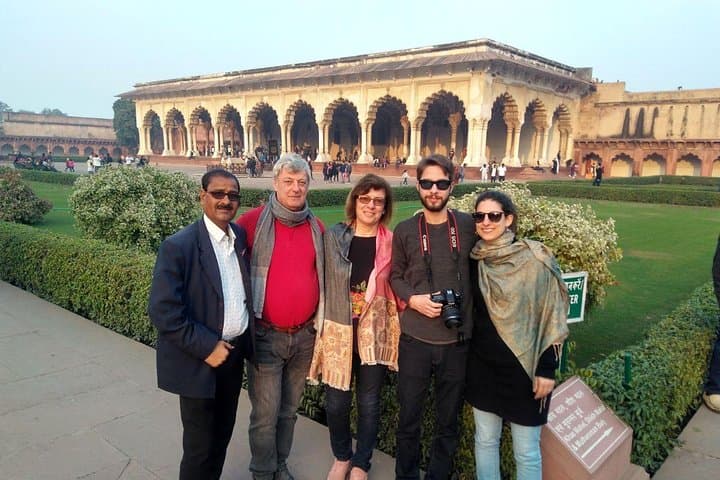
The Taj Mahal (completed 1653 by Shah Jahan) and nearby Agra Fort (a 16th–17th century red‑sandstone citadel begun by Akbar) sit on the flat Gangetic plains, where low elevation and open skies make visibility excellent but summer heat intense. Agra’s craft culture still revolves around pietra dura, marble carving and inlay work; you’ll pass roadside workshops and marble sellers on the drive in.
Practicalities: expect roughly 3.5–4 hours each way from central Delhi via the Yamuna Expressway (about 230 km one way), and plan for a 10–14 hour day depending on traffic and time spent at monuments. Terrain is almost entirely paved paths, marble platforms and steps inside the fort; total walking is moderate with minimal elevation gain. Security checks at the Taj and Fort are strict — large bags, tripods and drones are restricted and shoe covers are often required inside the mausoleum.
Best times are sunrise or late afternoon for softer light and smaller crowds; Fridays the Taj is closed for general visitors. Bring water, sun protection, ID for tickets, and a plan for restroom stops: facilities are available but can be busy. A private guided tour is valuable here — it will save time in lines, explain the complex iconography and point out local artisans and quieter viewpoints along the Yamuna.
easy.
12–14 hours.
Suitable for most fitness levels; requires moderate walking and standing for several hours.
Expect about 3.5–4 hours each way via the Yamuna Expressway; traffic can add time during peak hours.
This private tour typically includes monument fees; confirm at booking and carry ID used for the ticket purchase.
The Taj is closed to the general public on Fridays for congregational prayers; plan accordingly.
Tripods and drones are generally restricted at the Taj and Agra Fort; handheld cameras and phones are allowed following security checks.
Agra served as a Mughal capital for centuries; the Taj was commissioned by Shah Jahan in memory of Mumtaz Mahal and completed in the mid‑17th century.
Visitor volume and pollution have prompted protective measures including restricted zones, shoe covers, and controlled ticketing to limit wear on marble and grounds.
INDIA TRIP DESIGNER India operates guided outdoor trips and adventures with an emphasis on safety, stewardship, and memorable experiences.

Dawn on the Yamuna Expressway is a long ribbon of asphalt cutting through mustard fields and scrub; your private car hums east and the pale silhouette of the Taj appears on the horizon like a promise. By mid-morning the marble begins to change with the light — warm cream, then clean white — and the sound of the city gives way to the measured hush inside the garden complex.
Dawn on the Yamuna Expressway is a long ribbon of asphalt cutting through mustard fields and scrub; your private car hums east and the pale silhouette of the Taj appears on the horizon like a promise. By mid-morning the marble begins to change with the light — warm cream, then clean white — and the sound of the city gives way to the measured hush inside the garden complex.
The Taj Mahal (completed 1653 by Shah Jahan) and nearby Agra Fort (a 16th–17th century red‑sandstone citadel begun by Akbar) sit on the flat Gangetic plains, where low elevation and open skies make visibility excellent but summer heat intense. Agra’s craft culture still revolves around pietra dura, marble carving and inlay work; you’ll pass roadside workshops and marble sellers on the drive in.
Practicalities: expect roughly 3.5–4 hours each way from central Delhi via the Yamuna Expressway (about 230 km one way), and plan for a 10–14 hour day depending on traffic and time spent at monuments. Terrain is almost entirely paved paths, marble platforms and steps inside the fort; total walking is moderate with minimal elevation gain. Security checks at the Taj and Fort are strict — large bags, tripods and drones are restricted and shoe covers are often required inside the mausoleum.
Best times are sunrise or late afternoon for softer light and smaller crowds; Fridays the Taj is closed for general visitors. Bring water, sun protection, ID for tickets, and a plan for restroom stops: facilities are available but can be busy. A private guided tour is valuable here — it will save time in lines, explain the complex iconography and point out local artisans and quieter viewpoints along the Yamuna.