THE ADVENTURE COLLECTIVE® · Independent discovery and booking for outdoor travel

Take a private, air‑conditioned day trip from Delhi to the Taj Mahal and Agra Fort. This guided visit combines architecture, Mughal history, and practical tips for timing, dress, and what to expect at the site.
Take a private, air‑conditioned day trip from Delhi to the Taj Mahal and Agra Fort. This guided visit combines architecture, Mughal history, and practical tips for timing, dress, and what to expect at the site.
Before the crowds swell and the marble cools in shadow, the road from Delhi eases travelers across the Yamuna Motorway toward Agra, a three‑hour ribbon of highway that announces the day's purpose.
Verified experiences and guided adventures in the surrounding area.
Operated by Taj Voyages Tour · Agra, Uttar Pradesh
Before the crowds swell and the marble cools in shadow, the road from Delhi eases travelers across the Yamuna Motorway toward Agra, a three‑hour ribbon of highway that announces the day's purpose.
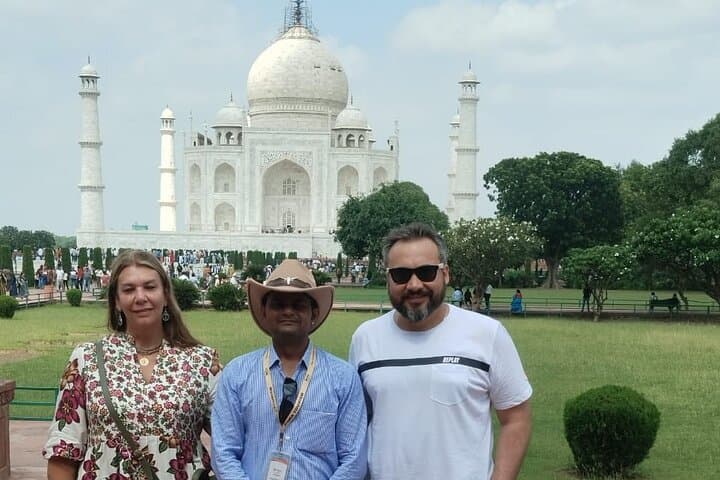
At the gateway, the Taj Mahal rises as white marble against an open sky; your private guide frames the architecture, the funerary gardens, and the stories that animate them. Built in the 17th century by Mughal emperor Shah Jahan for Mumtaz Mahal, the monument sits on a raised plinth with symmetrical gardens and reflecting pools that pull the eye toward the central dome.
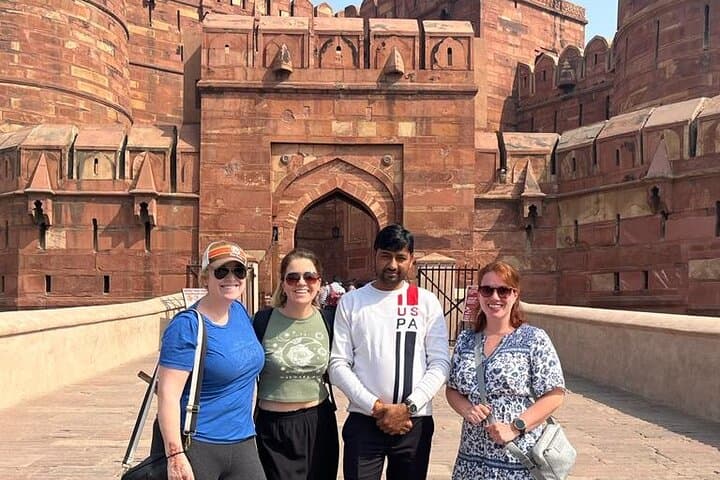
Geology and craft meet history here: Makrana marble laid over a sandstone core, inlaid with jasper, lapis and semi‑precious stones, speaks to trade routes and artisan workshops that supplied the Mughal court. Nearby Agra Fort—red sandstone ramparts—offers a complementary perspective on imperial power and urban life under the Mughals.
Practicalities are straightforward on this private day trip from New Delhi: plan for a 10–12 hour day with most time spent close to the monument, dress conservatively for access to sensitive areas, and expect security checks and shoe covers for gallery access. Water and shade are limited on the platform; sun protection and a light scarf are useful. Peak light for photography is early morning or late afternoon, and Fridays the main mausoleum is closed for prayer.
A private guide transforms lines into context, turning architectural detail into narrative and helping visitors navigate tickets, timings, and the small rituals that make a visit to the Taj both manageable and memorable.
easy.
10–12 hours.
Minimal fitness required—mostly walking on level surfaces and steps; be prepared for standing and short climbs.
This operator notes admission as not applicable in the itinerary—confirm ticket inclusion at booking; many private tours require you to purchase entrance tickets separately or the guide can arrange them for an additional fee.
Early morning or late afternoon offers the best light and cooler temperatures; note that the main mausoleum is closed for prayer on Fridays.
Expect roughly 3 to 3.5 hours each way on the Yamuna Motorway depending on traffic; the full trip is typically a 10–12 hour day including sightseeing.
Yes—shoe covers are often required for certain interior areas; many tours provide covers or ask visitors to remove shoes at specific spots.
The Taj Mahal was completed in the mid‑17th century under Shah Jahan and reflects Mughal funerary architecture combining Persian, Turkic and Indian elements.
Visitor numbers and pollution are managed through timed entry and restricted vehicle zones; choose reusable water and follow local guidance to reduce wear on grounds.
Taj Voyages Tour operates guided outdoor trips and adventures with an emphasis on safety, stewardship, and memorable experiences.
Before the crowds swell and the marble cools in shadow, the road from Delhi eases travelers across the Yamuna Motorway toward Agra, a three‑hour ribbon of highway that announces the day's purpose.
Before the crowds swell and the marble cools in shadow, the road from Delhi eases travelers across the Yamuna Motorway toward Agra, a three‑hour ribbon of highway that announces the day's purpose.
At the gateway, the Taj Mahal rises as white marble against an open sky; your private guide frames the architecture, the funerary gardens, and the stories that animate them. Built in the 17th century by Mughal emperor Shah Jahan for Mumtaz Mahal, the monument sits on a raised plinth with symmetrical gardens and reflecting pools that pull the eye toward the central dome.
Geology and craft meet history here: Makrana marble laid over a sandstone core, inlaid with jasper, lapis and semi‑precious stones, speaks to trade routes and artisan workshops that supplied the Mughal court. Nearby Agra Fort—red sandstone ramparts—offers a complementary perspective on imperial power and urban life under the Mughals.
Practicalities are straightforward on this private day trip from New Delhi: plan for a 10–12 hour day with most time spent close to the monument, dress conservatively for access to sensitive areas, and expect security checks and shoe covers for gallery access. Water and shade are limited on the platform; sun protection and a light scarf are useful. Peak light for photography is early morning or late afternoon, and Fridays the main mausoleum is closed for prayer.
A private guide transforms lines into context, turning architectural detail into narrative and helping visitors navigate tickets, timings, and the small rituals that make a visit to the Taj both manageable and memorable.