THE ADVENTURE COLLECTIVE® · Independent discovery and booking for outdoor travel

Spend a full day traveling by private vehicle from Delhi to Agra to visit the Taj Mahal with a professional guide. This private tour covers transport, entrance fees and optional lunch, offering early-morning light and practical tips for a smooth visit.
Spend a full day traveling by private vehicle from Delhi to Agra to visit the Taj Mahal with a professional guide. This private tour covers transport, entrance fees and optional lunch, offering early-morning light and practical tips for a smooth visit.
You arrive before sunrise at a wide plaza where the marble of the Taj Mahal begins to change from cool gray to warm cream. Low light throws the mosque’s minarets into crisp relief and the Yamuna river, running quietly behind the complex, seems to hold its breath.
Verified experiences and guided adventures in the surrounding area.
Operated by Trek India Tours · Agra, Uttar Pradesh
You arrive before sunrise at a wide plaza where the marble of the Taj Mahal begins to change from cool gray to warm cream. Low light throws the mosque’s minarets into crisp relief and the Yamuna river, running quietly behind the complex, seems to hold its breath.
The Taj Mahal was commissioned in 1632 by Mughal emperor Shah Jahan as a mausoleum for Mumtaz Mahal; its white Makrana marble, pietra dura inlays and symmetrical gardens reflect Mughal ideas of paradise on earth. The surrounding plain is alluvial Ganges basin—flat, agriculturally rich land crossed by the Yamuna—so viewpoints emphasize geometry and light rather than altitude.
Agra’s culture blends Mughal monuments with bustling bazaars where marble craftsmen, petha sweet sellers and handicraft traders work in the shadow of the fort. Nearby Mehtab Bagh offers a quieter river-facing view, and the smaller Itmad-ud-Daulah (the “Baby Taj”) shows delicate inlay work without the crowds.
Practical guide: expect a 10-hour day with roughly three hours each way by private vehicle from Delhi; the tour includes entry fees and an English-speaking guide. Wear comfortable shoes for walking on paved paths, carry water and sun protection, and bring ID for ticket checks. Mornings are best for softer light and cooler temperatures; afternoons are hotter and busier. Allow extra time for security lines and photography. If you plan to add Agra Fort, factor that into your schedule—otherwise you’ll return to Delhi in the evening.
easy.
10 hours.
Suitable for most travelers; requires a full day of travel and short periods of walking on paved surfaces.
The private vehicle takes about 3 hours each way depending on traffic; expect a total round-trip driving time of roughly 6 hours.
Yes—the tour price includes Taj Mahal entrance fees as listed in the itinerary.
The tour lists wheelchair and stroller accessibility and allows infants to ride on laps; confirm specific needs at booking so the operator can accommodate.
Agra Fort is optional—adding it requires extra time and may reduce time at the Taj; discuss your preference with the guide during booking.
Built in the 17th century by Shah Jahan, the Taj Mahal functions as both mausoleum and a physical expression of Mughal court aesthetics and funerary architecture.
Conservation efforts focus on air-quality controls, restricted vehicle access near the monument and limiting visitor impact; avoid littering and support local conservation initiatives.
Trek India Tours operates guided outdoor trips and adventures with an emphasis on safety, stewardship, and memorable experiences.
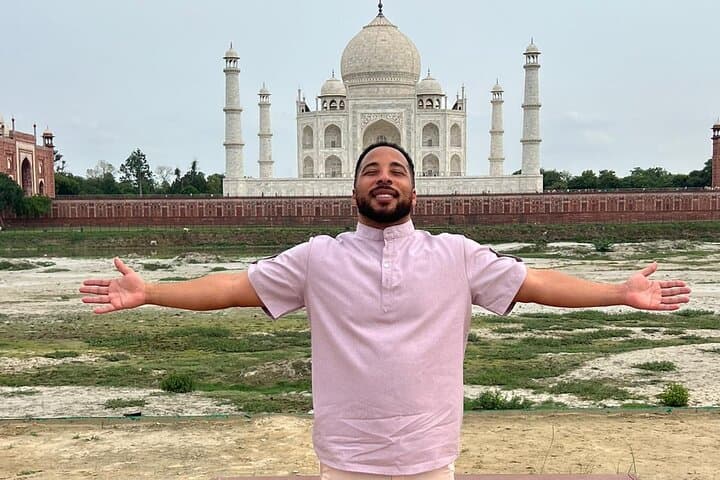
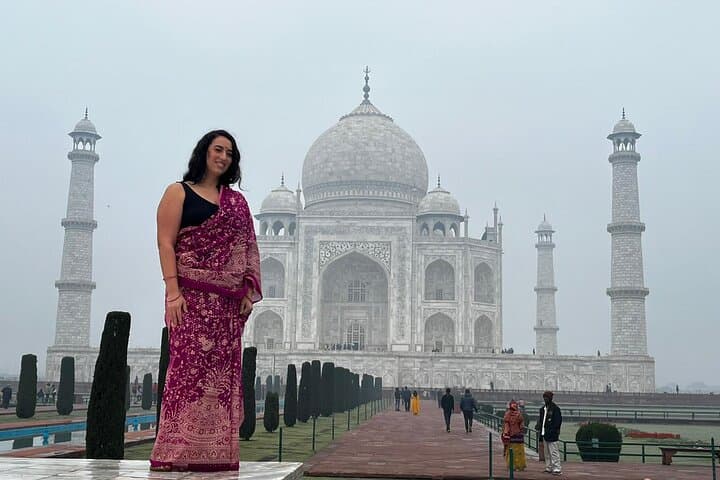
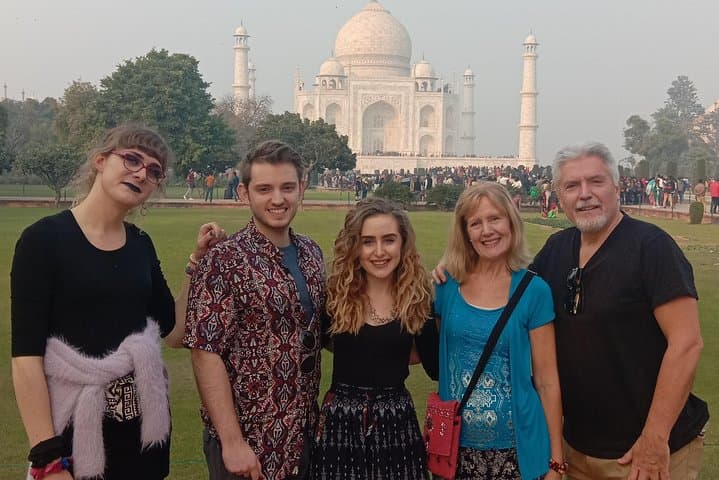
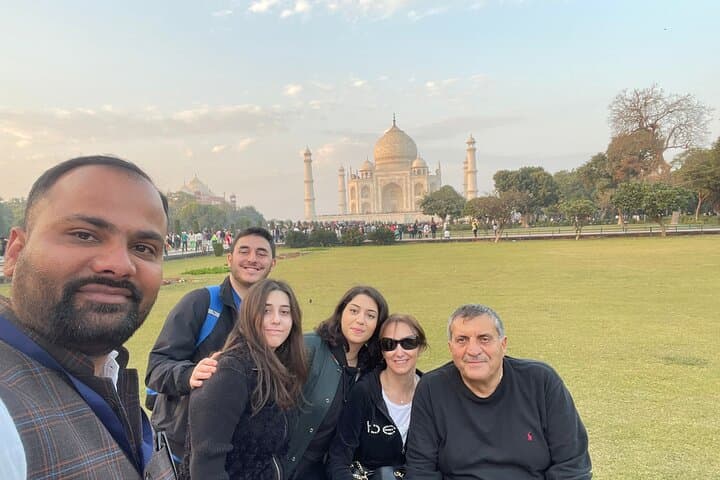
You arrive before sunrise at a wide plaza where the marble of the Taj Mahal begins to change from cool gray to warm cream. Low light throws the mosque’s minarets into crisp relief and the Yamuna river, running quietly behind the complex, seems to hold its breath.
You arrive before sunrise at a wide plaza where the marble of the Taj Mahal begins to change from cool gray to warm cream. Low light throws the mosque’s minarets into crisp relief and the Yamuna river, running quietly behind the complex, seems to hold its breath.
The Taj Mahal was commissioned in 1632 by Mughal emperor Shah Jahan as a mausoleum for Mumtaz Mahal; its white Makrana marble, pietra dura inlays and symmetrical gardens reflect Mughal ideas of paradise on earth. The surrounding plain is alluvial Ganges basin—flat, agriculturally rich land crossed by the Yamuna—so viewpoints emphasize geometry and light rather than altitude.
Agra’s culture blends Mughal monuments with bustling bazaars where marble craftsmen, petha sweet sellers and handicraft traders work in the shadow of the fort. Nearby Mehtab Bagh offers a quieter river-facing view, and the smaller Itmad-ud-Daulah (the “Baby Taj”) shows delicate inlay work without the crowds.
Practical guide: expect a 10-hour day with roughly three hours each way by private vehicle from Delhi; the tour includes entry fees and an English-speaking guide. Wear comfortable shoes for walking on paved paths, carry water and sun protection, and bring ID for ticket checks. Mornings are best for softer light and cooler temperatures; afternoons are hotter and busier. Allow extra time for security lines and photography. If you plan to add Agra Fort, factor that into your schedule—otherwise you’ll return to Delhi in the evening.