THE ADVENTURE COLLECTIVE® · Independent discovery and booking for outdoor travel

Board India’s fastest train for a one-day cultural sprint from Delhi to Agra: sunrise at the Taj Mahal, a guided tour of Agra Fort, and a relaxed lunch before the return Gatimaan service. Efficient, immersive, and ideal for travelers short on time.
Board India’s fastest train for a one-day cultural sprint from Delhi to Agra: sunrise at the Taj Mahal, a guided tour of Agra Fort, and a relaxed lunch before the return Gatimaan service. Efficient, immersive, and ideal for travelers short on time.
The day opens before dawn on a platform in New Delhi, the Gatimaan Express humming beneath fluorescent lights as steam of chai and soft conversation rises. Ninety minutes later the flat plains give way to the ochre city of Agra; the Yamuna keeps moving alongside like a quiet witness, and the Taj Mahal first appears as a pale silhouette that brightens with the sun.
Verified experiences and guided adventures in the surrounding area.
Operated by Holiday Journey India · Agra, Uttar Pradesh
The day opens before dawn on a platform in New Delhi, the Gatimaan Express humming beneath fluorescent lights as steam of chai and soft conversation rises. Ninety minutes later the flat plains give way to the ochre city of Agra; the Yamuna keeps moving alongside like a quiet witness, and the Taj Mahal first appears as a pale silhouette that brightens with the sun.
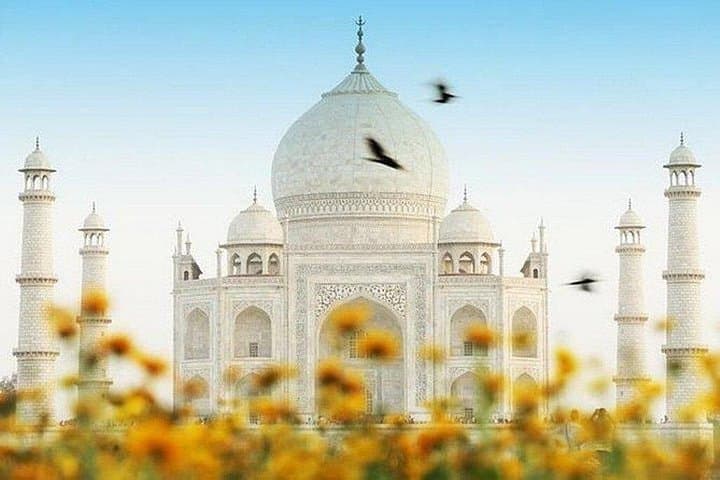
Built by Shah Jahan in the 17th century, the Taj Mahal is a mausoleum of white marble whose inlay work and symmetry reflect Mughal craftsmanship and imperial history. Nearby, Agra Fort — a compact citadel of red sandstone — maps the evolving tastes and politics of successive emperors. The geology here is riverine alluvium: the soft plains of the Yamuna allowed the city to expand, but also demand ongoing conservation of marble and foundations.
Culturally, the tour threads through markets, Mughal stories, and the region’s cuisine; a multi-course lunch at a five-star hotel offers a contrast to street-side flavors. Guides translate the architecture into clear stories — not just dates but the human choices behind them.
Practical notes: the itinerary is a full 12-hour day, with hotel pickup in Delhi, round-trip Gatimaan Express tickets, and an air-conditioned vehicle. Expect walking on marble and stone steps; carry water, sun protection, and modest clothing for mosque areas. Plan to arrive early at the mausoleum for softer light and fewer crowds, and leave time for passport and bag checks. The route suits travelers seeking a focused cultural daytrip with high comfort and efficient logistics.
easy.
12 hours.
Minimal fitness required—comfortable walking, standing for tours, and climbing short steps.
The Gatimaan Express takes about 90 minutes each way between Hazrat Nizamuddin (Delhi) and Agra Cantonment.
This tour typically includes guide services and train fare; confirm whether entrance tickets are provided or bought on-site—policies vary by operator.
Photography is allowed in most outdoor areas but restricted in some interior sections and for tripods; follow signage and guard instructions.
Light carry-on is recommended; larger luggage is usually checked with rail staff or left at your hotel during the day—confirm with the operator ahead of travel.
The Taj Mahal was completed in the mid-1600s under Shah Jahan as a mausoleum for Mumtaz Mahal; Agra Fort served as a Mughal administrative and military center with later architectural additions.
Marble conservation and managing visitor impact are ongoing—avoid touching inlay work, use marked paths, and follow guide directions to reduce wear.
Holiday Journey India operates guided outdoor trips and adventures with an emphasis on safety, stewardship, and memorable experiences.
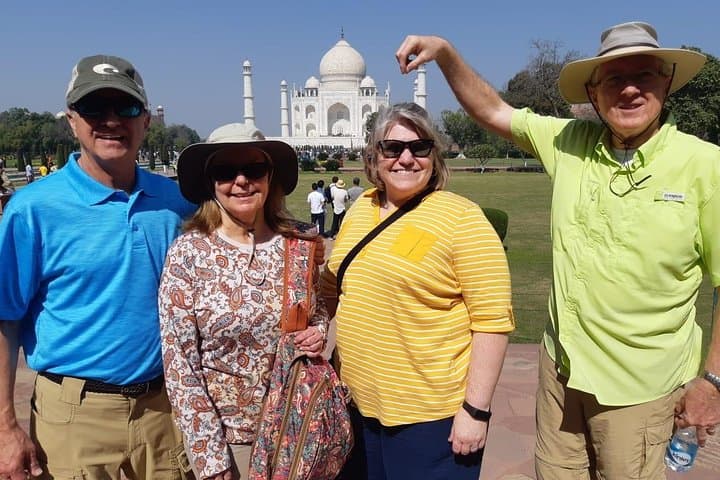


The day opens before dawn on a platform in New Delhi, the Gatimaan Express humming beneath fluorescent lights as steam of chai and soft conversation rises. Ninety minutes later the flat plains give way to the ochre city of Agra; the Yamuna keeps moving alongside like a quiet witness, and the Taj Mahal first appears as a pale silhouette that brightens with the sun.
The day opens before dawn on a platform in New Delhi, the Gatimaan Express humming beneath fluorescent lights as steam of chai and soft conversation rises. Ninety minutes later the flat plains give way to the ochre city of Agra; the Yamuna keeps moving alongside like a quiet witness, and the Taj Mahal first appears as a pale silhouette that brightens with the sun.
Built by Shah Jahan in the 17th century, the Taj Mahal is a mausoleum of white marble whose inlay work and symmetry reflect Mughal craftsmanship and imperial history. Nearby, Agra Fort — a compact citadel of red sandstone — maps the evolving tastes and politics of successive emperors. The geology here is riverine alluvium: the soft plains of the Yamuna allowed the city to expand, but also demand ongoing conservation of marble and foundations.
Culturally, the tour threads through markets, Mughal stories, and the region’s cuisine; a multi-course lunch at a five-star hotel offers a contrast to street-side flavors. Guides translate the architecture into clear stories — not just dates but the human choices behind them.
Practical notes: the itinerary is a full 12-hour day, with hotel pickup in Delhi, round-trip Gatimaan Express tickets, and an air-conditioned vehicle. Expect walking on marble and stone steps; carry water, sun protection, and modest clothing for mosque areas. Plan to arrive early at the mausoleum for softer light and fewer crowds, and leave time for passport and bag checks. The route suits travelers seeking a focused cultural daytrip with high comfort and efficient logistics.