THE ADVENTURE COLLECTIVE® · Independent discovery and booking for outdoor travel

Ride the Gatimaan Express at dawn, walk the Taj’s gardens in soft light, and visit Agra Fort and the Baby Taj—then return to Delhi the same evening. This full-day itinerary is built for efficiency: timed trains, a private guide, and a hotel lunch option streamline a packed cultural day.
Ride the Gatimaan Express at dawn, walk the Taj’s gardens in soft light, and visit Agra Fort and the Baby Taj—then return to Delhi the same evening. This full-day itinerary is built for efficiency: timed trains, a private guide, and a hotel lunch option streamline a packed cultural day.
A clean, fast train pushes out of Nizamuddin before dawn and the city blurs into field and river as the Gatimaan Express races toward Agra. By the time the platform appears you’ve shed Delhi’s noise—steam of chai vendors replaced by the steady hum of the coach—and within an hour you’re standing beneath the soft morning light that makes the Taj’s white marble read like a quiet, living thing.
Verified experiences and guided adventures in the surrounding area.
Operated by TAJ TRIP INDIA · Agra, Uttar Pradesh
A clean, fast train pushes out of Nizamuddin before dawn and the city blurs into field and river as the Gatimaan Express races toward Agra. By the time the platform appears you’ve shed Delhi’s noise—steam of chai vendors replaced by the steady hum of the coach—and within an hour you’re standing beneath the soft morning light that makes the Taj’s white marble read like a quiet, living thing.
The Taj Mahal is a Mughal-era mausoleum commissioned by Shah Jahan in the 17th century; nearby Agra Fort, begun under Akbar, is a fortress-palace of red sandstone with layered courtyards and imperial chambers. Itimad-ud-Daulah, the “Baby Taj,” shows the pietra dura inlay that precedes the Taj’s more famous surfaces. The Yamuna skirts these sites, keeping a slow, indifferent rhythm as tourists thread the gardens.
This day tour runs 8–12 hours: early pickup in Delhi (5–7 AM), round-trip Gatimaan seat, guided visits to the Taj (about 2–3 hours), Agra Fort (≈1 hour), Itimad-ud-Daulah, and a 5-star hotel buffet lunch if selected. Expect security checks, shoe covers for certain areas, and stretches of cobbled or paved ground. Wear comfortable shoes, bring sun protection and a refillable bottle, and plan for fixed train timetables—missed trains mean missed return connections.
Practical timing, a licensed local guide, and a private AC car between sites keep the day efficient. For photographers, early morning or late afternoon light softens the marble; for planners, check ticket inclusions and arrive with ID. The tour balances high-density heritage viewing with logistical reliability—an accessible, tightly scheduled way to see Agra and return to Delhi the same day.
easy.
8–12 hours.
Suitable for most fitness levels; requires walking on paved and uneven surfaces and standing through security checks.
Some booking options include entrance tickets; confirm your specific option—if not included, the guide can advise where to purchase on arrival.
The Gatimaan is a scheduled service with reserved seats; train time is fixed—arrive at the station with ID and your e-ticket as listed in your booking.
Most itineraries allow roughly 2–3 hours at the Taj, enough to cover the main mausoleum, mosque, and garden viewpoints at a measured pace.
Yes—this is a low-strain day with vehicle transfers and minimal walking distances; wheelchair access is available for portions though some historic areas have steps.
Agra rose to imperial prominence under the Mughals; Shah Jahan’s Taj (mid-17th century) and Akbar’s red-sandstone Agra Fort reflect successive Mughal architectural ambitions.
The Archaeological Survey of India restricts access and enforces conservation practices—avoid touching marble, use designated paths, and minimize single-use plastics to reduce visitor impact.
TAJ TRIP INDIA operates guided outdoor trips and adventures with an emphasis on safety, stewardship, and memorable experiences.



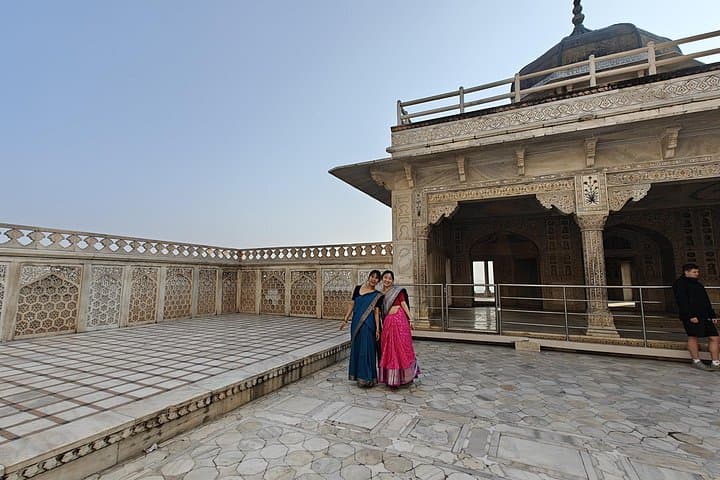
A clean, fast train pushes out of Nizamuddin before dawn and the city blurs into field and river as the Gatimaan Express races toward Agra. By the time the platform appears you’ve shed Delhi’s noise—steam of chai vendors replaced by the steady hum of the coach—and within an hour you’re standing beneath the soft morning light that makes the Taj’s white marble read like a quiet, living thing.
A clean, fast train pushes out of Nizamuddin before dawn and the city blurs into field and river as the Gatimaan Express races toward Agra. By the time the platform appears you’ve shed Delhi’s noise—steam of chai vendors replaced by the steady hum of the coach—and within an hour you’re standing beneath the soft morning light that makes the Taj’s white marble read like a quiet, living thing.
The Taj Mahal is a Mughal-era mausoleum commissioned by Shah Jahan in the 17th century; nearby Agra Fort, begun under Akbar, is a fortress-palace of red sandstone with layered courtyards and imperial chambers. Itimad-ud-Daulah, the “Baby Taj,” shows the pietra dura inlay that precedes the Taj’s more famous surfaces. The Yamuna skirts these sites, keeping a slow, indifferent rhythm as tourists thread the gardens.
This day tour runs 8–12 hours: early pickup in Delhi (5–7 AM), round-trip Gatimaan seat, guided visits to the Taj (about 2–3 hours), Agra Fort (≈1 hour), Itimad-ud-Daulah, and a 5-star hotel buffet lunch if selected. Expect security checks, shoe covers for certain areas, and stretches of cobbled or paved ground. Wear comfortable shoes, bring sun protection and a refillable bottle, and plan for fixed train timetables—missed trains mean missed return connections.
Practical timing, a licensed local guide, and a private AC car between sites keep the day efficient. For photographers, early morning or late afternoon light softens the marble; for planners, check ticket inclusions and arrive with ID. The tour balances high-density heritage viewing with logistical reliability—an accessible, tightly scheduled way to see Agra and return to Delhi the same day.