THE ADVENTURE COLLECTIVE® · Independent discovery and booking for outdoor travel

Ascend Tram Face on a guided Via Ferrata at Palisades Tahoe — an assisted climbing route that straps you to an 800‑foot granite wall with ladders, bridges and continuous safety lines. Perfect for adventurous visitors comfortable with exposure and looking for a memorable alpine perspective of Lake Tahoe.
Ascend Tram Face on a guided Via Ferrata at Palisades Tahoe — an assisted climbing route that straps you to an 800‑foot granite wall with ladders, bridges and continuous safety lines. Perfect for adventurous visitors comfortable with exposure and looking for a memorable alpine perspective of Lake Tahoe.
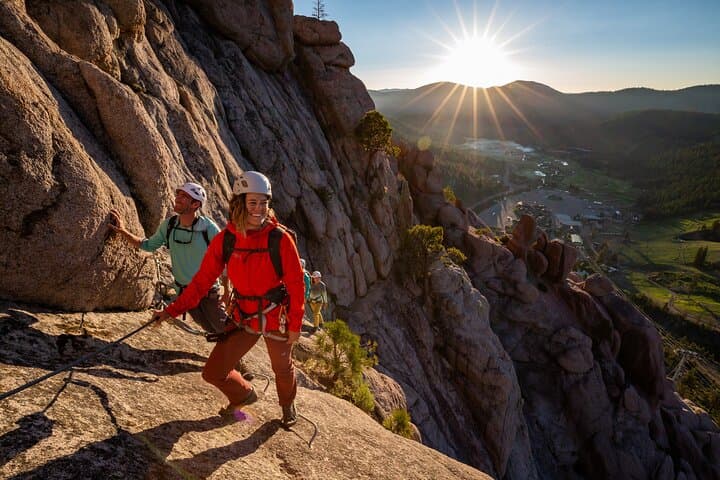
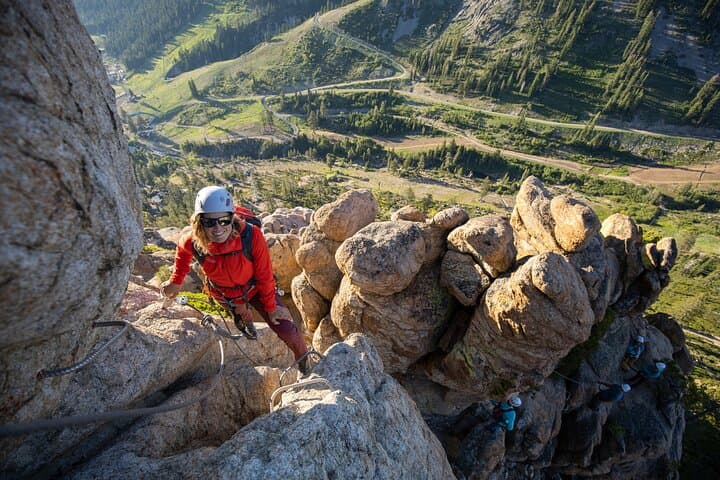
You step out of The Village into cold alpenglow and the tram hums above, a ribbon of steel that once ferried Olympians now framing one of Lake Tahoe’s steepest faces. Guides from Alpenglow Expeditions tighten harnesses, check carabiners, and point to the ladder rungs and suspension bridges high on Tram Face — an 800‑foot vertical sweep of granite that dares you to look up.
Verified experiences and guided adventures in the surrounding area.
Operated by Tahoe Via Ferrata · Olympic Valley, California
You step out of The Village into cold alpenglow and the tram hums above, a ribbon of steel that once ferried Olympians now framing one of Lake Tahoe’s steepest faces. Guides from Alpenglow Expeditions tighten harnesses, check carabiners, and point to the ladder rungs and suspension bridges high on Tram Face — an 800‑foot vertical sweep of granite that dares you to look up.
This route occupies rock shaped by glaciers and uplifted granodiorite common to the Sierra Nevada. The 1960 Winter Olympics put Squaw Valley (now Palisades Tahoe) on the map, and the tram and access roads opened terrain previously impossible for casual hikers. Via Ferrata borrows from European alpine tradition, adding fixed steel anchors and continuous cables so non‑climbers can safely gain big exposure.
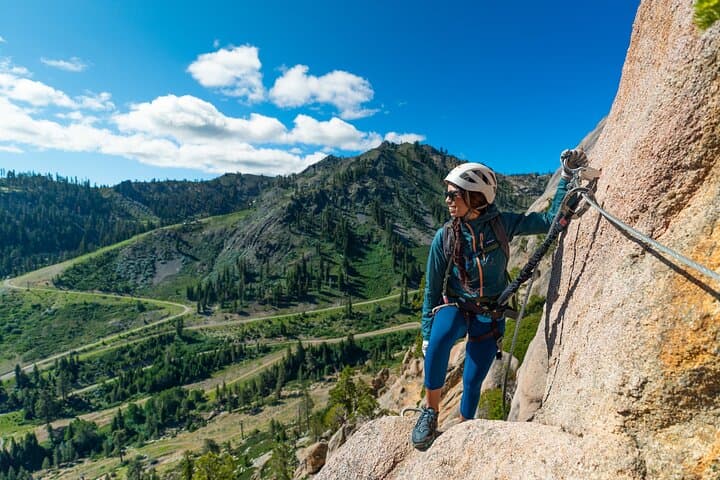
Expect a mix of steep hiking, fixed ladders, exposed ledges and short technical pitches. Guides lead groups, provide all helmets, harnesses and continuous lanyards, and coach clipping technique and movement on iron rungs. Weather changes fast at alpine elevation; wind and sun are both likely. Bring breathable layers, sturdy shoes, and enough water for a couple of hours of active, pumped‑leg movement.
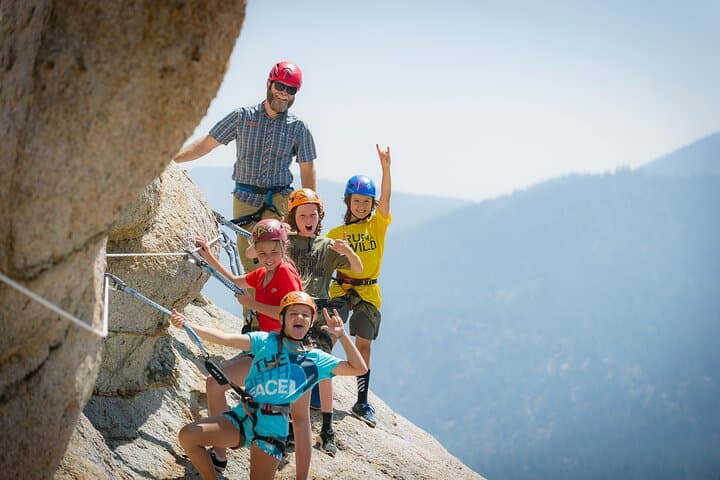
Plan to meet at the Palisades Tahoe Village booth in front of the Funitel; the activity runs about two hours and is family‑friendly for those comfortable with heights. The route is designed to make serious exposure accessible without prior climbing skills, but it rewards attention to foot placement and steady breathing. Leave no trace, follow your guide’s commands, and expect to finish with panoramic views of Olympic Valley and Lake Tahoe’s glittering basin.
moderate.
2 hours.
Moderate fitness — comfortable hiking, steady on your feet and able to manage short, sustained climbs and exposure.
No prior climbing experience is required; the route uses fixed steel anchors and a continuous lanyard system and is guided by AMGA‑trained staff.
Operators screen for age and weight during booking — expect lower age limits for children and maximum weight limits for safety; disclose weight and height when asked.
Tours may be canceled if conditions make the route unsafe; check the provider’s bad‑weather policy but note many cancellations are at guide discretion for safety.
Meet at the Palisades Tahoe Village booth in front of the Funitel building; public transport and shuttle options are available nearby, but private cars and parking are common.
Tram Face sits above Olympic Valley, the host of the 1960 Winter Olympics; Palisades Tahoe’s infrastructure opened high alpine routes that were previously inaccessible.
Stay clipped to the route, avoid trampling alpine vegetation, pack out trash and respect fixed anchors so the area remains safe and available for future visitors.
Tahoe Via Ferrata operates guided outdoor trips and adventures with an emphasis on safety, stewardship, and memorable experiences.
You step out of The Village into cold alpenglow and the tram hums above, a ribbon of steel that once ferried Olympians now framing one of Lake Tahoe’s steepest faces. Guides from Alpenglow Expeditions tighten harnesses, check carabiners, and point to the ladder rungs and suspension bridges high on Tram Face — an 800‑foot vertical sweep of granite that dares you to look up.
You step out of The Village into cold alpenglow and the tram hums above, a ribbon of steel that once ferried Olympians now framing one of Lake Tahoe’s steepest faces. Guides from Alpenglow Expeditions tighten harnesses, check carabiners, and point to the ladder rungs and suspension bridges high on Tram Face — an 800‑foot vertical sweep of granite that dares you to look up.
This route occupies rock shaped by glaciers and uplifted granodiorite common to the Sierra Nevada. The 1960 Winter Olympics put Squaw Valley (now Palisades Tahoe) on the map, and the tram and access roads opened terrain previously impossible for casual hikers. Via Ferrata borrows from European alpine tradition, adding fixed steel anchors and continuous cables so non‑climbers can safely gain big exposure.
Expect a mix of steep hiking, fixed ladders, exposed ledges and short technical pitches. Guides lead groups, provide all helmets, harnesses and continuous lanyards, and coach clipping technique and movement on iron rungs. Weather changes fast at alpine elevation; wind and sun are both likely. Bring breathable layers, sturdy shoes, and enough water for a couple of hours of active, pumped‑leg movement.
Plan to meet at the Palisades Tahoe Village booth in front of the Funitel; the activity runs about two hours and is family‑friendly for those comfortable with heights. The route is designed to make serious exposure accessible without prior climbing skills, but it rewards attention to foot placement and steady breathing. Leave no trace, follow your guide’s commands, and expect to finish with panoramic views of Olympic Valley and Lake Tahoe’s glittering basin.