THE ADVENTURE COLLECTIVE® · Independent discovery and booking for outdoor travel

Small-group surf lessons along the Taghazout–Tamraght coast teach beginners to read the ocean and stand on their first waves. Learn about local conditions, equipment provided, and practical tips to prepare for a 2.5-hour lesson.
Small-group surf lessons along the Taghazout–Tamraght coast teach beginners to read the ocean and stand on their first waves. Learn about local conditions, equipment provided, and practical tips to prepare for a 2.5-hour lesson.
A morning in Taghazout begins with the Atlantic breathing across a flat horizon; foam threads curl toward the sand and the village stirs with fishermen hauling nets. Step onto the beach and the ocean already seems to be sizing you up, offering manageable peaks that invite you into the line-up.
Verified experiences and guided adventures in the surrounding area.
Operated by Mounir surf coach · Taghazout, Souss-Massa
A morning in Taghazout begins with the Atlantic breathing across a flat horizon; foam threads curl toward the sand and the village stirs with fishermen hauling nets. Step onto the beach and the ocean already seems to be sizing you up, offering manageable peaks that invite you into the line-up.
This coastline was once a quiet Berber fishing stretch; since the 1960s it has layered surf culture over traditional life, with simple stone houses and crescent beaches giving way to surf camps and cafés. Geologically, the shore is a gentle mixture of sandy bays and low rocky points—points that shape the swells into rippable, predictable peaks favored by learners and intermediates. Cultural rhythms here are low-key: mornings for surf, afternoons for mint tea and repair of boards.
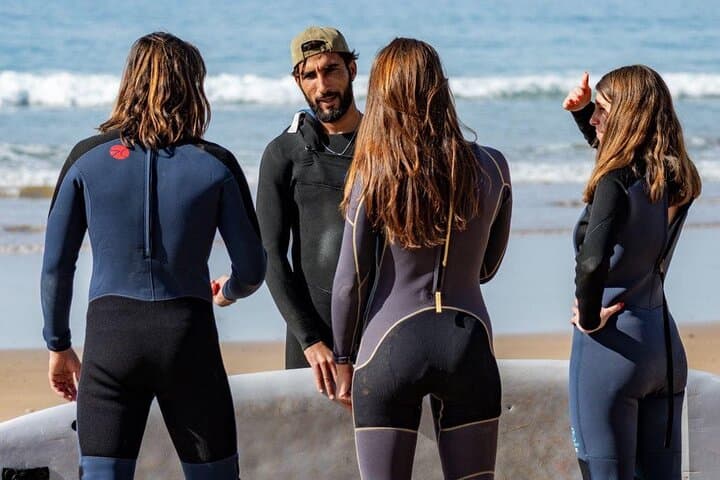
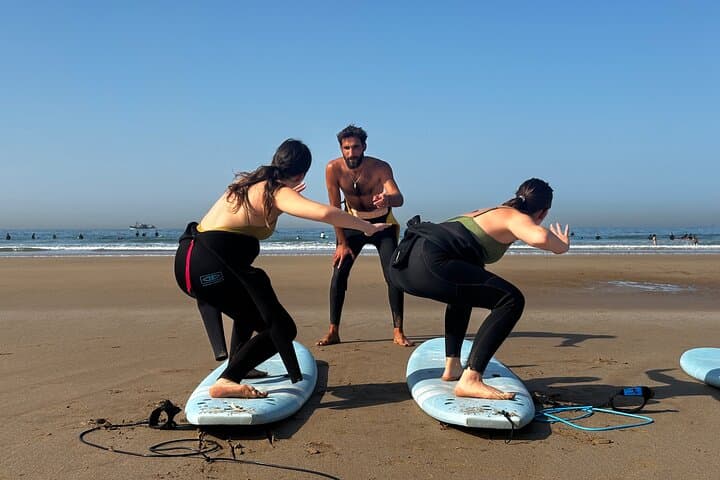
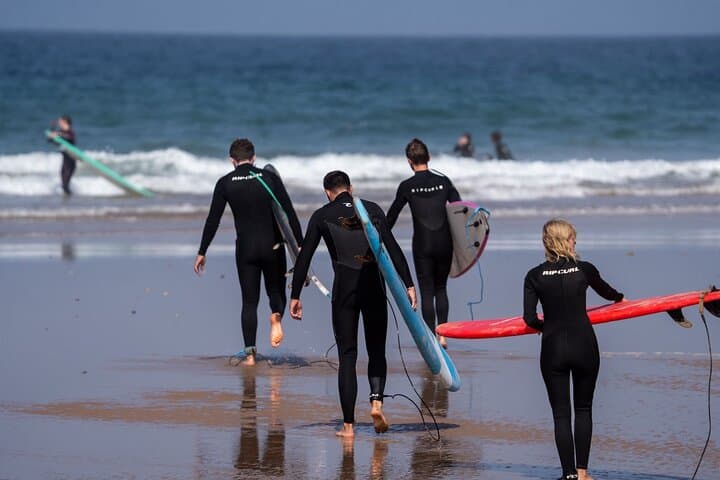
On a typical 2.5-hour lesson you'll work with an instructor in small groups (max five), drilling pop-ups on the sand, practicing paddling in waist- to chest-deep water, then catching whitewater and small open-face waves. Expect 0.5–1.5 m (1–5 ft) waves most days, shifting with swell and tide; offshore morning winds are common and helpful. Lessons include board and wetsuit, but bring a swimsuit, towel, and sunscreen.
Practical tips: arrive early to check tide and wind, hydrate well, and be honest about your swimming comfort. Instructors emphasize basic etiquette—don’t drop in—and local conditions can change quickly; lessons may be canceled in rough weather. For a first surf in Morocco, Taghazout and Tamraght offer accessible waves, patient coaches, and a coastline that rewards persistence with the simple exhilaration of standing on a wave.
moderate.
2–2.5 hours.
Moderate fitness — comfortable swimming, able to do short sprints and pop up repeatedly in shallow surf.
Yes—these lessons include board and wetsuit rental, so you only need personal items like a swimsuit and towel.
No—lessons are designed for beginners and intermediates; instructors start on land drills before entering gentle water.
Lessons can be canceled for rough conditions; operators typically refund or reschedule if surf or safety is a concern.
Pickup may be available depending on the operator and booking options—confirm your pickup point when you book.
Taghazout evolved from a small Berber fishing village into a surf destination over recent decades, its economy shifting toward tourism while retaining local fishing practices.
Coastal development and litter are local concerns; choose schools that follow ‘leave no trace’ practices and support community beach clean-ups.
Mounir surf coach operates guided outdoor trips and adventures with an emphasis on safety, stewardship, and memorable experiences.
A morning in Taghazout begins with the Atlantic breathing across a flat horizon; foam threads curl toward the sand and the village stirs with fishermen hauling nets. Step onto the beach and the ocean already seems to be sizing you up, offering manageable peaks that invite you into the line-up.
A morning in Taghazout begins with the Atlantic breathing across a flat horizon; foam threads curl toward the sand and the village stirs with fishermen hauling nets. Step onto the beach and the ocean already seems to be sizing you up, offering manageable peaks that invite you into the line-up.
This coastline was once a quiet Berber fishing stretch; since the 1960s it has layered surf culture over traditional life, with simple stone houses and crescent beaches giving way to surf camps and cafés. Geologically, the shore is a gentle mixture of sandy bays and low rocky points—points that shape the swells into rippable, predictable peaks favored by learners and intermediates. Cultural rhythms here are low-key: mornings for surf, afternoons for mint tea and repair of boards.
On a typical 2.5-hour lesson you'll work with an instructor in small groups (max five), drilling pop-ups on the sand, practicing paddling in waist- to chest-deep water, then catching whitewater and small open-face waves. Expect 0.5–1.5 m (1–5 ft) waves most days, shifting with swell and tide; offshore morning winds are common and helpful. Lessons include board and wetsuit, but bring a swimsuit, towel, and sunscreen.
Practical tips: arrive early to check tide and wind, hydrate well, and be honest about your swimming comfort. Instructors emphasize basic etiquette—don’t drop in—and local conditions can change quickly; lessons may be canceled in rough weather. For a first surf in Morocco, Taghazout and Tamraght offer accessible waves, patient coaches, and a coastline that rewards persistence with the simple exhilaration of standing on a wave.