THE ADVENTURE COLLECTIVE® · Independent discovery and booking for outdoor travel

Drive the Anti-Atlas from Agadir to Tafraout on a full-day tour that combines surreal painted boulders, palm oases, and traditional Berber culture. This 10‑hour outing blends scenic drives with short walks, local food, and market time in Tiznit.
Drive the Anti-Atlas from Agadir to Tafraout on a full-day tour that combines surreal painted boulders, palm oases, and traditional Berber culture. This 10‑hour outing blends scenic drives with short walks, local food, and market time in Tiznit.
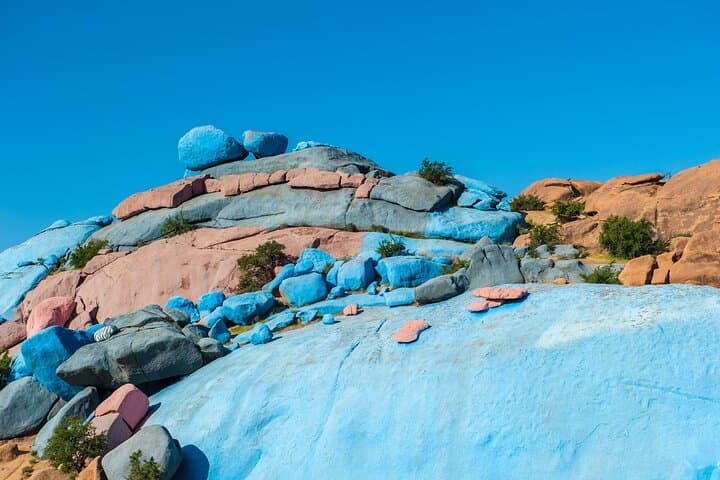
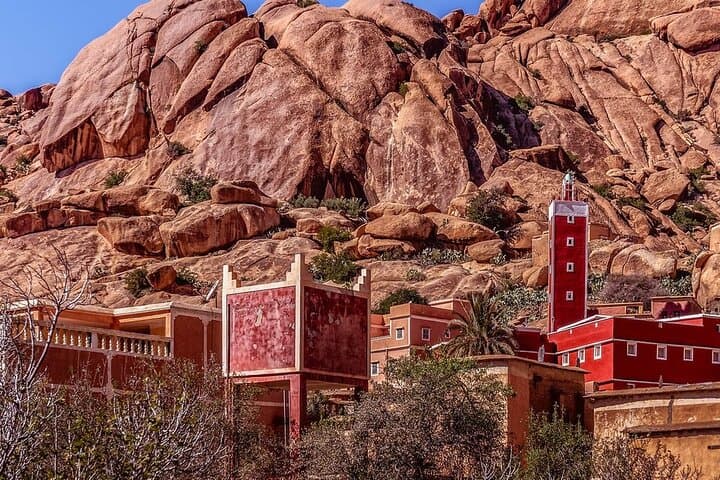
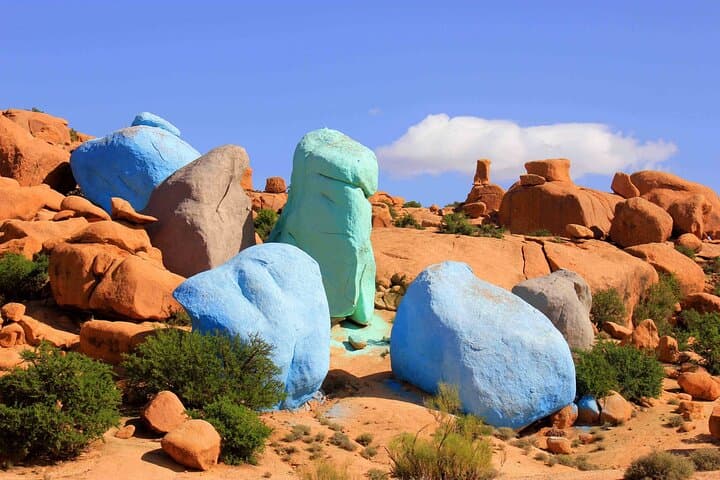
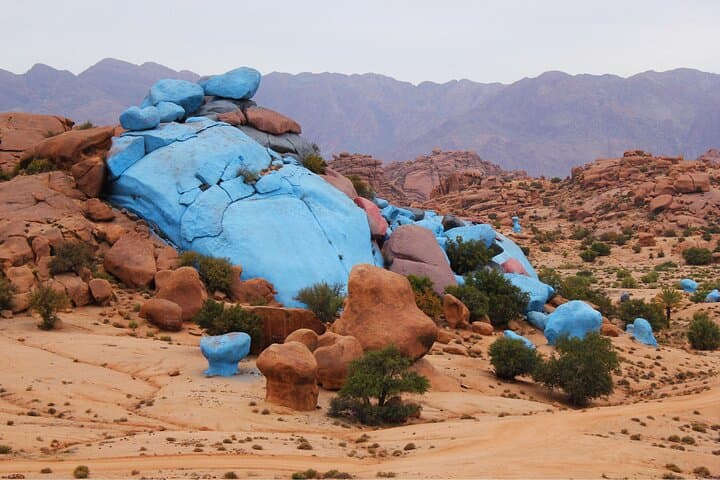
Early light cuts across the Anti-Atlas as the road from Agadir climbs into a landscape of pink granite boulders and narrow oases. The air smells faintly of almond blossom and dust; rocks the size of houses sit like slow-moving animals across ridgelines. By midmorning you stand beneath the Painted Rocks—bulbous boulders splashed in primary colors—while terraces of palms and red-earth villages hang on the valley slopes.
Verified experiences and guided adventures in the surrounding area.
Operated by Agadir Local Tours · Tafraout, Souss-Massa
Early light cuts across the Anti-Atlas as the road from Agadir climbs into a landscape of pink granite boulders and narrow oases. The air smells faintly of almond blossom and dust; rocks the size of houses sit like slow-moving animals across ridgelines. By midmorning you stand beneath the Painted Rocks—bulbous boulders splashed in primary colors—while terraces of palms and red-earth villages hang on the valley slopes.
Tafraout is a Berber-speaking market town whose human history ties to trans-Saharan routes and local olive, almond, and argan farming. Geologically the region is older than the High Atlas—ancient granite and gneiss sculpted by wind and thermal fracture into the rounded forms that draw artists and photographers. In the early 1980s Belgian artist Jean Vérame painted select boulders, an intervention that now sits alongside older Amazigh traditions displayed in a small local museum.
The tour moves from lookout to souk, with time to see the Lion’s Head rock, eat a traditional lunch, and descend through almond-lined roads toward the pink-walled city of Tiznit—known for silverwork and lively markets. Expect rough village streets and short walks over uneven ground; the rhythm of the day is scenic drives punctuated by brief explorations.
Practical edge: travel in an air-conditioned 4x4 with pick-up from Agadir, plan for a 10-hour day, carry sun protection, water, and small change for crafts. Respect private agricultural land, ask before photographing people, and leave painted stones as you find them—this place rewards curiosity but benefits from careful travel.
moderate.
10–11 hours.
Moderate—suitable for travelers who can handle several short walks on uneven terrain and a long day in a vehicle.
The tour is approximately 10 hours (pick-up around 8:00 AM) with collection from hotels in Agadir; exact pick-up times are confirmed at booking.
The painted surfaces date to the early 1980s; visitors are asked not to climb or deface the rocks to help preserve both the art and the fragile stone surfaces.
Yes—Tiznit is known for silver jewelry and local markets; bring cash in small denominations and be prepared to bargain politely.
Children can join (restrictions may apply) but the tour is not recommended for pregnant travelers or those with significant cardiovascular issues due to long vehicle time and some uneven walking.
Tafraout has long been a Berber market town tied to local almond and argan agriculture; the painted boulders were created in the early 1980s by Belgian artist Jean Vérame and have since become a modern landmark.
The Anti-Atlas environment is arid and erosion-prone—stay on paths, avoid removing stones or plants, and support local businesses to keep tourism benefits in the community.
Agadir Local Tours operates guided outdoor trips and adventures with an emphasis on safety, stewardship, and memorable experiences.
Early light cuts across the Anti-Atlas as the road from Agadir climbs into a landscape of pink granite boulders and narrow oases. The air smells faintly of almond blossom and dust; rocks the size of houses sit like slow-moving animals across ridgelines. By midmorning you stand beneath the Painted Rocks—bulbous boulders splashed in primary colors—while terraces of palms and red-earth villages hang on the valley slopes.
Early light cuts across the Anti-Atlas as the road from Agadir climbs into a landscape of pink granite boulders and narrow oases. The air smells faintly of almond blossom and dust; rocks the size of houses sit like slow-moving animals across ridgelines. By midmorning you stand beneath the Painted Rocks—bulbous boulders splashed in primary colors—while terraces of palms and red-earth villages hang on the valley slopes.
Tafraout is a Berber-speaking market town whose human history ties to trans-Saharan routes and local olive, almond, and argan farming. Geologically the region is older than the High Atlas—ancient granite and gneiss sculpted by wind and thermal fracture into the rounded forms that draw artists and photographers. In the early 1980s Belgian artist Jean Vérame painted select boulders, an intervention that now sits alongside older Amazigh traditions displayed in a small local museum.
The tour moves from lookout to souk, with time to see the Lion’s Head rock, eat a traditional lunch, and descend through almond-lined roads toward the pink-walled city of Tiznit—known for silverwork and lively markets. Expect rough village streets and short walks over uneven ground; the rhythm of the day is scenic drives punctuated by brief explorations.
Practical edge: travel in an air-conditioned 4x4 with pick-up from Agadir, plan for a 10-hour day, carry sun protection, water, and small change for crafts. Respect private agricultural land, ask before photographing people, and leave painted stones as you find them—this place rewards curiosity but benefits from careful travel.