THE ADVENTURE COLLECTIVE® · Independent discovery and booking for outdoor travel

Spend a day tasting wine and pisco at Tacama—South America’s oldest commercial vineyard—then race across Huacachina’s giant dunes in a dune buggy and sandboard at sunset. This full-day from Lima combines history, hands-on tasting and high-adrenaline desert driving.
Spend a day tasting wine and pisco at Tacama—South America’s oldest commercial vineyard—then race across Huacachina’s giant dunes in a dune buggy and sandboard at sunset. This full-day from Lima combines history, hands-on tasting and high-adrenaline desert driving.
A morning in the Ica Valley opens with sun striking low stone and rows of vines—Tacama’s terraces spread out like a working map of colonial agriculture. You arrive at the oldest commercial vineyard in South America (est. 1546) to walk between gnarly vine trunks, taste structured desert wines and the clear, fruity pisco that Peru made its own, and learn the basics of vinification from a local guide.
Verified experiences and guided adventures in the surrounding area.
Operated by Travel Adventures Peru · Ica, Ica
A morning in the Ica Valley opens with sun striking low stone and rows of vines—Tacama’s terraces spread out like a working map of colonial agriculture. You arrive at the oldest commercial vineyard in South America (est. 1546) to walk between gnarly vine trunks, taste structured desert wines and the clear, fruity pisco that Peru made its own, and learn the basics of vinification from a local guide.
By midafternoon the scene shifts: half an hour’s drive takes you to Huacachina, an emerald pool ringed by steep sand. The dunes here rise in steep faces—informally measured up to about 150–200 m—where dune buggies thread fast lines and sandboards carve short, adrenaline-rich runs. The dune buggy segment is brief (about an hour) but intense; it’s a roller-coaster of drops and climbs that ends with a sunset that suddenly flattens the desert’s contrasts.
History and geology meet in this day: colonial viticulture fed an agricultural boom in an otherwise arid basin, while wind, scarce rain and alluvial deposits built the dunes you race today. Culture shows up at the table—lunch at Tacama pairs local produce with regional wines.
Practical guide: expect a long day (roughly 15 hours round-trip from Lima including transport), private transport and bottled water are typically provided, and activities suit most fitness levels. Bring sun protection, closed-toe shoes for the vines, a lightweight layer for the desert sunset, and a camera with extra battery. If you’re prone to motion sickness, plan accordingly before the dune run.
easy.
15 hours.
Suitable for most fitness levels; minimal walking on flat winery grounds and brief climbs on sand dunes.
Road transfer is roughly 3.5–4.5 hours each way depending on traffic; the full tour is typically about 15 hours including stops.
Yes—sandboarding is included and geared to beginners; guides give basic instruction and boards for short runs.
Yes—guided wine and pisco tastings are part of the vineyard visit, and a lunch option is usually available at the vineyard restaurant.
The tour is advertised as suitable for all fitness levels, but dune buggies and sand climbs may be uncomfortable for some; inform the operator of mobility needs when booking.
Tacama dates to 1546 and represents one of the earliest colonial agricultural enterprises in Peru; the winery remains a working producer of wine and pisco.
The Ica Valley is an irrigated agricultural zone in an arid region—water use is tightly managed and visitors should avoid wasting water and stick to marked paths to protect fragile dune vegetation.
Travel Adventures Peru operates guided outdoor trips and adventures with an emphasis on safety, stewardship, and memorable experiences.


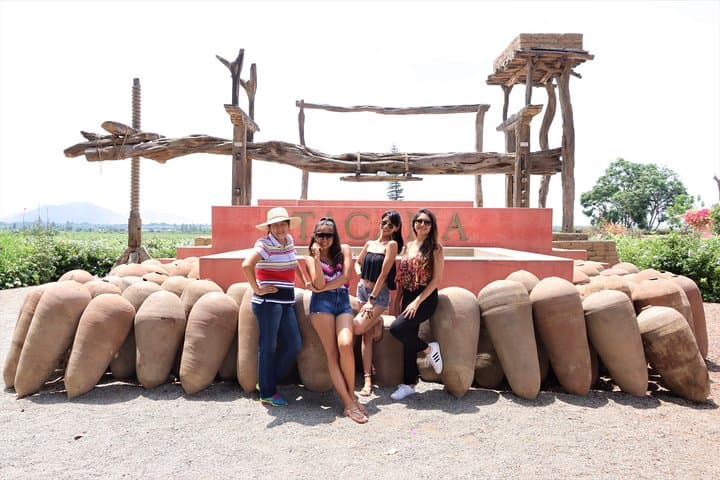
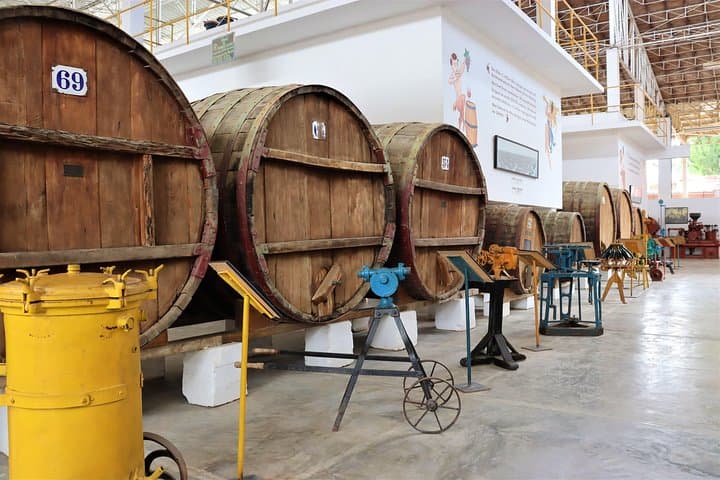
A morning in the Ica Valley opens with sun striking low stone and rows of vines—Tacama’s terraces spread out like a working map of colonial agriculture. You arrive at the oldest commercial vineyard in South America (est. 1546) to walk between gnarly vine trunks, taste structured desert wines and the clear, fruity pisco that Peru made its own, and learn the basics of vinification from a local guide.
A morning in the Ica Valley opens with sun striking low stone and rows of vines—Tacama’s terraces spread out like a working map of colonial agriculture. You arrive at the oldest commercial vineyard in South America (est. 1546) to walk between gnarly vine trunks, taste structured desert wines and the clear, fruity pisco that Peru made its own, and learn the basics of vinification from a local guide.
By midafternoon the scene shifts: half an hour’s drive takes you to Huacachina, an emerald pool ringed by steep sand. The dunes here rise in steep faces—informally measured up to about 150–200 m—where dune buggies thread fast lines and sandboards carve short, adrenaline-rich runs. The dune buggy segment is brief (about an hour) but intense; it’s a roller-coaster of drops and climbs that ends with a sunset that suddenly flattens the desert’s contrasts.
History and geology meet in this day: colonial viticulture fed an agricultural boom in an otherwise arid basin, while wind, scarce rain and alluvial deposits built the dunes you race today. Culture shows up at the table—lunch at Tacama pairs local produce with regional wines.
Practical guide: expect a long day (roughly 15 hours round-trip from Lima including transport), private transport and bottled water are typically provided, and activities suit most fitness levels. Bring sun protection, closed-toe shoes for the vines, a lightweight layer for the desert sunset, and a camera with extra battery. If you’re prone to motion sickness, plan accordingly before the dune run.