THE ADVENTURE COLLECTIVE® · Independent discovery and booking for outdoor travel

Hike to the flat-top summit of Table Mountain with a local guide who reads the fynbos, the rocks, and the weather. Expect steep starts, exposed ledges, sweeping city and ocean views, and the option to descend by cable car.
Hike to the flat-top summit of Table Mountain with a local guide who reads the fynbos, the rocks, and the weather. Expect steep starts, exposed ledges, sweeping city and ocean views, and the option to descend by cable car.
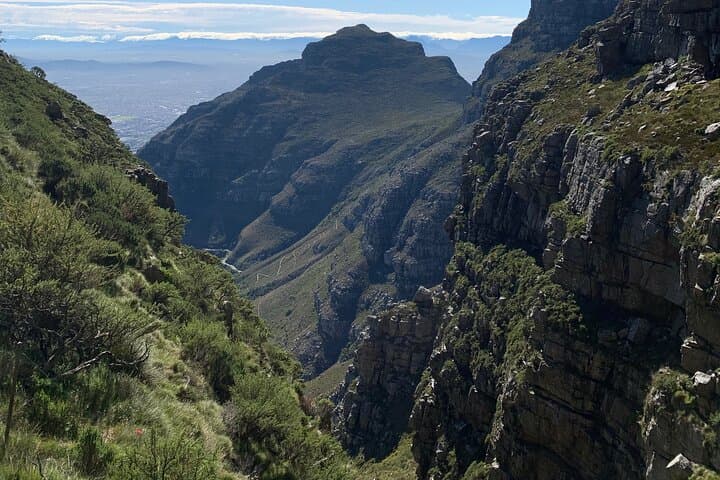
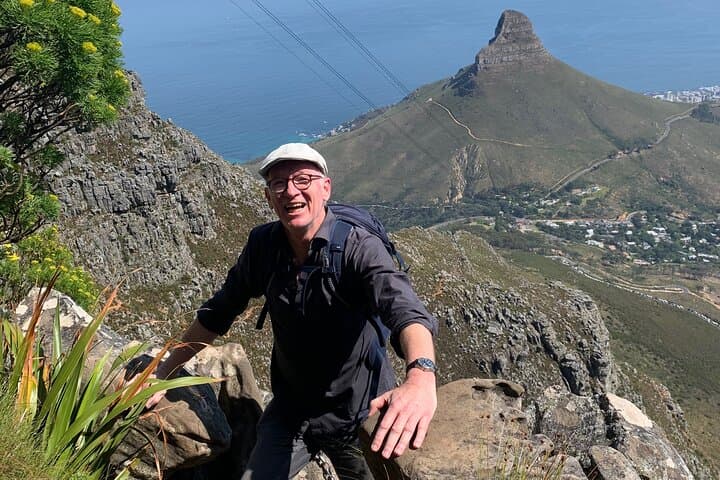
You step from the city’s hum into wind that sculpts the plateau’s edge, the flat crown of Table Mountain unrolling above you. Fynbos brushes your knees, the trail climbs steeply at first and then eases onto a contour path with Atlantic light sweeping across the city and False Bay below. The guide pauses to point out the scalloped ridgelines and the ‘tablecloth’ cloud spilling gently over the lip.
Verified experiences and guided adventures in the surrounding area.
Operated by Cape Mountain Guides · Cape Town, Western Cape
You step from the city’s hum into wind that sculpts the plateau’s edge, the flat crown of Table Mountain unrolling above you. Fynbos brushes your knees, the trail climbs steeply at first and then eases onto a contour path with Atlantic light sweeping across the city and False Bay below. The guide pauses to point out the scalloped ridgelines and the ‘tablecloth’ cloud spilling gently over the lip.
The mountain is made of hard quartzitic sandstone that caps older rocks and helped shape Cape Town’s skyline over geological time. It sits at the heart of the Cape Floral Kingdom—one of the world’s six floral kingdoms—so expect to learn local plant names and the ecological role of frequent fires. The peak has long been a landmark for sailors and carries cultural traces from indigenous Khoi place names to colonial-era maps.
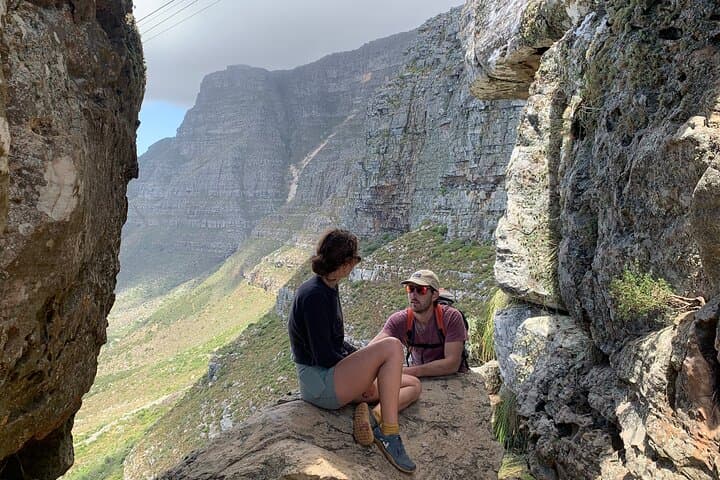
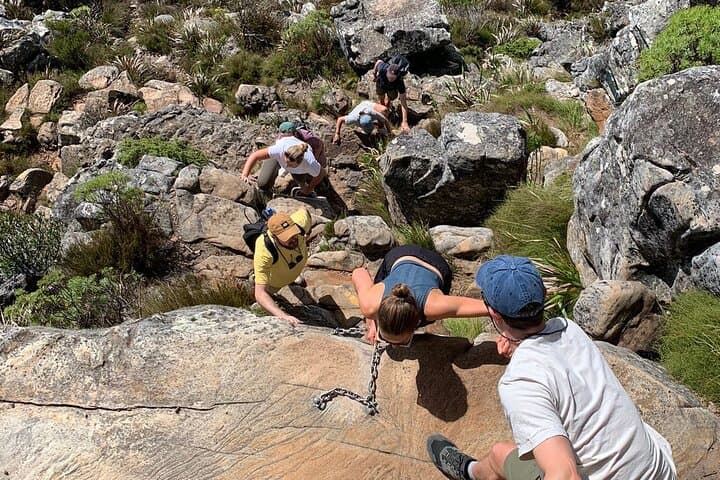
On the hike, terrain changes from packed switchbacks to exposed ledges where the guide will coach you through narrow sections. Look for dassies sunning on rocks and endemic proteas in bloom. Many groups finish at the Upper Cable Station; descending by cable car is a common, scenic option if legs are tired.
Practicalities: plan 3–4 hours, carry at least 1.5–2 liters of water, wear sturdy trail shoes and a windproof layer, and start early to avoid heat and crowds. The guide will cover safety, route choices, and basic trail etiquette—stay on trail, pack out litter, and listen for shifting wind that can change conditions quickly.
moderate.
3–4 hours.
Moderate—comfortable on steep, sustained climbs and uneven terrain for several hours
No technical experience is required, but you should be comfortable on sustained uphill sections and uneven ground for several hours.
Yes—many guided walks finish at the Upper Cable Station and participants can use the cable car (ticket costs may be separate).
Tours may be cancelled or rescheduled if winds or low visibility make the route unsafe; check the cancellation policy and local forecasts.
Guides typically do not provide water or snacks—bring your own supplies for the 3–4 hour outing.
Table Mountain has long been a maritime landmark and sits within the Cape Floral Kingdom; the plateau and surrounding routes carry names and stories from both indigenous Khoi people and early European sailors.
The fynbos ecosystem is fire-adapted but vulnerable to invasive species and trampling—stay on trails, avoid picking plants, and follow Leave No Trace principles.
Cape Mountain Guides operates guided outdoor trips and adventures with an emphasis on safety, stewardship, and memorable experiences.
You step from the city’s hum into wind that sculpts the plateau’s edge, the flat crown of Table Mountain unrolling above you. Fynbos brushes your knees, the trail climbs steeply at first and then eases onto a contour path with Atlantic light sweeping across the city and False Bay below. The guide pauses to point out the scalloped ridgelines and the ‘tablecloth’ cloud spilling gently over the lip.
You step from the city’s hum into wind that sculpts the plateau’s edge, the flat crown of Table Mountain unrolling above you. Fynbos brushes your knees, the trail climbs steeply at first and then eases onto a contour path with Atlantic light sweeping across the city and False Bay below. The guide pauses to point out the scalloped ridgelines and the ‘tablecloth’ cloud spilling gently over the lip.
The mountain is made of hard quartzitic sandstone that caps older rocks and helped shape Cape Town’s skyline over geological time. It sits at the heart of the Cape Floral Kingdom—one of the world’s six floral kingdoms—so expect to learn local plant names and the ecological role of frequent fires. The peak has long been a landmark for sailors and carries cultural traces from indigenous Khoi place names to colonial-era maps.
On the hike, terrain changes from packed switchbacks to exposed ledges where the guide will coach you through narrow sections. Look for dassies sunning on rocks and endemic proteas in bloom. Many groups finish at the Upper Cable Station; descending by cable car is a common, scenic option if legs are tired.
Practicalities: plan 3–4 hours, carry at least 1.5–2 liters of water, wear sturdy trail shoes and a windproof layer, and start early to avoid heat and crowds. The guide will cover safety, route choices, and basic trail etiquette—stay on trail, pack out litter, and listen for shifting wind that can change conditions quickly.