THE ADVENTURE COLLECTIVE® · Independent discovery and booking for outdoor travel

Ride a rotating cable car up Table Mountain, stroll summit trails and weave through Camps Bay and Bo‑Kaap in a well-paced half-day that pairs panoramic views with local history and seaside stops.
Ride a rotating cable car up Table Mountain, stroll summit trails and weave through Camps Bay and Bo‑Kaap in a well-paced half-day that pairs panoramic views with local history and seaside stops.
You step out of the air-conditioned minivan into a wind that seems to know the city’s secrets. Above you, Table Mountain hangs flat like a polished roof, clouds sometimes slipping over its lip like a slow waterfall. The cable car waits a short walk away — a three-minute, rotating-glass ascent that pushes the city into a precise postcard: V&A Waterfront glinting, Robben Island a pale thumbprint on the ocean, and the Atlantic seaboard slicing toward Blouberg.
Verified experiences and guided adventures in the surrounding area.
Operated by Remigeous Tsuro · Cape Town, Western Cape
You step out of the air-conditioned minivan into a wind that seems to know the city’s secrets. Above you, Table Mountain hangs flat like a polished roof, clouds sometimes slipping over its lip like a slow waterfall. The cable car waits a short walk away — a three-minute, rotating-glass ascent that pushes the city into a precise postcard: V&A Waterfront glinting, Robben Island a pale thumbprint on the ocean, and the Atlantic seaboard slicing toward Blouberg.
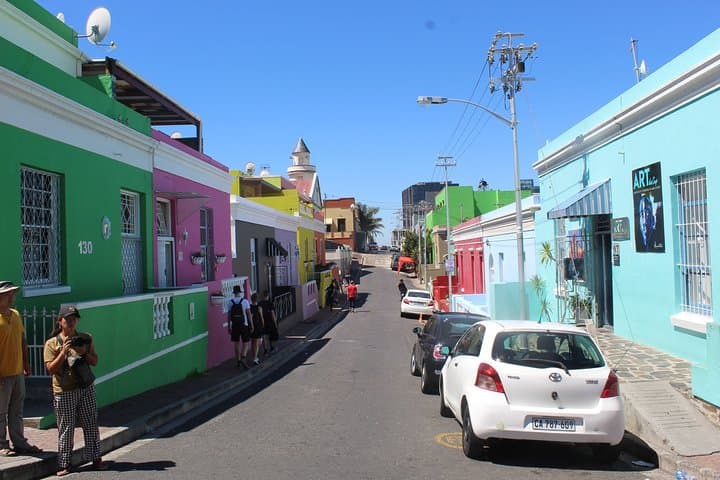
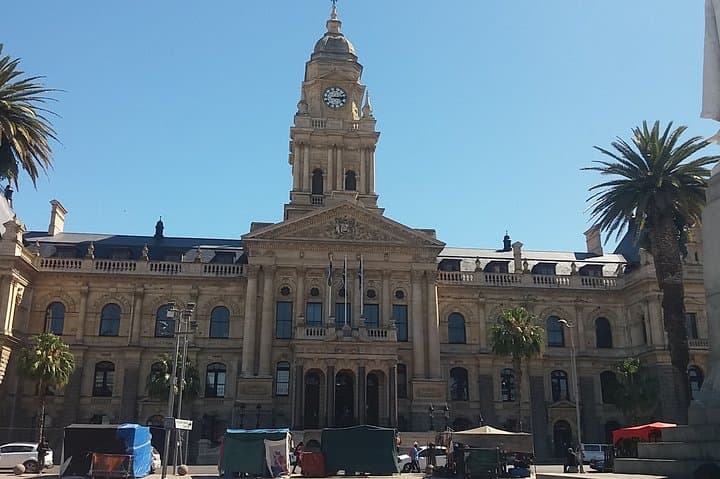
From the summit the walk is straightforward but characterful: a rim of sandstone ledges, patches of fynbos that lean into the wind, and viewpoints where the peninsula unfurls. The guide folds in geology, explaining how ancient quartzitic sandstone forms the plateau’s sheer faces and broad table. History threads through the route — the Castle of Good Hope and Company Gardens recall the Dutch East India Company’s arrival, while the Bo-Kaap’s candy-bright houses tell of Cape Malay culture and the complicated layers of colonial and apartheid-era history.
The tour moves at the city’s best angles. Camps Bay’s wide white beach and the jagged 12 Apostles behind it give a cinematic contrast to Bo-Kaap’s cobbled streets and multicolored façades; movies have long used both as quick notes of glamour and local texture. You’ll also pass modern marks of the 2010 World Cup stadium and, time permitting, a stop at The Diamond Works for a quick museum look.
Practical notes are as sharp as the views. The full experience runs about 4–5 hours with hotel pickup (within roughly 5 km of the centre) and drop-off; the cable car ride is included and the summit stop is roughly two hours. The plateau’s paths are mostly even but uneven underfoot in places — comfortable, grippy shoes are recommended. Weather changes fast on the mountain: a light, windproof layer and sun protection are essential. If you want afternoon light on Camps Bay, ask for an earlier slot; for clearer summit visibility aim for mornings when the cloud table is less likely.
The tour is designed to be accessible: stroller-friendly options are noted, and the guide balances interpretive stops with photo time. Bring a reusable water bottle (the guide provides bottled water on board) and a charged camera — sunset and the rotating cable car floor make for crisp panoramas. Expect friendly, informed narration about local culture and nature; when the cannon fires at noon from the castle, you’re literally in the middle of Cape Town’s rhythms.
In short: this trip gives you a sweep of Cape Town’s geology, social history and shoreline in a single, well-paced outing — equal parts spectacle and context, useful for first-time visitors who want both views and the stories behind them.
moderate.
4–5 hours.
Suitable for most visitors who can handle short, uneven walks and a few steps; not highly strenuous.
The ride takes about three minutes each way; the cable car rotates for 360° views during ascent and descent.
Yes—infants can ride in prams and the tour notes stroller accessibility; infants must sit on an adult’s lap on the vehicle.
No—the tour includes the Table Mountain Cable Car ticket, so you won’t need to queue for tickets at the station.
If weather forces closure the supplier may cancel — the tour’s cancellation policy allows full refunds if canceled at least 24 hours before departure or for weather closures.
Expect easy to moderate walking for viewpoints and short paved or rocky sections; guides plan time for photos and short strolls.
There are restroom facilities and a café at the upper cableway station, but options are limited—carry snacks if you prefer specific dietary items.
The route traces Cape Town’s colonial and multicultural layers—from the Dutch East India Company fortifications to the Cape Malay culture concentrated in Bo‑Kaap.
Table Mountain National Park protects a unique fynbos biome; visitors are asked to stay on paths, carry out waste and avoid disturbing native flora.
Remigeous Tsuro operates guided outdoor trips and adventures with an emphasis on safety, stewardship, and memorable experiences.
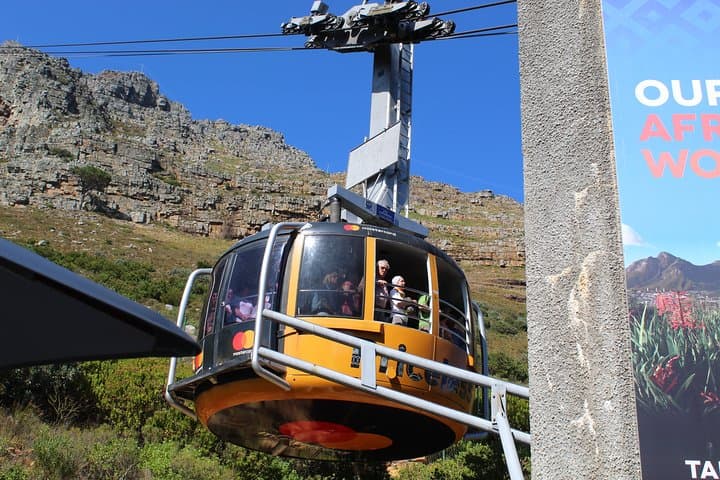
You step out of the air-conditioned minivan into a wind that seems to know the city’s secrets. Above you, Table Mountain hangs flat like a polished roof, clouds sometimes slipping over its lip like a slow waterfall. The cable car waits a short walk away — a three-minute, rotating-glass ascent that pushes the city into a precise postcard: V&A Waterfront glinting, Robben Island a pale thumbprint on the ocean, and the Atlantic seaboard slicing toward Blouberg.
You step out of the air-conditioned minivan into a wind that seems to know the city’s secrets. Above you, Table Mountain hangs flat like a polished roof, clouds sometimes slipping over its lip like a slow waterfall. The cable car waits a short walk away — a three-minute, rotating-glass ascent that pushes the city into a precise postcard: V&A Waterfront glinting, Robben Island a pale thumbprint on the ocean, and the Atlantic seaboard slicing toward Blouberg.
From the summit the walk is straightforward but characterful: a rim of sandstone ledges, patches of fynbos that lean into the wind, and viewpoints where the peninsula unfurls. The guide folds in geology, explaining how ancient quartzitic sandstone forms the plateau’s sheer faces and broad table. History threads through the route — the Castle of Good Hope and Company Gardens recall the Dutch East India Company’s arrival, while the Bo-Kaap’s candy-bright houses tell of Cape Malay culture and the complicated layers of colonial and apartheid-era history.
The tour moves at the city’s best angles. Camps Bay’s wide white beach and the jagged 12 Apostles behind it give a cinematic contrast to Bo-Kaap’s cobbled streets and multicolored façades; movies have long used both as quick notes of glamour and local texture. You’ll also pass modern marks of the 2010 World Cup stadium and, time permitting, a stop at The Diamond Works for a quick museum look.
Practical notes are as sharp as the views. The full experience runs about 4–5 hours with hotel pickup (within roughly 5 km of the centre) and drop-off; the cable car ride is included and the summit stop is roughly two hours. The plateau’s paths are mostly even but uneven underfoot in places — comfortable, grippy shoes are recommended. Weather changes fast on the mountain: a light, windproof layer and sun protection are essential. If you want afternoon light on Camps Bay, ask for an earlier slot; for clearer summit visibility aim for mornings when the cloud table is less likely.
The tour is designed to be accessible: stroller-friendly options are noted, and the guide balances interpretive stops with photo time. Bring a reusable water bottle (the guide provides bottled water on board) and a charged camera — sunset and the rotating cable car floor make for crisp panoramas. Expect friendly, informed narration about local culture and nature; when the cannon fires at noon from the castle, you’re literally in the middle of Cape Town’s rhythms.
In short: this trip gives you a sweep of Cape Town’s geology, social history and shoreline in a single, well-paced outing — equal parts spectacle and context, useful for first-time visitors who want both views and the stories behind them.