THE ADVENTURE COLLECTIVE® · Independent discovery and booking for outdoor travel

Spend a restorative day at Széchenyi, Budapest’s largest thermal complex. This full-day entrance grants access to outdoor and indoor pools, saunas, and steam rooms in a 1913 Neo-Baroque setting.
Spend a restorative day at Széchenyi, Budapest’s largest thermal complex. This full-day entrance grants access to outdoor and indoor pools, saunas, and steam rooms in a 1913 Neo-Baroque setting.
Steam lifts off the outdoor pools as the city park hums around you — benches, chess players, and the occasional tram whistle in the distance. The Széchenyi Spa’s mustard-yellow façades and Neo-Baroque pavilions frame a dozen hot pools where locals and visitors soak through slow afternoons, the mineral-rich water pressing gently against tired limbs.
Verified experiences and guided adventures in the surrounding area.
Operated by APEBE · Budapest, Budapest
Steam lifts off the outdoor pools as the city park hums around you — benches, chess players, and the occasional tram whistle in the distance. The Széchenyi Spa’s mustard-yellow façades and Neo-Baroque pavilions frame a dozen hot pools where locals and visitors soak through slow afternoons, the mineral-rich water pressing gently against tired limbs.
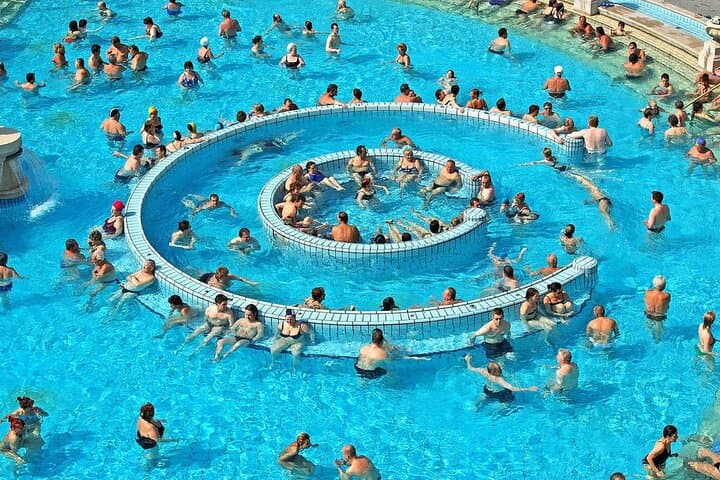
Opened in 1913 and fed by thermal springs that have shaped Budapest’s bathing culture for centuries, Széchenyi blends civic architecture with practical wellness. The complex houses 21 pools: large outdoor thermal basins, indoor medicinal tubs, saunas, steam rooms, and spaces for water fitness and massages. The outdoor pools stay busy year-round; winter steam makes the warm water feel almost private even when the terrace is full.
Culturally, a visit is as much about people-watching and ritual as it is about bathing — seniors play chess at the poolside, families paddle in shallow baths, and wellness routines are a daily habit for many locals. The geology beneath Budapest channels mineralized water from deep aquifers, giving the baths their characteristic scent and buoyancy.
Practical guidance: bring swimwear, towel, and flip-flops (slippers are required). Lockers and changing rooms are available; consider arriving early to avoid peak crowds and reserve a massage in advance. Hydrate between dips, pace sauna sessions, and follow facility rules — children under 14 are not permitted. Tickets are mobile-friendly but final sale; plan for a 4–6 hour full-day experience to fully enjoy the pools, saunas, and optional treatments.
easy.
4–6 hours.
Suitable for most fitness levels; expect light walking and standing while changing and moving between pools.
Towels and slippers are not included with the standard entrance; you should bring them or rent on-site where available.
Children under 14 are not permitted; the facility enforces age restrictions for safety and atmosphere reasons.
Mobile or paper tickets are accepted, but this product is sold as a full-day entrance with instant confirmation; while walk-up tickets exist, buying ahead avoids wait times.
Yes — there are changing rooms and coin-operated or electronic lockers; for extra privacy you can rent a cabin if available.
The Széchenyi complex opened in 1913 in a Neo-Baroque style on the City Park site; its thermal springs are part of a centuries-old bathing tradition in Budapest.
The baths manage chemical treatment and water circulation carefully, but guests can help by rinsing off sunscreen before entering and respecting signage to reduce environmental and maintenance impacts.
APEBE operates guided outdoor trips and adventures with an emphasis on safety, stewardship, and memorable experiences.


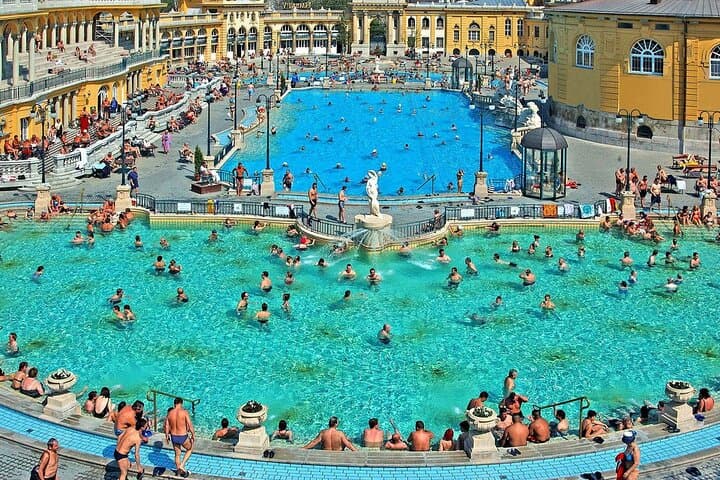
Steam lifts off the outdoor pools as the city park hums around you — benches, chess players, and the occasional tram whistle in the distance. The Széchenyi Spa’s mustard-yellow façades and Neo-Baroque pavilions frame a dozen hot pools where locals and visitors soak through slow afternoons, the mineral-rich water pressing gently against tired limbs.
Steam lifts off the outdoor pools as the city park hums around you — benches, chess players, and the occasional tram whistle in the distance. The Széchenyi Spa’s mustard-yellow façades and Neo-Baroque pavilions frame a dozen hot pools where locals and visitors soak through slow afternoons, the mineral-rich water pressing gently against tired limbs.
Opened in 1913 and fed by thermal springs that have shaped Budapest’s bathing culture for centuries, Széchenyi blends civic architecture with practical wellness. The complex houses 21 pools: large outdoor thermal basins, indoor medicinal tubs, saunas, steam rooms, and spaces for water fitness and massages. The outdoor pools stay busy year-round; winter steam makes the warm water feel almost private even when the terrace is full.
Culturally, a visit is as much about people-watching and ritual as it is about bathing — seniors play chess at the poolside, families paddle in shallow baths, and wellness routines are a daily habit for many locals. The geology beneath Budapest channels mineralized water from deep aquifers, giving the baths their characteristic scent and buoyancy.
Practical guidance: bring swimwear, towel, and flip-flops (slippers are required). Lockers and changing rooms are available; consider arriving early to avoid peak crowds and reserve a massage in advance. Hydrate between dips, pace sauna sessions, and follow facility rules — children under 14 are not permitted. Tickets are mobile-friendly but final sale; plan for a 4–6 hour full-day experience to fully enjoy the pools, saunas, and optional treatments.