THE ADVENTURE COLLECTIVE® · Independent discovery and booking for outdoor travel

Spend a full day tracing Sicily’s classical and Baroque highlights on this walking tour from Catania. Visit the Neapolis archaeological park, stroll Ortigia’s seafront and explore Noto’s gilded Baroque streets—all with a local guide and transport included.
Spend a full day tracing Sicily’s classical and Baroque highlights on this walking tour from Catania. Visit the Neapolis archaeological park, stroll Ortigia’s seafront and explore Noto’s gilded Baroque streets—all with a local guide and transport included.
A low hillside breeze meets the coach as it pulls out of Catania, carrying travelers along the Ionian coast toward Syracuse. In the archaeological park the ground still remembers Greek sandals: tumbled theaters, cut limestone quarries and the dramatic hollow of the Ear of Dionysius where echoes seem to answer questions. Later, the thin island of Ortigia narrows to a seafront promenade where fishermen mend nets and a freshwater spring — Fonte Aretusa — laps quietly at ancient stone.
Verified experiences and guided adventures in the surrounding area.
Operated by EtnaTribe · Syracuse, Sicily
A low hillside breeze meets the coach as it pulls out of Catania, carrying travelers along the Ionian coast toward Syracuse. In the archaeological park the ground still remembers Greek sandals: tumbled theaters, cut limestone quarries and the dramatic hollow of the Ear of Dionysius where echoes seem to answer questions. Later, the thin island of Ortigia narrows to a seafront promenade where fishermen mend nets and a freshwater spring — Fonte Aretusa — laps quietly at ancient stone.
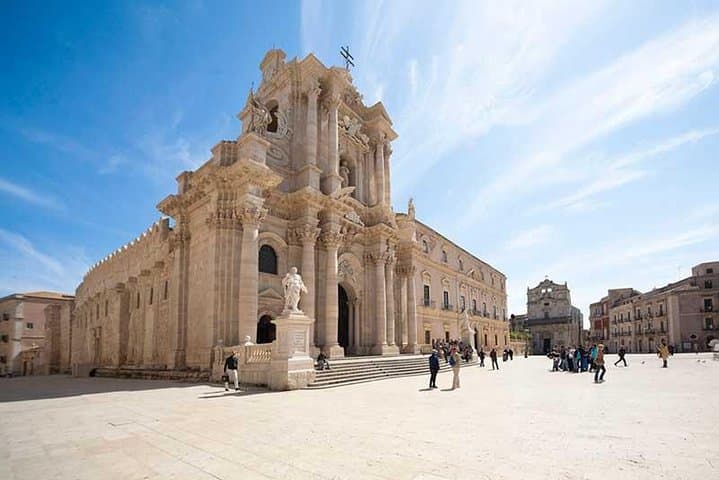
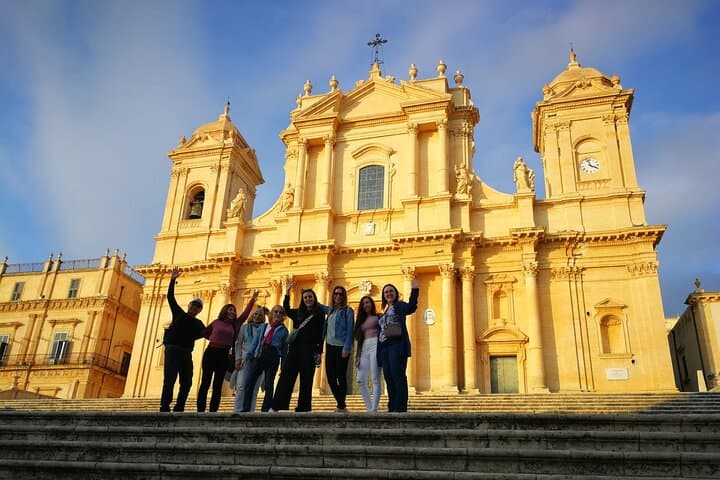
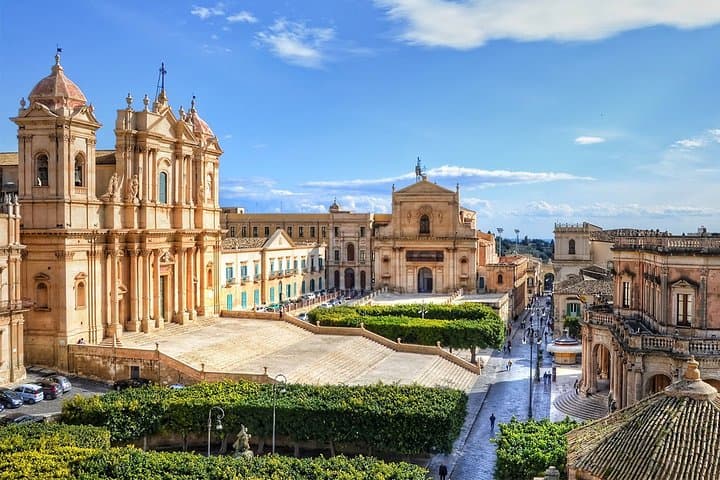
Syracuse was one of classical Greece’s great city-states; its Neapolis site preserves Greek theatre seating and Roman overlays. Geologically the area is driven by calcarenite and limestone, carved into latomie (quarries) that became amphitheaters and burial grounds. By afternoon the bus threads inland to Noto, rebuilt in flamboyant Sicilian Baroque after the 1693 earthquake—its church façades glow in late light and its carved balconies throw deep shadow.
Expect a steady day of walking on paved streets, archaeological paths and some stairs—this is a cultural ramble more than a wilderness hike. Guides typically include entrance to Neapolis and a stop on Ortigia; comfortable shoes and sun protection make the difference. Bring water, a light layer for coastal wind, and a small daypack; pauses at markets and cafes let the schedule breathe. Peak season brings heat and crowds—start early from Catania to make the most of cooler morning light and quieter monuments. The route balances classical ruins and Baroque cityscape, giving a compact, readable slice of southeastern Sicily in one well-paced day.
easy.
8 hours.
Suitable for people comfortable walking several hours with short uphill sections and stairs.
Most departures are from central Catania; the tour returns to the same meeting point at the end of the day.
The tour includes the entrance ticket to the Neapolis archaeological park; check with the operator for any additional museum fees.
Strollers are possible in flatter parts of Ortigia, but archaeological areas and cobbles make a baby carrier or smallfold stroller more practical.
Guides and operators are typically multilingual and can note special requirements—mention allergies or dietary needs at booking.
Syracuse rose to prominence as a Greek polis and later a Roman stronghold; Noto’s present form is largely Baroque reconstruction after the 1693 earthquake.
These sites face heavy visitor pressure—stick to marked paths in the archaeological park and avoid touching delicate carvings; support local businesses to help preserve community heritage.
EtnaTribe operates guided outdoor trips and adventures with an emphasis on safety, stewardship, and memorable experiences.
A low hillside breeze meets the coach as it pulls out of Catania, carrying travelers along the Ionian coast toward Syracuse. In the archaeological park the ground still remembers Greek sandals: tumbled theaters, cut limestone quarries and the dramatic hollow of the Ear of Dionysius where echoes seem to answer questions. Later, the thin island of Ortigia narrows to a seafront promenade where fishermen mend nets and a freshwater spring — Fonte Aretusa — laps quietly at ancient stone.
A low hillside breeze meets the coach as it pulls out of Catania, carrying travelers along the Ionian coast toward Syracuse. In the archaeological park the ground still remembers Greek sandals: tumbled theaters, cut limestone quarries and the dramatic hollow of the Ear of Dionysius where echoes seem to answer questions. Later, the thin island of Ortigia narrows to a seafront promenade where fishermen mend nets and a freshwater spring — Fonte Aretusa — laps quietly at ancient stone.
Syracuse was one of classical Greece’s great city-states; its Neapolis site preserves Greek theatre seating and Roman overlays. Geologically the area is driven by calcarenite and limestone, carved into latomie (quarries) that became amphitheaters and burial grounds. By afternoon the bus threads inland to Noto, rebuilt in flamboyant Sicilian Baroque after the 1693 earthquake—its church façades glow in late light and its carved balconies throw deep shadow.
Expect a steady day of walking on paved streets, archaeological paths and some stairs—this is a cultural ramble more than a wilderness hike. Guides typically include entrance to Neapolis and a stop on Ortigia; comfortable shoes and sun protection make the difference. Bring water, a light layer for coastal wind, and a small daypack; pauses at markets and cafes let the schedule breathe. Peak season brings heat and crowds—start early from Catania to make the most of cooler morning light and quieter monuments. The route balances classical ruins and Baroque cityscape, giving a compact, readable slice of southeastern Sicily in one well-paced day.