THE ADVENTURE COLLECTIVE® · Independent discovery and booking for outdoor travel

Experience Syracuse on foot: ancient stone theaters, quarry caves, and the compact island of Ortigia where history lives in markets and churches. This three- to four-hour guided route pairs archaeological spectacle with everyday Mediterranean life.
Experience Syracuse on foot: ancient stone theaters, quarry caves, and the compact island of Ortigia where history lives in markets and churches. This three- to four-hour guided route pairs archaeological spectacle with everyday Mediterranean life.
You step out of a narrow alley into a sun-bleached square and the city opens like a layered map: limestone facades, baroque stucco, and the low roar of the Ionian Sea. This guided walking tour threads two faces of Syracuse — the archaeological sweep of Neapolis and the lived-in lanes of Ortigia — so the past meets daily life in every turn.
Verified experiences and guided adventures in the surrounding area.
Operated by Italo Giordano (archeologo e tour guide) · Siracusa, Sicily
You step out of a narrow alley into a sun-bleached square and the city opens like a layered map: limestone facades, baroque stucco, and the low roar of the Ionian Sea. This guided walking tour threads two faces of Syracuse — the archaeological sweep of Neapolis and the lived-in lanes of Ortigia — so the past meets daily life in every turn.
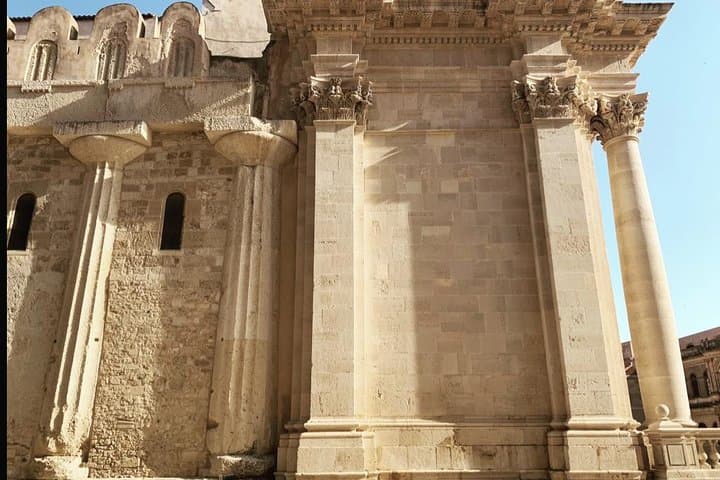
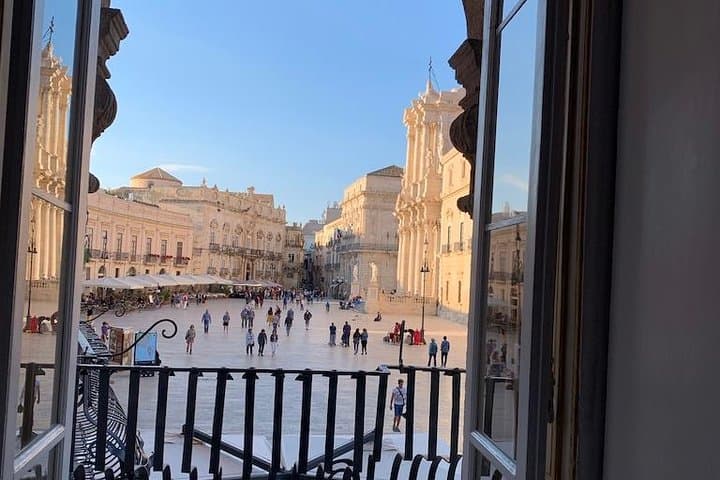
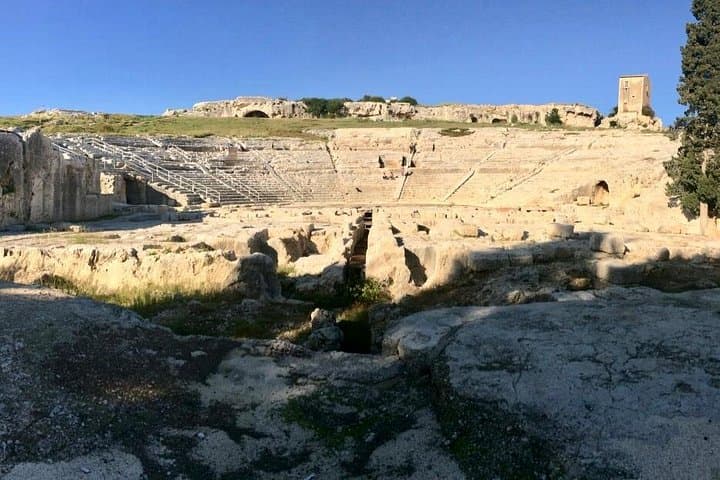
In Neapolis the ground itself keeps score: a Greek theater hewn from bedrock, a Roman amphitheater cut into the earth, and quarries where the Ear of Dionysius amplifies sound inside a cleft of stone. On Ortigia, walkways curve around the Temple of Apollo’s column fragments and into Piazza Duomo, where the cathedral incorporates a Greek temple’s structure. History here is physical — layers of Greek, Roman, Byzantine and Norman hands building on one another.
Geology explains the feel: soft calcarenite allowed ancient builders to carve stages and caves directly into the hill, while coastal breezes slowed settlement patterns and created a compact island plan. Culture is immediate — morning markets, fishermen hauling nets, and religious observances centered on Saint Lucia.
Practical guidance: allow three to four hours, wear supportive shoes for uneven stone and steps, and bring water and sun protection for exposed ruins. Admissions to archaeological sites are typically paid separately; confirm if your guide includes skip-the-line access. Mornings are quieter for photos and market browsing; late afternoons pull golden light across the cathedral façade. Stay aware of cobbles and low thresholds when moving between sites — they challenge ankles more than distance.
easy.
3–4 hours.
Suitable for most fitness levels but requires comfortable walking ability and mobility on cobbles and steps.
Admissions to Neapolis and some museums are typically not included; the guide coordinates the visits but entrance fees are usually paid on-site.
The tour notes wheelchair accessibility for many areas, but some ancient sites and alleyways have steps and rough surfaces — check with the operator for tailored access needs.
The listed meeting point is the Church of San Nicolò dei Cordari in Ortigia; confirm exact time and any contact details before arrival.
Strollers are allowed on the tour, but some cobbled sections and steps may make navigation difficult; infants must sit on laps according to provider notes.
Syracuse was a major Greek polis; its Greek theater and quarry complexes date to classical antiquity while the cathedral sits on the site of a former Greek temple, reflecting centuries of layered occupation.
Archaeological sites are sensitive to wear — stick to marked paths, avoid climbing ancient stonework, and support local conservation by following site rules and disposing of waste properly.
Italo Giordano (archeologo e tour guide) operates guided outdoor trips and adventures with an emphasis on safety, stewardship, and memorable experiences.
You step out of a narrow alley into a sun-bleached square and the city opens like a layered map: limestone facades, baroque stucco, and the low roar of the Ionian Sea. This guided walking tour threads two faces of Syracuse — the archaeological sweep of Neapolis and the lived-in lanes of Ortigia — so the past meets daily life in every turn.
You step out of a narrow alley into a sun-bleached square and the city opens like a layered map: limestone facades, baroque stucco, and the low roar of the Ionian Sea. This guided walking tour threads two faces of Syracuse — the archaeological sweep of Neapolis and the lived-in lanes of Ortigia — so the past meets daily life in every turn.
In Neapolis the ground itself keeps score: a Greek theater hewn from bedrock, a Roman amphitheater cut into the earth, and quarries where the Ear of Dionysius amplifies sound inside a cleft of stone. On Ortigia, walkways curve around the Temple of Apollo’s column fragments and into Piazza Duomo, where the cathedral incorporates a Greek temple’s structure. History here is physical — layers of Greek, Roman, Byzantine and Norman hands building on one another.
Geology explains the feel: soft calcarenite allowed ancient builders to carve stages and caves directly into the hill, while coastal breezes slowed settlement patterns and created a compact island plan. Culture is immediate — morning markets, fishermen hauling nets, and religious observances centered on Saint Lucia.
Practical guidance: allow three to four hours, wear supportive shoes for uneven stone and steps, and bring water and sun protection for exposed ruins. Admissions to archaeological sites are typically paid separately; confirm if your guide includes skip-the-line access. Mornings are quieter for photos and market browsing; late afternoons pull golden light across the cathedral façade. Stay aware of cobbles and low thresholds when moving between sites — they challenge ankles more than distance.