THE ADVENTURE COLLECTIVE® · Independent discovery and booking for outdoor travel

Step off Circular Quay and follow migrating humpbacks and southern right whales into the open Pacific. This 2.5-hour catamaran cruise combines close-up sightings with live naturalist commentary and a whale-sighting guarantee.
Step off Circular Quay and follow migrating humpbacks and southern right whales into the open Pacific. This 2.5-hour catamaran cruise combines close-up sightings with live naturalist commentary and a whale-sighting guarantee.
The catamaran eases away from Circular Quay, the Opera House shrinking to an architectural silhouette as the harbour mouths widen and the Pacific draws nearer. Cold spray teases the rail; gulls wheel and the tide seems to pull the boat toward the migratory highway where humpbacks and southern right whales move past the headlands.
Verified experiences and guided adventures in the surrounding area.
Operated by Captain Cook Cruises · Sydney, New South Wales
The catamaran eases away from Circular Quay, the Opera House shrinking to an architectural silhouette as the harbour mouths widen and the Pacific draws nearer. Cold spray teases the rail; gulls wheel and the tide seems to pull the boat toward the migratory highway where humpbacks and southern right whales move past the headlands.
This route follows a coastline shaped by ancient seas and Hawkesbury sandstone cliffs, a corridor used by whales for millennia. European whaling once shadowed these waters in the 19th century, but today the migration is a conservation story — numbers rebound and the coastline hums with wildlife tourism and volunteer researchers recording sightings.
Culturally, Sydney’s eastern suburbs and headlands have long been places of lookout and connection for First Nations peoples; modern whale watching layers onto that history, offering guided commentary that mixes natural science with local stories.
Practical guidance: cruises run about 2½ hours, departing Circular Quay Wharf 6; dress in warm, windproof layers and expect cooler temperatures offshore. Bring binoculars and a camera with a zoom lens; the open decks provide unobstructed views but limited shelter. Seas can range from calm to choppy—those prone to motion sickness should prepare. Operators follow distance and approach guidelines; if a whale is not seen, most companies offer a rebook guarantee.
Timing matters: peak sightings occur during the winter migration, but whales can appear any day during the mid‑May to early‑November season. Arrive early to collect tickets, follow the reconfirmation hotline on the day, and enjoy live commentary that turns each spout and breach into context and curiosity.
easy.
2–3 hours.
Suitable for most fitness levels; requires short periods of standing on deck and boarding a vessel.
Operators report high sighting rates during the mid‑May to early‑November migration; many trips record humpbacks and occasional southern right sightings, and most companies offer a rebook if none are seen.
The vessel is stroller- and wheelchair-accessible per operator notes, but infants under three are not recommended for this activity due to safety and comfort concerns.
Take prescribed or over-the-counter seasickness medication before boarding, choose a mid-ship seat, and focus on the horizon; ginger and acupressure bands can also help.
Policies vary by operator—light snacks and water are usually permitted, but confirm with the provider and dress for colder conditions at sea.
Sydney’s coastline sits on traditional lands of Aboriginal peoples and later hosted 19th-century shore-based whaling; today the migration route is protected and monitored.
Operators follow whale-watching codes of conduct—maintain distance, avoid disrupting behavior, and report sightings to local research groups to support monitoring.
Captain Cook Cruises operates guided outdoor trips and adventures with an emphasis on safety, stewardship, and memorable experiences.
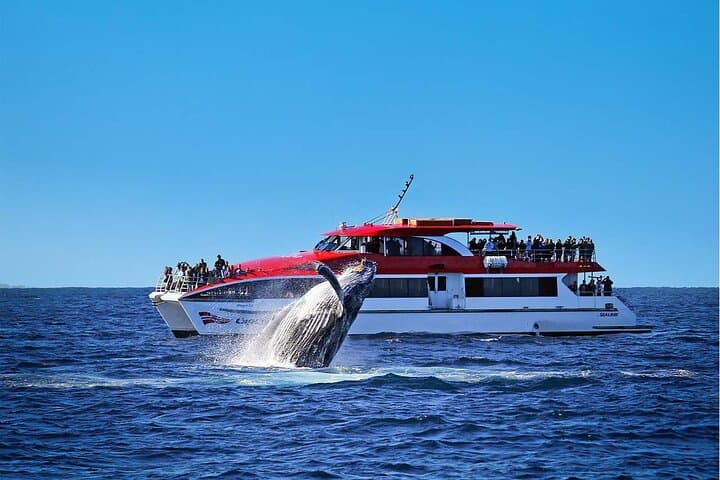
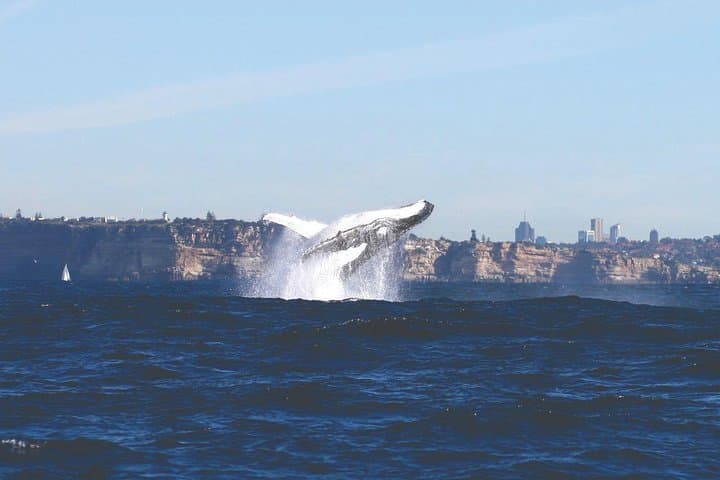
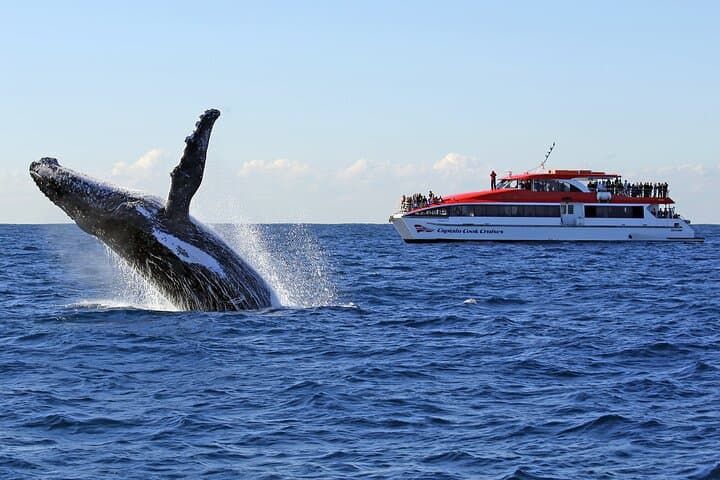
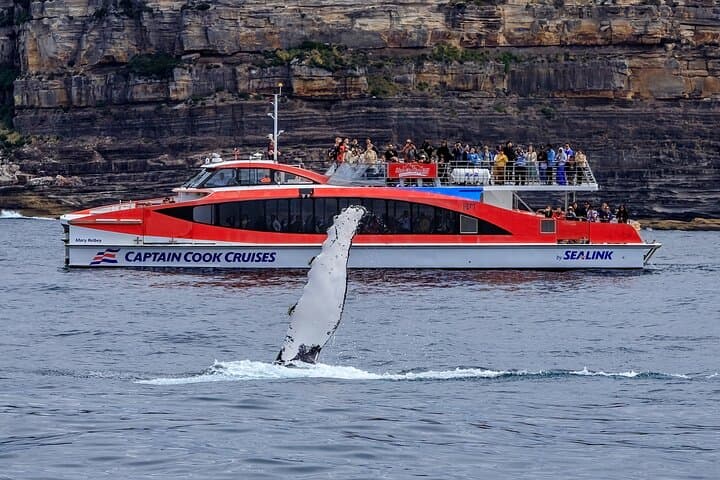
The catamaran eases away from Circular Quay, the Opera House shrinking to an architectural silhouette as the harbour mouths widen and the Pacific draws nearer. Cold spray teases the rail; gulls wheel and the tide seems to pull the boat toward the migratory highway where humpbacks and southern right whales move past the headlands.
The catamaran eases away from Circular Quay, the Opera House shrinking to an architectural silhouette as the harbour mouths widen and the Pacific draws nearer. Cold spray teases the rail; gulls wheel and the tide seems to pull the boat toward the migratory highway where humpbacks and southern right whales move past the headlands.
This route follows a coastline shaped by ancient seas and Hawkesbury sandstone cliffs, a corridor used by whales for millennia. European whaling once shadowed these waters in the 19th century, but today the migration is a conservation story — numbers rebound and the coastline hums with wildlife tourism and volunteer researchers recording sightings.
Culturally, Sydney’s eastern suburbs and headlands have long been places of lookout and connection for First Nations peoples; modern whale watching layers onto that history, offering guided commentary that mixes natural science with local stories.
Practical guidance: cruises run about 2½ hours, departing Circular Quay Wharf 6; dress in warm, windproof layers and expect cooler temperatures offshore. Bring binoculars and a camera with a zoom lens; the open decks provide unobstructed views but limited shelter. Seas can range from calm to choppy—those prone to motion sickness should prepare. Operators follow distance and approach guidelines; if a whale is not seen, most companies offer a rebook guarantee.
Timing matters: peak sightings occur during the winter migration, but whales can appear any day during the mid‑May to early‑November season. Arrive early to collect tickets, follow the reconfirmation hotline on the day, and enjoy live commentary that turns each spout and breach into context and curiosity.