THE ADVENTURE COLLECTIVE® · Independent discovery and booking for outdoor travel

See thousands of Australia’s largest flying foxes up close with a small-group guided tour from Circular Quay. Learn about their ecology, photograph dramatic daytime flights with supplied zoom gear, and hear why these fruit bats are vital — and vulnerable.
See thousands of Australia’s largest flying foxes up close with a small-group guided tour from Circular Quay. Learn about their ecology, photograph dramatic daytime flights with supplied zoom gear, and hear why these fruit bats are vital — and vulnerable.
You meet near Circular Quay, the city's harbor noise fading as an air-conditioned minibus pushes east toward the reserve. By the time the trees close in, the guide has your high-zoom camera ready and hands free binoculars — the first silhouettes of wings against sky arrive like a slow parade.
Verified experiences and guided adventures in the surrounding area.
Operated by Perfect Day Sydney · Sydney, New South Wales
You meet near Circular Quay, the city's harbor noise fading as an air-conditioned minibus pushes east toward the reserve. By the time the trees close in, the guide has your high-zoom camera ready and hands free binoculars — the first silhouettes of wings against sky arrive like a slow parade.
These are flying foxes (often called fruit bats), locally referred to by some Indigenous groups as Bangu. In the Sydney region they are important daytime pollinators and seed dispersers; colonies congregate in riverine and coastal stands where figs and eucalypts feed them. The tour spends roughly two hours in the reserve watching thousands of bats wheel and land, displaying wingspans that can reach about three feet, and you’ll hear guides explain why populations are vulnerable to habitat loss, heat events, and urban conflict.
The walk routes are level and accessible, with opportunities to photograph close flight paths using supplied high-zoom lenses. Expect mixed terrain underfoot — park tracks, soft soil and some boardwalk — and variable light for shooting fast-moving subjects.
Practical notes: arrive with layered clothing, insect protection and a charged phone; flash photography is discouraged to avoid startling animals. Small groups keep disturbance low and make for better viewing. This is a wildlife encounter that balances up-close spectacle with conservation context — ideal for curious travelers who want more than a look, and want to leave these bats in better shape than they found them.
easy.
2–3 hours.
Suitable for most fitness levels; requires short, flat walks and standing for wildlife viewing.
The guide meets guests near Circular Quay in central Sydney and provides luxury coach transport to the reserve.
Yes — the tour notes stroller accessibility and is suitable for a wide range of ages, but infants should remain supervised near wildlife.
Yes — you may use your own camera, but guides supply high-zoom cameras for close shots; avoid flash to prevent disturbing the bats.
Tours may be canceled for severe weather or extreme heat events; check cancellation policy for full-refund windows and rescheduling options.
Flying fox camps in the Sydney region have been used seasonally for generations; local Aboriginal names like Bangu reflect long-standing cultural connections to these animals.
Populations are sensitive to habitat loss and extreme heat; tours aim to minimize disturbance and often include educational components about rescue, habitat protection and coexistence.
Perfect Day Sydney operates guided outdoor trips and adventures with an emphasis on safety, stewardship, and memorable experiences.



You meet near Circular Quay, the city's harbor noise fading as an air-conditioned minibus pushes east toward the reserve. By the time the trees close in, the guide has your high-zoom camera ready and hands free binoculars — the first silhouettes of wings against sky arrive like a slow parade.
You meet near Circular Quay, the city's harbor noise fading as an air-conditioned minibus pushes east toward the reserve. By the time the trees close in, the guide has your high-zoom camera ready and hands free binoculars — the first silhouettes of wings against sky arrive like a slow parade.
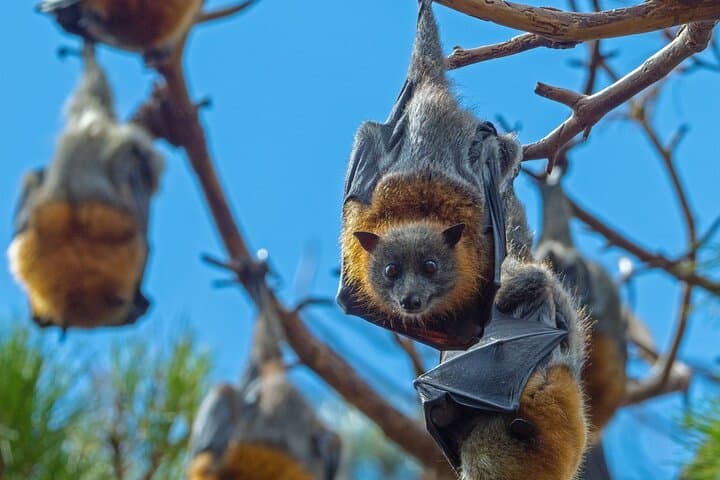
These are flying foxes (often called fruit bats), locally referred to by some Indigenous groups as Bangu. In the Sydney region they are important daytime pollinators and seed dispersers; colonies congregate in riverine and coastal stands where figs and eucalypts feed them. The tour spends roughly two hours in the reserve watching thousands of bats wheel and land, displaying wingspans that can reach about three feet, and you’ll hear guides explain why populations are vulnerable to habitat loss, heat events, and urban conflict.
The walk routes are level and accessible, with opportunities to photograph close flight paths using supplied high-zoom lenses. Expect mixed terrain underfoot — park tracks, soft soil and some boardwalk — and variable light for shooting fast-moving subjects.
Practical notes: arrive with layered clothing, insect protection and a charged phone; flash photography is discouraged to avoid startling animals. Small groups keep disturbance low and make for better viewing. This is a wildlife encounter that balances up-close spectacle with conservation context — ideal for curious travelers who want more than a look, and want to leave these bats in better shape than they found them.