THE ADVENTURE COLLECTIVE® · Independent discovery and booking for outdoor travel

Escape the busiest trails and walk quieter alpine ridgelines with a local guide who tailors the route to your pace. Half‑day to full‑day options and winter snowshoeing mean accessible mountain time year‑round.
Escape the busiest trails and walk quieter alpine ridgelines with a local guide who tailors the route to your pace. Half‑day to full‑day options and winter snowshoeing mean accessible mountain time year‑round.
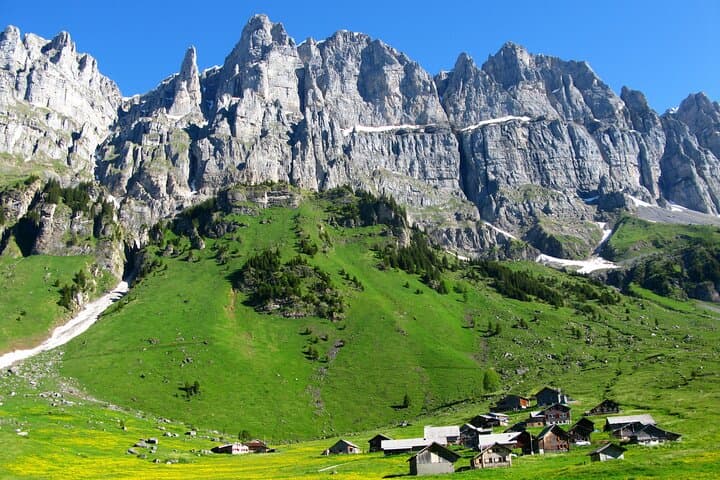
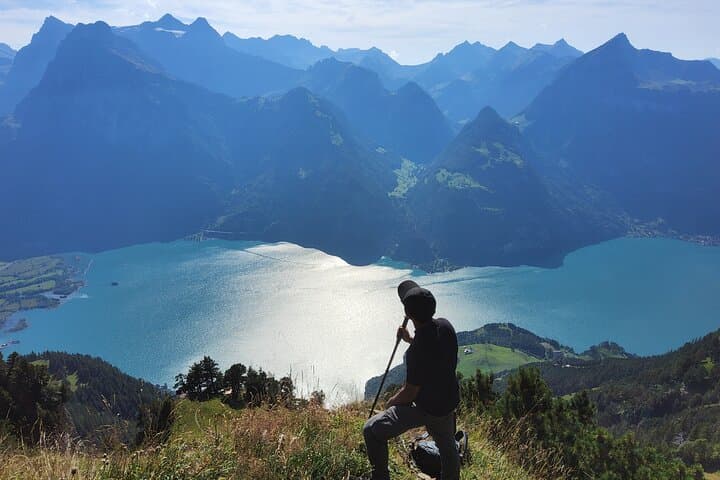
A cool, clear morning air slices through the valley as the guide leads a small group up a grassy ramp toward a ridgeline. Stones click under boot tread, a distant waterfall dares you to quicken your pace, and the skyline of jagged peaks frames the walk like a map come to life.
Verified experiences and guided adventures in the surrounding area.
Operated by Trekking Switzerland · Zurich, Canton of Zurich
A cool, clear morning air slices through the valley as the guide leads a small group up a grassy ramp toward a ridgeline. Stones click under boot tread, a distant waterfall dares you to quicken your pace, and the skyline of jagged peaks frames the walk like a map come to life.
This guided, flexible hike threads together the quieter faces of the Swiss Alps—meadows once used for grazing, old stone mule tracks, and viewpoints that were long overlooked by mass itineraries. Geologically the Alps are young and steep, folded by tectonic force into limestone ribs and glacial basins; hikers will notice rounded cirques and scoured rock left by the last ice age. Culturally, the route follows paths shepherds and seasonal farmers used for centuries, and local hamlets still preserve alpine dairy traditions.
Expect personalized pacing: the operator adapts routes to fitness and season, offering half‑day to full‑day options (roughly 5–12 hours). Terrain ranges from compact dirt trails and meadow tracks to short rocky sections where poles are useful; in winter, snowshoes replace boots and the rhythm slows under packed snow.
Practical points: start early for stable weather and clearer views, carry a waterproof shell and extra layers, and bring 1–2 liters of water plus snacks to sustain steady climbing. The guide handles navigation and photos, but hikers should be prepared for changing mountain conditions and moderate elevation gain. This is an approachable way to access lesser‑visited alpine scenery with local knowledge and minimal crowds.
easy.
5–12 hours.
Suitable for walkers in reasonable health; requires steady footing on uneven ground and the ability to handle sustained uphill sections.
The operator offers flexible pick‑up options across Switzerland—confirm meeting point at booking; central cities like Zurich are common pickup hubs.
Yes; routes are tailored to fitness and experience, making this suitable for hikers comfortable with steady uphill walking and uneven trails.
In winter the trip swaps to snowshoeing on compact snow; pace is slower, and snowshoes are provided as part of the tour.
Yes—the guide handles navigation and shares unlimited photos and videos after the hike via Google Photos.
Many trails follow centuries‑old pastoral routes used for seasonal grazing; stone walls and old footbridges mark historical alpine agriculture.
Stick to marked trails, pack out all waste, and avoid disturbing grazing areas; guides emphasize low‑impact practices to protect fragile alpine flora.
Trekking Switzerland operates guided outdoor trips and adventures with an emphasis on safety, stewardship, and memorable experiences.
A cool, clear morning air slices through the valley as the guide leads a small group up a grassy ramp toward a ridgeline. Stones click under boot tread, a distant waterfall dares you to quicken your pace, and the skyline of jagged peaks frames the walk like a map come to life.
A cool, clear morning air slices through the valley as the guide leads a small group up a grassy ramp toward a ridgeline. Stones click under boot tread, a distant waterfall dares you to quicken your pace, and the skyline of jagged peaks frames the walk like a map come to life.
This guided, flexible hike threads together the quieter faces of the Swiss Alps—meadows once used for grazing, old stone mule tracks, and viewpoints that were long overlooked by mass itineraries. Geologically the Alps are young and steep, folded by tectonic force into limestone ribs and glacial basins; hikers will notice rounded cirques and scoured rock left by the last ice age. Culturally, the route follows paths shepherds and seasonal farmers used for centuries, and local hamlets still preserve alpine dairy traditions.
Expect personalized pacing: the operator adapts routes to fitness and season, offering half‑day to full‑day options (roughly 5–12 hours). Terrain ranges from compact dirt trails and meadow tracks to short rocky sections where poles are useful; in winter, snowshoes replace boots and the rhythm slows under packed snow.
Practical points: start early for stable weather and clearer views, carry a waterproof shell and extra layers, and bring 1–2 liters of water plus snacks to sustain steady climbing. The guide handles navigation and photos, but hikers should be prepared for changing mountain conditions and moderate elevation gain. This is an approachable way to access lesser‑visited alpine scenery with local knowledge and minimal crowds.