THE ADVENTURE COLLECTIVE® · Independent discovery and booking for outdoor travel

Board a morning boat from Isla Mujeres for a guided snorkel with seasonal whale sharks, then return to Playa Norte for a beachside lunch. This full-day tour pairs close, regulated encounters with practical on-water guidance for first-time snorkelers.
Board a morning boat from Isla Mujeres for a guided snorkel with seasonal whale sharks, then return to Playa Norte for a beachside lunch. This full-day tour pairs close, regulated encounters with practical on-water guidance for first-time snorkelers.
A boat slips away from Isla Mujeres under a hard, bright sun and the Caribbean spreads out in glassy blue. Within an hour the water deepens to a cobalt that seems to hide giants; the skipper scans the horizon, crew readying masks and flotation vests. When the first broad, spotted flank appears, the sea changes tempo—the whale shark glides like a slow, living reef and you slip quietly alongside to watch filtering mouths and placid eyes.
Verified experiences and guided adventures in the surrounding area.
Operated by Contoy Excursions · Isla Mujeres, Quintana Roo
A boat slips away from Isla Mujeres under a hard, bright sun and the Caribbean spreads out in glassy blue. Within an hour the water deepens to a cobalt that seems to hide giants; the skipper scans the horizon, crew readying masks and flotation vests. When the first broad, spotted flank appears, the sea changes tempo—the whale shark glides like a slow, living reef and you slip quietly alongside to watch filtering mouths and placid eyes.
This seasonal gathering off the Yucatán is driven by plankton blooms and currents along the continental shelf, a natural event long observed by local fishers. Isla Mujeres itself carries Mayan echoes—once a site for offerings to the goddess Ixchel—and today combines small-town seafood stalls with tourism tuned to respectful wildlife viewing.
Geology here is limestone shelf and shallow coral patches; encounters typically happen several kilometers northeast of the island where the sea floor drops and food concentrates. Culture on Isla Mujeres balances tourism and fishing; operators follow national guidelines limiting approach distance and group size to reduce stress on the animals.
Practical guidance: expect a 6–8 hour outing, moderate sea motion, and three short in-water swims per boat grouping. Bring a well-fitting snorkel mask, reef-safe sunscreen, a neoprene top for chafing, and light hydration. Listen to briefings—no touching, no flash photography, and enter the water calmly to avoid startling the sharks. Timing is everything: mornings often offer calmer seas and clearer water. Back on Playa Norte, a simple seafood lunch is the quiet punctuation after a long blue day.
moderate.
6–8 hours.
Moderate fitness—able to swim short distances, exit and re-enter a boat, and manage several hours on the water.
Peak season runs late spring through early fall, with highest concentrations in summer months when plankton blooms attract the animals.
No—whale sharks are filter feeders and not aggressive, but encounters are regulated: keep distance, avoid touching, and follow your guide’s instructions.
Typical inclusions are snorkel equipment, guided boat transit to the feeding area, snacks, and a beachside lunch back on Isla Mujeres; confirm specifics with your operator.
Non-swimmers can participate if comfortable on a boat and wearing a life jacket; most operators require at least a basic level of fitness and water confidence.
Isla Mujeres has pre-Columbian ties to the Mayan goddess Ixchel and later developed as a fishing community before tourism centered on marine encounters.
Operators follow approach-distance guidelines and encourage reef-safe sunscreen and no-touch policies to minimize stress on whale sharks and protect local coral systems.
Contoy Excursions operates guided outdoor trips and adventures with an emphasis on safety, stewardship, and memorable experiences.
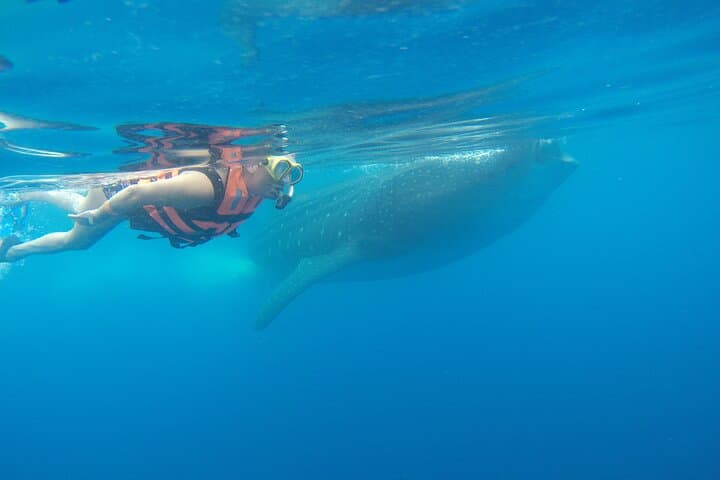
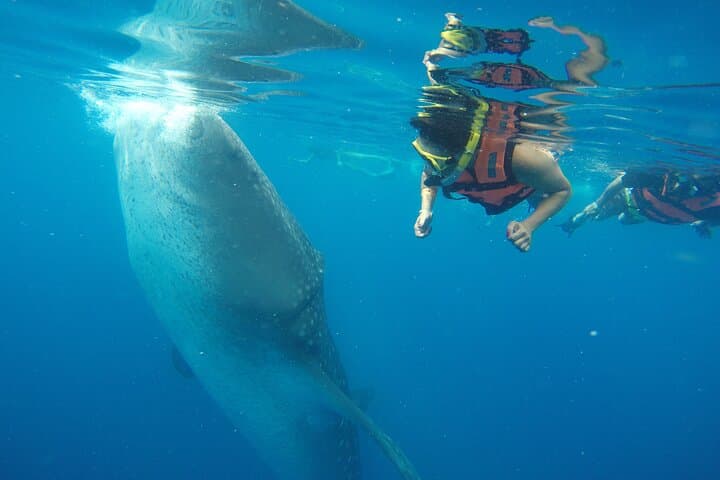
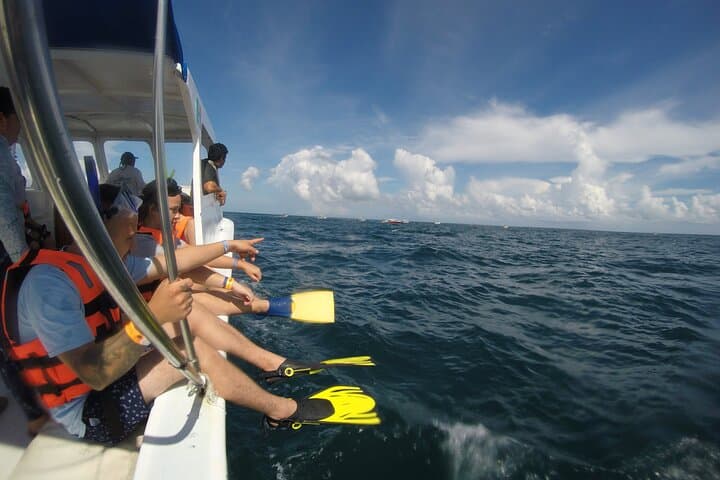
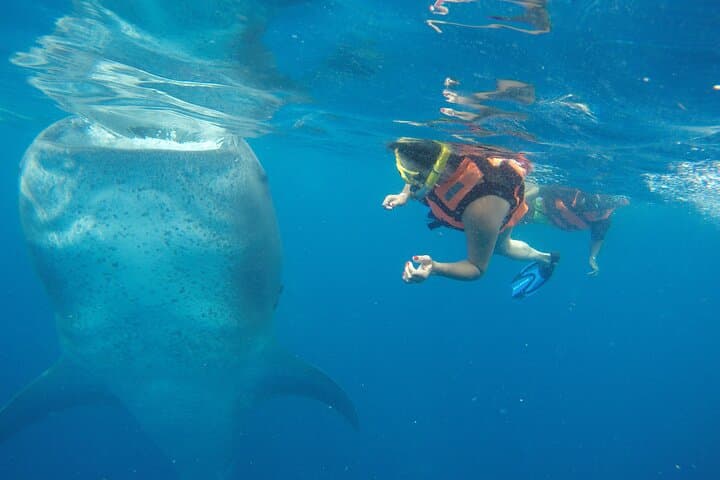
A boat slips away from Isla Mujeres under a hard, bright sun and the Caribbean spreads out in glassy blue. Within an hour the water deepens to a cobalt that seems to hide giants; the skipper scans the horizon, crew readying masks and flotation vests. When the first broad, spotted flank appears, the sea changes tempo—the whale shark glides like a slow, living reef and you slip quietly alongside to watch filtering mouths and placid eyes.
A boat slips away from Isla Mujeres under a hard, bright sun and the Caribbean spreads out in glassy blue. Within an hour the water deepens to a cobalt that seems to hide giants; the skipper scans the horizon, crew readying masks and flotation vests. When the first broad, spotted flank appears, the sea changes tempo—the whale shark glides like a slow, living reef and you slip quietly alongside to watch filtering mouths and placid eyes.
This seasonal gathering off the Yucatán is driven by plankton blooms and currents along the continental shelf, a natural event long observed by local fishers. Isla Mujeres itself carries Mayan echoes—once a site for offerings to the goddess Ixchel—and today combines small-town seafood stalls with tourism tuned to respectful wildlife viewing.
Geology here is limestone shelf and shallow coral patches; encounters typically happen several kilometers northeast of the island where the sea floor drops and food concentrates. Culture on Isla Mujeres balances tourism and fishing; operators follow national guidelines limiting approach distance and group size to reduce stress on the animals.
Practical guidance: expect a 6–8 hour outing, moderate sea motion, and three short in-water swims per boat grouping. Bring a well-fitting snorkel mask, reef-safe sunscreen, a neoprene top for chafing, and light hydration. Listen to briefings—no touching, no flash photography, and enter the water calmly to avoid startling the sharks. Timing is everything: mornings often offer calmer seas and clearer water. Back on Playa Norte, a simple seafood lunch is the quiet punctuation after a long blue day.