THE ADVENTURE COLLECTIVE® · Independent discovery and booking for outdoor travel

Get close to migrating humpbacks in Moorea on a small, guided swim that limits swimmers to six and prioritizes animal welfare. This 4‑hour excursion balances intimate ocean encounters with clear safety and conservation practices.
Get close to migrating humpbacks in Moorea on a small, guided swim that limits swimmers to six and prioritizes animal welfare. This 4‑hour excursion balances intimate ocean encounters with clear safety and conservation practices.
The boat slips off the reef at dawn and the lagoon opens like a wide, breathing space. Salt air sharpens the light; the captain eases the engine and the water, as if by contract, quiets. A breath ahead, a dark back breaks the surface and the whale announces its passage with a slow, deliberate exhale—an invitation more than a show.
Verified experiences and guided adventures in the surrounding area.
Operated by MOOREA REO TOURS · Moorea, Society Islands
The boat slips off the reef at dawn and the lagoon opens like a wide, breathing space. Salt air sharpens the light; the captain eases the engine and the water, as if by contract, quiets. A breath ahead, a dark back breaks the surface and the whale announces its passage with a slow, deliberate exhale—an invitation more than a show.
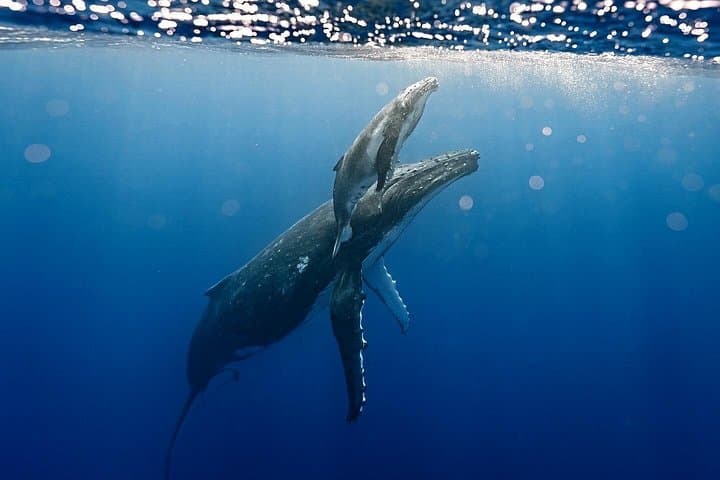
Moorea sits on uplifted volcanic rock shaped by waves and time, its bays collecting generations of Polynesian voyagers. Each winter the South Pacific becomes a nursery: humpback whales travel from Antarctic feeding grounds to mate and calf in these warm waters, a rhythm local guides have read for decades. The guides on this small‑group trip are certified and steeped in Polynesian respect for the sea; encounters are conducted with strict proximity and behavior rules so the animals set the pace.
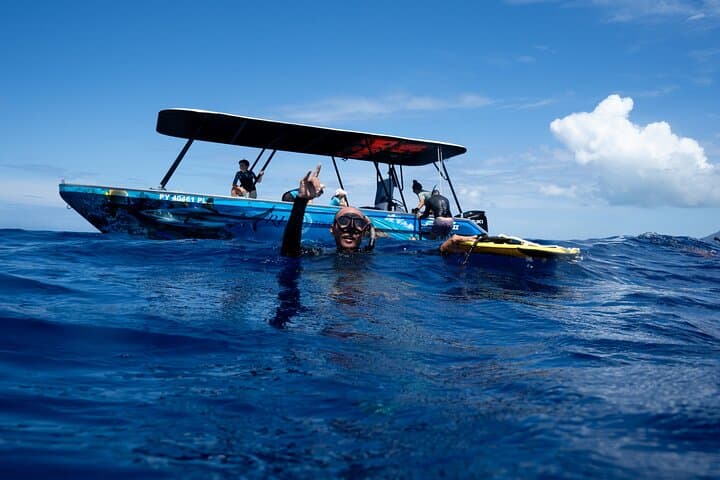
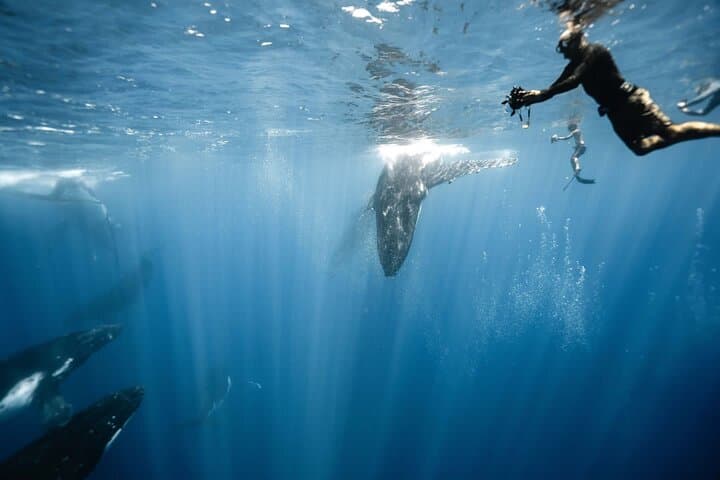
Expect a 4‑hour outing (typically 07:00–11:00 or 12:00–16:00), launched from Moorea's lagoon toward deeper channels. Terrain shifts from sheltered coral flats to open blue where whales surface, breach, or pass beneath your fins. Snorkeling equipment, beverages, and snacks are provided; six swimmers maximum preserves calm and safety.
Practical notes: have a moderate swim fitness level, wear a rash guard or thin wetsuit in cooler months, and use reef‑safe sunscreen. Listen to the guide for entry and exit procedures—sudden movements can startle both people and whales. Above all, follow the guides’ respectful distance and no‑touch rules: the encounter is theirs to offer, not ours to take.
moderate.
4 hours.
Expect to swim in open water and snorkel from a small boat; a moderate level of cardiovascular fitness and comfort in waves is recommended.
Humpback whales are typically present from about July through November; peak encounters often occur in the austral winter and early spring months.
Certified guides enforce minimum approach distances and control swimmer numbers — the animal dictates proximity; touching is not allowed and boats keep a respectful buffer.
Yes — participants should be comfortable snorkeling in open water and able to swim short distances independently between the boat and the animals.
Tours may be cancelled for safety and animal welfare if sea conditions are poor; the operator’s policy indicates weather‑related cancellations are possible and non‑refundable.
Moorea and the Society Islands have long been part of Polynesian navigation routes; modern whale‑watching builds on local knowledge of seasonal animal movements.
Operators here follow strict approach and swim limits to reduce disturbance; choose guides who enforce no‑touch rules and use reef‑safe products to minimize impact.
MOOREA REO TOURS operates guided outdoor trips and adventures with an emphasis on safety, stewardship, and memorable experiences.

The boat slips off the reef at dawn and the lagoon opens like a wide, breathing space. Salt air sharpens the light; the captain eases the engine and the water, as if by contract, quiets. A breath ahead, a dark back breaks the surface and the whale announces its passage with a slow, deliberate exhale—an invitation more than a show.
The boat slips off the reef at dawn and the lagoon opens like a wide, breathing space. Salt air sharpens the light; the captain eases the engine and the water, as if by contract, quiets. A breath ahead, a dark back breaks the surface and the whale announces its passage with a slow, deliberate exhale—an invitation more than a show.
Moorea sits on uplifted volcanic rock shaped by waves and time, its bays collecting generations of Polynesian voyagers. Each winter the South Pacific becomes a nursery: humpback whales travel from Antarctic feeding grounds to mate and calf in these warm waters, a rhythm local guides have read for decades. The guides on this small‑group trip are certified and steeped in Polynesian respect for the sea; encounters are conducted with strict proximity and behavior rules so the animals set the pace.
Expect a 4‑hour outing (typically 07:00–11:00 or 12:00–16:00), launched from Moorea's lagoon toward deeper channels. Terrain shifts from sheltered coral flats to open blue where whales surface, breach, or pass beneath your fins. Snorkeling equipment, beverages, and snacks are provided; six swimmers maximum preserves calm and safety.
Practical notes: have a moderate swim fitness level, wear a rash guard or thin wetsuit in cooler months, and use reef‑safe sunscreen. Listen to the guide for entry and exit procedures—sudden movements can startle both people and whales. Above all, follow the guides’ respectful distance and no‑touch rules: the encounter is theirs to offer, not ours to take.