THE ADVENTURE COLLECTIVE® · Independent discovery and booking for outdoor travel

Spend a long, humid day exploring three cenotes and a turquoise lagoon south of Tulum — swim in crystalline caverns, photograph shafts of sunlight, and finish with a Mayan-style buffet in the jungle. Ideal for travelers who want an all-in-one water experience with local context.
Spend a long, humid day exploring three cenotes and a turquoise lagoon south of Tulum — swim in crystalline caverns, photograph shafts of sunlight, and finish with a Mayan-style buffet in the jungle. Ideal for travelers who want an all-in-one water experience with local context.
You step off the minibus into humidity and sun-dappled jungle; limestone sinkholes gurgle like held breath and the air smells of wet earth and salt. The day unfolds around water that feels older than the ruins nearby — caverns where light slices through holes in the ceiling, and a green-turquoise lagoon whose center drops into a deep, secret well.
Verified experiences and guided adventures in the surrounding area.
Operated by Caribe Páradise Tours · Tulum, Quintana Roo
You step off the minibus into humidity and sun-dappled jungle; limestone sinkholes gurgle like held breath and the air smells of wet earth and salt. The day unfolds around water that feels older than the ruins nearby — caverns where light slices through holes in the ceiling, and a green-turquoise lagoon whose center drops into a deep, secret well.
These cenotes are collapse-formed openings in the Yucatán limestone, where groundwater carved caves over millennia. The Maya regarded some cenotes as ceremonial portals; local guides still recount offerings and rituals tied to freshwater access. Geologically, the region sits on a porous karst plateau, so underground rivers mingle with surface pools and create the striking clarity and color you see.
Cultural notes: modest restaurants near cenotes serve regional dishes and the tour includes a buffet lunch with local flavors. Expect basic facilities at popular sites (changing rooms, shaded seating) and more rustic edges at secluded holes.
Practical guidance: this is a full-day trip (roughly 11–12 hours) with several 45–120 minute swims and short walks on uneven, sometimes slippery limestone. Bring a biodegradable reef-safe sunscreen and a lightweight towel; rent or bring a snorkel if you want to study fish and rock formations. Wear water shoes or sturdy sandals for traction on wet steps and jump platforms.
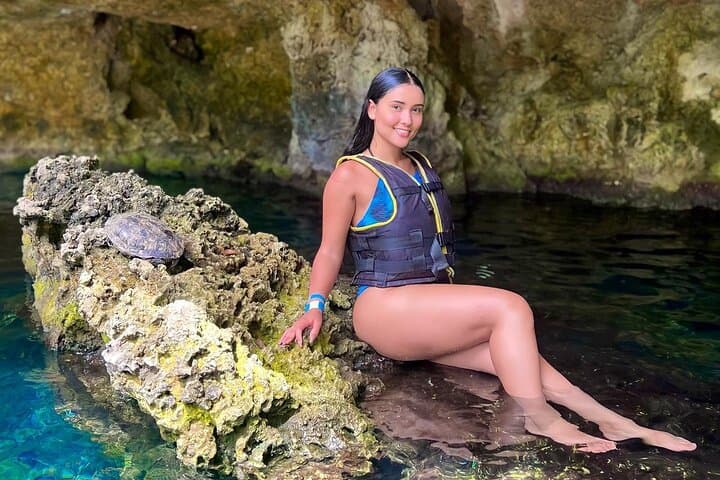
Timing matters: arrive with enough daylight for the cave cenote when beams of sun are strongest, and keep a small dry bag for electronics. The water is calm but deep in places — if you’re not a confident swimmer, use the provided life vests. Above all, move slowly and give the water space; these are living features shaped by time.
easy.
11–12 hours.
Suitable for most fitness levels; requires basic swimming ability and mobility on uneven terrain
The full-day tour runs about 11–12 hours and includes round-trip transport from Tulum, entrance to three cenotes and a lagoon, box breakfast, and a Mexican buffet lunch.
No — basic swimming ability is sufficient and life vests are typically available at cenotes for less confident swimmers.
Most popular cenotes on this route offer basic changing areas and restrooms; secure lockers may be limited so carry valuables in a dry bag.
Some tours provide basic snorkels and masks, but bringing your own ensures a better fit and hygiene.
Cenotes were vital to Maya communities for water and ritual; many near Tulum were used as ceremonial sites and sources of groundwater for settlements.
Visitors are asked to use biodegradable products and avoid soaps in cenotes; many operators promote low-impact practices to protect karst aquifers and fragile cave life.
Caribe Páradise Tours operates guided outdoor trips and adventures with an emphasis on safety, stewardship, and memorable experiences.
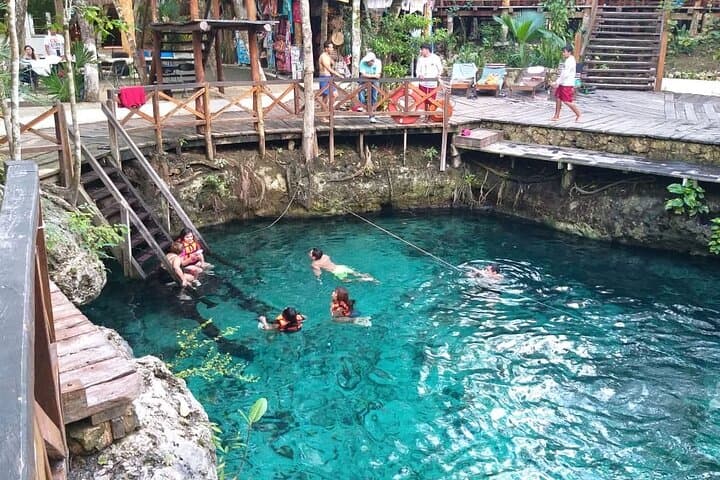
You step off the minibus into humidity and sun-dappled jungle; limestone sinkholes gurgle like held breath and the air smells of wet earth and salt. The day unfolds around water that feels older than the ruins nearby — caverns where light slices through holes in the ceiling, and a green-turquoise lagoon whose center drops into a deep, secret well.
You step off the minibus into humidity and sun-dappled jungle; limestone sinkholes gurgle like held breath and the air smells of wet earth and salt. The day unfolds around water that feels older than the ruins nearby — caverns where light slices through holes in the ceiling, and a green-turquoise lagoon whose center drops into a deep, secret well.
These cenotes are collapse-formed openings in the Yucatán limestone, where groundwater carved caves over millennia. The Maya regarded some cenotes as ceremonial portals; local guides still recount offerings and rituals tied to freshwater access. Geologically, the region sits on a porous karst plateau, so underground rivers mingle with surface pools and create the striking clarity and color you see.
Cultural notes: modest restaurants near cenotes serve regional dishes and the tour includes a buffet lunch with local flavors. Expect basic facilities at popular sites (changing rooms, shaded seating) and more rustic edges at secluded holes.
Practical guidance: this is a full-day trip (roughly 11–12 hours) with several 45–120 minute swims and short walks on uneven, sometimes slippery limestone. Bring a biodegradable reef-safe sunscreen and a lightweight towel; rent or bring a snorkel if you want to study fish and rock formations. Wear water shoes or sturdy sandals for traction on wet steps and jump platforms.
Timing matters: arrive with enough daylight for the cave cenote when beams of sun are strongest, and keep a small dry bag for electronics. The water is calm but deep in places — if you’re not a confident swimmer, use the provided life vests. Above all, move slowly and give the water space; these are living features shaped by time.