THE ADVENTURE COLLECTIVE® · Independent discovery and booking for outdoor travel

Hike through palm gardens and swim into a hidden waterfall cave at Wadi Shab before dropping into the bright aquamarine of Bimmah Sinkhole. This full-day Muscat escape blends canyon walking, wild swimming, and coastal geology with practical ease.
Hike through palm gardens and swim into a hidden waterfall cave at Wadi Shab before dropping into the bright aquamarine of Bimmah Sinkhole. This full-day Muscat escape blends canyon walking, wild swimming, and coastal geology with practical ease.
Dawn on the coastal highway east of Muscat and the Gulf of Oman keeps pace beside you, silver and unblinking. By the time the road thins near Tiwi, cliffs tighten, palms gather, and a narrow canyon cleaves into the limestone. This is Wadi Shab, where a footpath threads past farms and falaj channels and clear pools call you forward. The water doesn’t shout; it dares—cool, glassy, and willing to carry you deeper than you planned.
Verified experiences and guided adventures in the surrounding area.
Operated by Desert Line · Tiwi, Ash Sharqiyah South
Dawn on the coastal highway east of Muscat and the Gulf of Oman keeps pace beside you, silver and unblinking. By the time the road thins near Tiwi, cliffs tighten, palms gather, and a narrow canyon cleaves into the limestone. This is Wadi Shab, where a footpath threads past farms and falaj channels and clear pools call you forward. The water doesn’t shout; it dares—cool, glassy, and willing to carry you deeper than you planned.
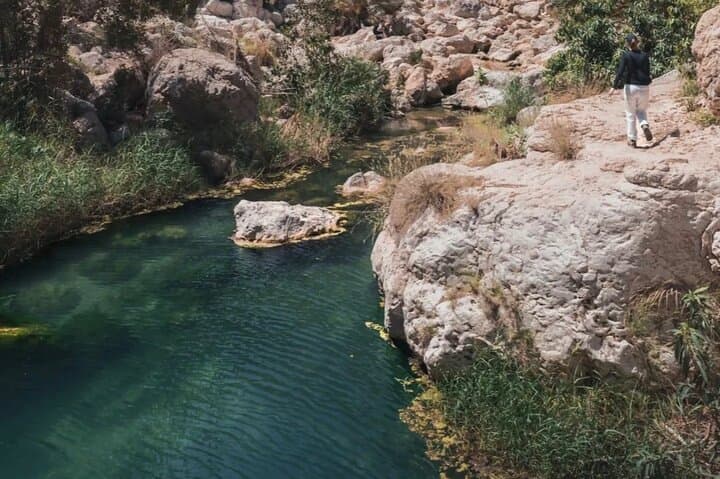
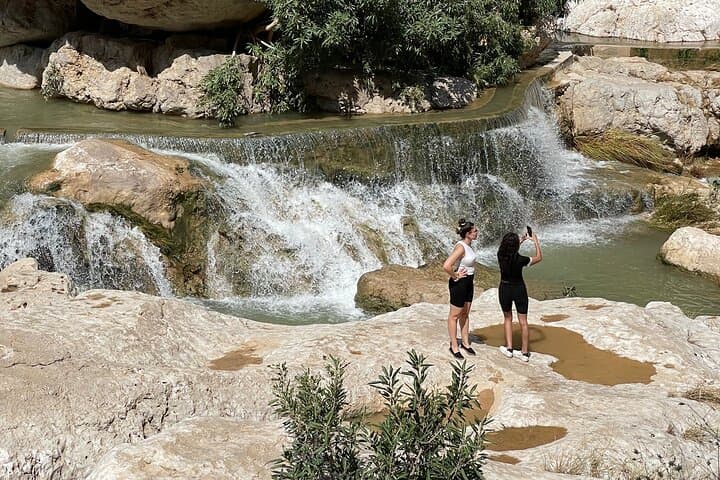
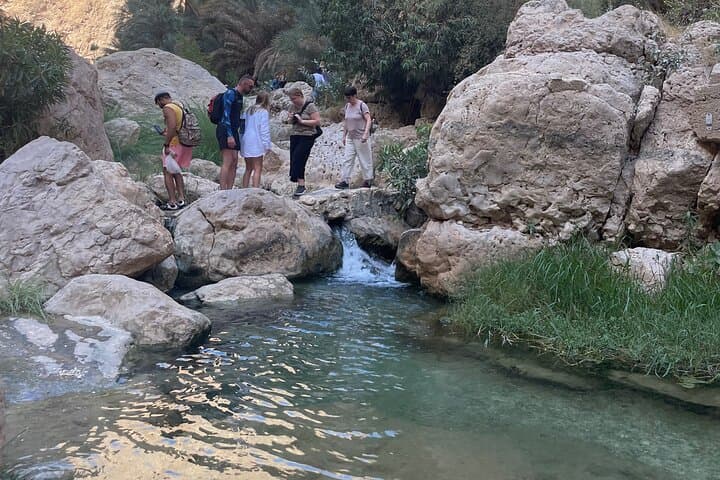
The approach is straightforward: a quick local boat shuttle across the mouth of the wadi, then roughly 3 km of walking each way on a rocky path that climbs and dips along ledges (about 120 m cumulative gain). Date palms shade small plots irrigated by aflaj—Oman’s ancient water systems recognized by UNESCO—while green bee-eaters flick through the heat. At the upper pools you stash your backpack, slip into the water, and swim through a string of jade basins toward a slim fissure. Squeeze through and a hidden chamber opens, where a small waterfall pours into a turquoise grotto. The canyon hums, echoing your heartbeat.
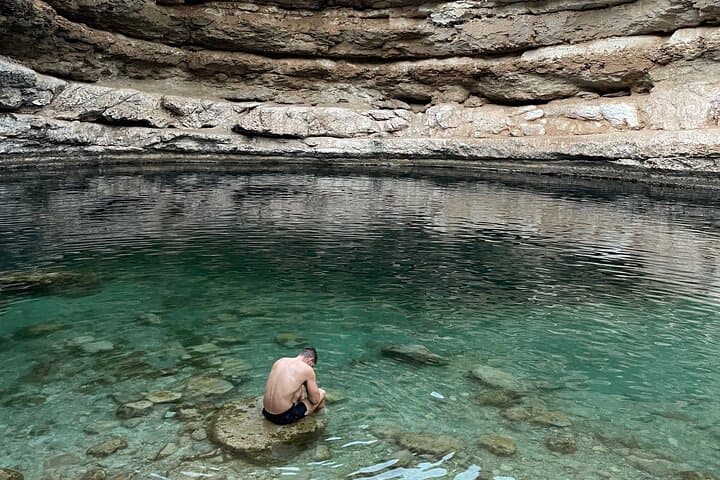
After the hike-and-swim circuit, the route arcs back to the coast for Hawiyat Najm, better known as Bimmah Sinkhole. Local lore says a star fell here; geology says otherwise—a limestone roof gave way over a brackish, sea-fed cavity. Either story fits the color: a bright aquamarine bowl with stone steps leading down. The water nips at your toes with tiny fish, and midday light turns the pool electric.
This full-day tour balances movement and pause: 1.5–2 hours’ drive each way from Muscat, 45–60 minutes’ hike in, 60–90 minutes swimming, plus time for a casual local lunch and a sinkhole swim. Sur and the fishing villages along this coast have long traded on timing; you should too. Start early to beat the heat and crowds, carry at least 2 liters of water per person, and wear sturdy trail shoes plus water shoes for the pools. Modest swimwear is appreciated.
Conditions are desert-hot most of the year, with winter offering the mildest temperatures. Flash floods are rare but real after heavy rain—guides monitor forecasts and will pivot if needed. There are restrooms at the Wadi Shab parking area and at Hawiyat Najm Park, but no lockers; a small dry bag keeps phones and snacks safe. Non-swimmers can enjoy the walk and lower pools, but the cave requires comfortable swimming in deep water—life vests are available from some operators or for rent on busy days. Finish with a rinse of sea breeze at Fins Beach, where white sand meets clear, shallow water and the coast keeps unfolding, urging you back for another lap.
moderate.
7–9 hours.
Comfortable walking on uneven terrain for up to 6 km total with light scrambling and a sustained swim of 200–300 m.
Plan on about 3 km each way (6 km round trip) with roughly 120 m of cumulative elevation gain and some scrambling.
Yes. Reaching the hidden chamber requires swimming 200–300 m through deep pools and a narrow crack; non-swimmers can enjoy the lower pools without entering the cave.
Some guides carry life vests and local vendors may rent them on busy days—confirm with your operator before departure if you need one.
A short boat shuttle usually runs from the parking area across the wadi mouth for a small cash fee; service may pause in rough conditions or off-hours.
Restrooms are at the Wadi Shab parking area and at Hawiyat Najm Park. There are no lockers—keep valuables minimal and use a dry bag.
October to April offers cooler hiking temps. Summer is possible with an early start, extra water, and sun protection.
Wadi farming here depends on aflaj—gravity-fed irrigation channels that have watered Omani settlements for over a millennium. Hawiyat Najm’s name means “fallen star,” nodding to a meteor legend, though the sinkhole formed by limestone collapse.
Stick to established paths to protect crops and fragile banks, and pack out all trash. Use mineral sunscreen or cover up to reduce chemical load in the pools.
Desert Line operates guided outdoor trips and adventures with an emphasis on safety, stewardship, and memorable experiences.
Dawn on the coastal highway east of Muscat and the Gulf of Oman keeps pace beside you, silver and unblinking. By the time the road thins near Tiwi, cliffs tighten, palms gather, and a narrow canyon cleaves into the limestone. This is Wadi Shab, where a footpath threads past farms and falaj channels and clear pools call you forward. The water doesn’t shout; it dares—cool, glassy, and willing to carry you deeper than you planned.
Dawn on the coastal highway east of Muscat and the Gulf of Oman keeps pace beside you, silver and unblinking. By the time the road thins near Tiwi, cliffs tighten, palms gather, and a narrow canyon cleaves into the limestone. This is Wadi Shab, where a footpath threads past farms and falaj channels and clear pools call you forward. The water doesn’t shout; it dares—cool, glassy, and willing to carry you deeper than you planned.
The approach is straightforward: a quick local boat shuttle across the mouth of the wadi, then roughly 3 km of walking each way on a rocky path that climbs and dips along ledges (about 120 m cumulative gain). Date palms shade small plots irrigated by aflaj—Oman’s ancient water systems recognized by UNESCO—while green bee-eaters flick through the heat. At the upper pools you stash your backpack, slip into the water, and swim through a string of jade basins toward a slim fissure. Squeeze through and a hidden chamber opens, where a small waterfall pours into a turquoise grotto. The canyon hums, echoing your heartbeat.
After the hike-and-swim circuit, the route arcs back to the coast for Hawiyat Najm, better known as Bimmah Sinkhole. Local lore says a star fell here; geology says otherwise—a limestone roof gave way over a brackish, sea-fed cavity. Either story fits the color: a bright aquamarine bowl with stone steps leading down. The water nips at your toes with tiny fish, and midday light turns the pool electric.
This full-day tour balances movement and pause: 1.5–2 hours’ drive each way from Muscat, 45–60 minutes’ hike in, 60–90 minutes swimming, plus time for a casual local lunch and a sinkhole swim. Sur and the fishing villages along this coast have long traded on timing; you should too. Start early to beat the heat and crowds, carry at least 2 liters of water per person, and wear sturdy trail shoes plus water shoes for the pools. Modest swimwear is appreciated.
Conditions are desert-hot most of the year, with winter offering the mildest temperatures. Flash floods are rare but real after heavy rain—guides monitor forecasts and will pivot if needed. There are restrooms at the Wadi Shab parking area and at Hawiyat Najm Park, but no lockers; a small dry bag keeps phones and snacks safe. Non-swimmers can enjoy the walk and lower pools, but the cave requires comfortable swimming in deep water—life vests are available from some operators or for rent on busy days. Finish with a rinse of sea breeze at Fins Beach, where white sand meets clear, shallow water and the coast keeps unfolding, urging you back for another lap.