THE ADVENTURE COLLECTIVE® · Independent discovery and booking for outdoor travel

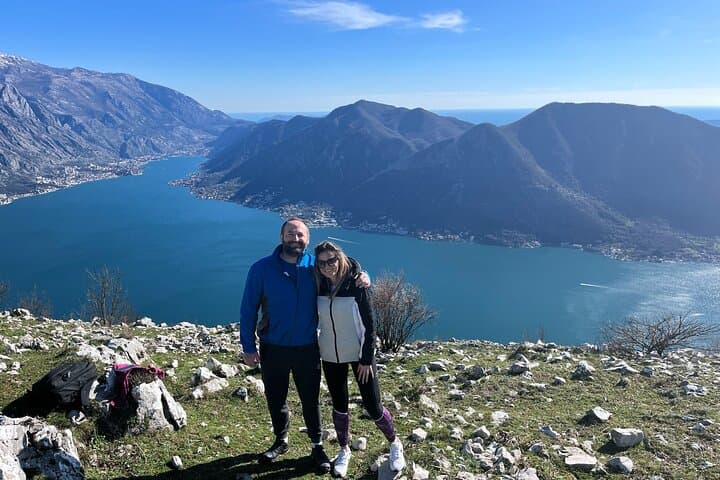
Follow an old Austro-Hungarian road from Risan to the Sveti Andrija fortress and earn panoramic views of the Bay of Kotor. This easy-to-moderate private hike mixes coastal history, beech forests, and summit picnics at nearly 1,000 m.
Follow an old Austro-Hungarian road from Risan to the Sveti Andrija fortress and earn panoramic views of the Bay of Kotor. This easy-to-moderate private hike mixes coastal history, beech forests, and summit picnics at nearly 1,000 m.
The trail begins in the stone lanes of Risan and quickly trades village hush for the wind and bird-song of the beech woods. The old Austro-Hungarian road climbs in easy switchbacks, the horses that once used it long gone but their route still guiding the footsteps of modern hikers. With each hairpin the bay widens: Perast’s tiny island churches, the Verige narrows, and the patchwork of red roofs below.
Verified experiences and guided adventures in the surrounding area.
Operated by Kotour · Risan, Kotor Municipality
The trail begins in the stone lanes of Risan and quickly trades village hush for the wind and bird-song of the beech woods. The old Austro-Hungarian road climbs in easy switchbacks, the horses that once used it long gone but their route still guiding the footsteps of modern hikers. With each hairpin the bay widens: Perast’s tiny island churches, the Verige narrows, and the patchwork of red roofs below.
This route follows a 19th-century military road carved into Vrmac’s slopes; remnants of stonework and ruined houses speak to the region’s maritime wealth and Austro-Hungarian presence. Geologically, you move from coastal limestone formations up through weathered scree and beech-dominated soils, offering sweeping viewpoints where the bay’s deep blue dares you to keep looking.
Culturally, the walk threads seaside towns known for sailors and baroque palaces—Perast’s Our Lady of the Rocks is a short detour—and the summit is crowned by the compact Sveti Andrija fortress. Locals still graze sheep on the slopes and seasonal olives dot lower terraces.
Practical guidance: plan 4–5 hours door-to-door with photo and picnic stops at roughly 900–1,000 m elevation. Trails are well-graded but uneven; wear stout shoes and bring water and layered clothing for wind and sun exposure. Start early to avoid midday heat and to catch the clearest air for photos; expect some muddy patches in spring and windier conditions in winter. This private, family-friendly hike pairs history, accessible climbing, and dramatic panoramas—ideal for hikers who want big views without technical scrambling.
moderate.
4–5 hours.
Suitable for moderately fit participants who can handle sustained uphill walking and uneven terrain; families with teens can manage.
Rated easy-to-moderate: sustained uphill walking but no technical climbing; suitable for most reasonably fit people.
Yes—private pickup and drop-off from hotels is included as part of the tour.
Families with teenage children are suitable; younger children may find the duration and elevation gain challenging.
The tour includes access to viewpoints and the fortress area as described; confirm with the operator if any local site fees apply.
The route follows a late 19th-century Austro-Hungarian military road; nearby towns like Perast grew wealthy from seafaring and baroque trade.
Trails are sensitive to erosion—stay on the historic road, pack out rubbish, and avoid trampling fragile vegetation to protect the beech understory.
Kotour operates guided outdoor trips and adventures with an emphasis on safety, stewardship, and memorable experiences.
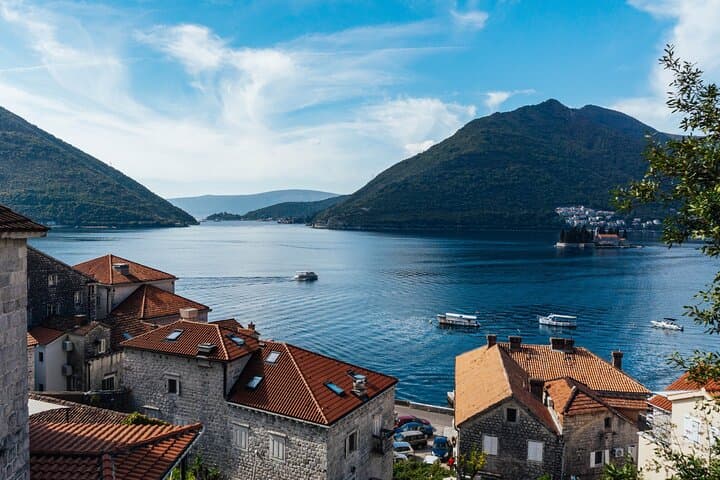
The trail begins in the stone lanes of Risan and quickly trades village hush for the wind and bird-song of the beech woods. The old Austro-Hungarian road climbs in easy switchbacks, the horses that once used it long gone but their route still guiding the footsteps of modern hikers. With each hairpin the bay widens: Perast’s tiny island churches, the Verige narrows, and the patchwork of red roofs below.
The trail begins in the stone lanes of Risan and quickly trades village hush for the wind and bird-song of the beech woods. The old Austro-Hungarian road climbs in easy switchbacks, the horses that once used it long gone but their route still guiding the footsteps of modern hikers. With each hairpin the bay widens: Perast’s tiny island churches, the Verige narrows, and the patchwork of red roofs below.
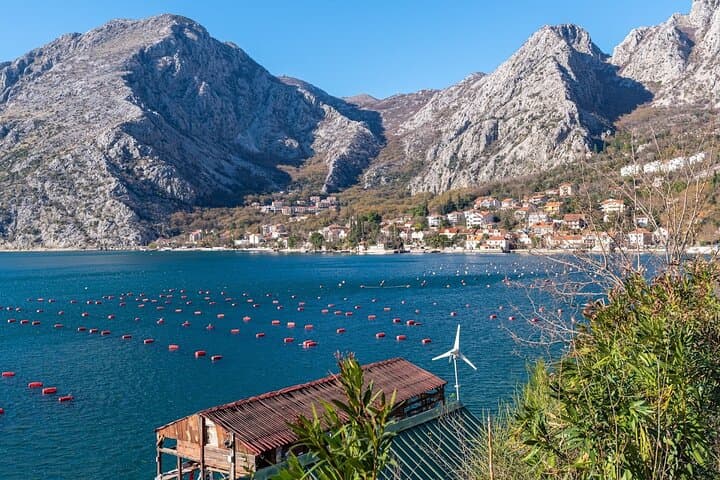
This route follows a 19th-century military road carved into Vrmac’s slopes; remnants of stonework and ruined houses speak to the region’s maritime wealth and Austro-Hungarian presence. Geologically, you move from coastal limestone formations up through weathered scree and beech-dominated soils, offering sweeping viewpoints where the bay’s deep blue dares you to keep looking.
Culturally, the walk threads seaside towns known for sailors and baroque palaces—Perast’s Our Lady of the Rocks is a short detour—and the summit is crowned by the compact Sveti Andrija fortress. Locals still graze sheep on the slopes and seasonal olives dot lower terraces.
Practical guidance: plan 4–5 hours door-to-door with photo and picnic stops at roughly 900–1,000 m elevation. Trails are well-graded but uneven; wear stout shoes and bring water and layered clothing for wind and sun exposure. Start early to avoid midday heat and to catch the clearest air for photos; expect some muddy patches in spring and windier conditions in winter. This private, family-friendly hike pairs history, accessible climbing, and dramatic panoramas—ideal for hikers who want big views without technical scrambling.