THE ADVENTURE COLLECTIVE® · Independent discovery and booking for outdoor travel

A 30-minute helicopter flight from Milford Sound that follows the Milford Track, circles New Zealand’s tallest waterfall—Sutherland Falls (581m)—and lands above Lake Quill for an alpine viewpoint. Expect dramatic aerial vistas, weather-dependent scheduling, and a compact but unforgettable encounter with Fiordland.
A 30-minute helicopter flight from Milford Sound that follows the Milford Track, circles New Zealand’s tallest waterfall—Sutherland Falls (581m)—and lands above Lake Quill for an alpine viewpoint. Expect dramatic aerial vistas, weather-dependent scheduling, and a compact but unforgettable encounter with Fiordland.
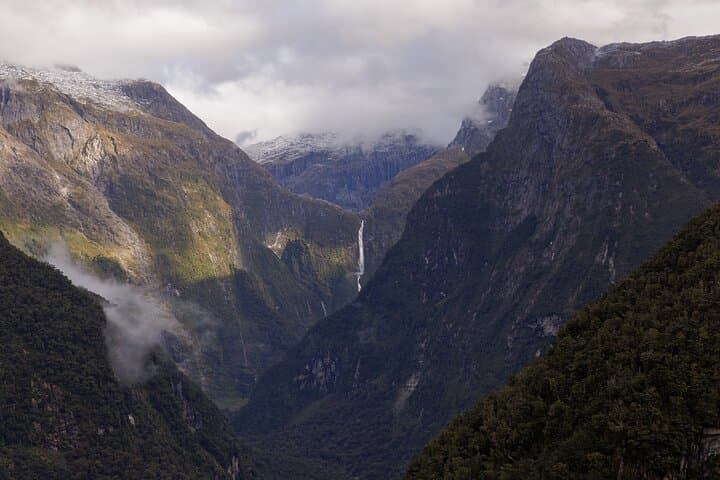
The helicopter lifts off the gravel apron at Milford Sound Airport and, within moments, the steep walls of the fiord lean away beneath you. The Arthur Valley opens like a cut in the mountain—green beech and silver rivers threading toward the Sound—and the chopper follows the line of the famed Milford Track, skimming Lake Ada before angling toward a thunderous drop: Sutherland Falls. From the air the falls do what they do best—throw themselves off the plateau in three dramatic tiers, 581 meters of water that seems to dare the valley to catch it.
Verified experiences and guided adventures in the surrounding area.
Operated by Milford Helicopters · Milford Sound, Southland
The helicopter lifts off the gravel apron at Milford Sound Airport and, within moments, the steep walls of the fiord lean away beneath you. The Arthur Valley opens like a cut in the mountain—green beech and silver rivers threading toward the Sound—and the chopper follows the line of the famed Milford Track, skimming Lake Ada before angling toward a thunderous drop: Sutherland Falls. From the air the falls do what they do best—throw themselves off the plateau in three dramatic tiers, 581 meters of water that seems to dare the valley to catch it.
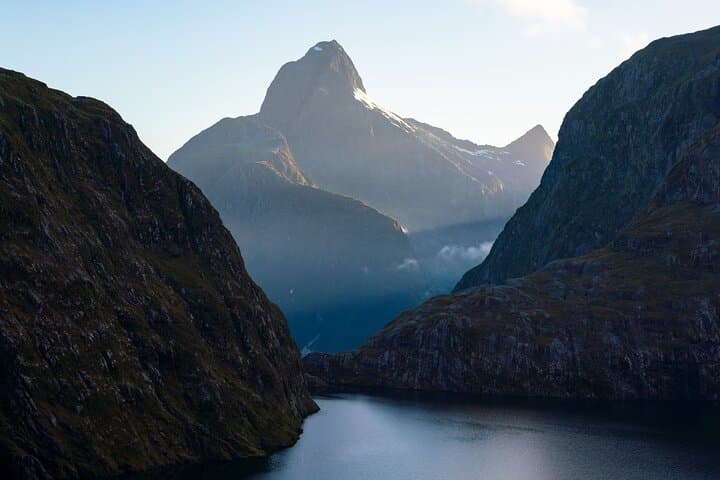
Fiordland is a place written in ice and time. Glaciers gouged the deep U-shaped valleys here during the last ice age, leaving sheer cliffs, hanging valleys, and alpine tarns such as Lake Quill that punctuate the high country. Māori first navigated these coasts and valleys, naming the Sound Piopiotahi; later European explorers and trampers turned the Milford Track into an internationally renowned route, the landscape remaining largely unchanged from the air.
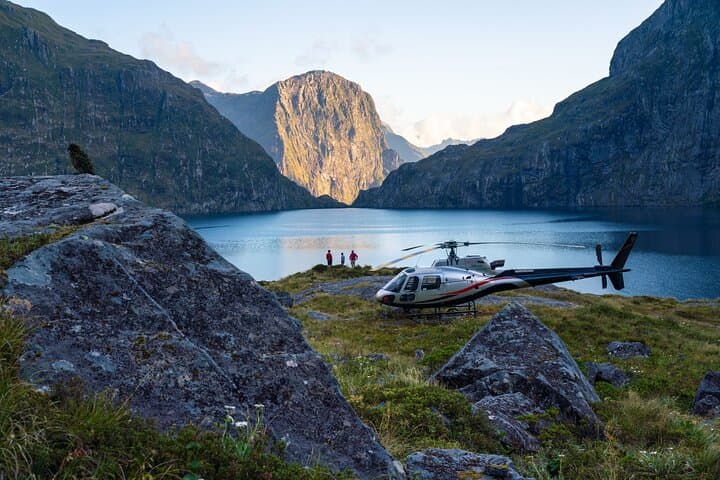
The flight’s highlight is the circle over Sutherland Falls followed by a controlled alpine landing above Lake Quill—a rare perspective that feels equal parts scientific survey and private viewing. Return legs deliver views of Mackinnon Pass, where the Milford Track crests, and Joe’s River weaving through native forest back toward the Sound. On clear days the Tasman Sea glitters beyond the fiord mouth; on moody days cloud and spray wrap the valley like a moving curtain.
Practicalities are straightforward: the tour is a 30-minute shared flight based at Milford Sound Airport with a minimum of four passengers required to go ahead. Operators group parties when needed and provide live commentary over headsets. Weather governs everything in Fiordland—flights are frequently postponed or cancelled for safety and visibility, and a full refund is available for cancellations made at least 24 hours in advance.
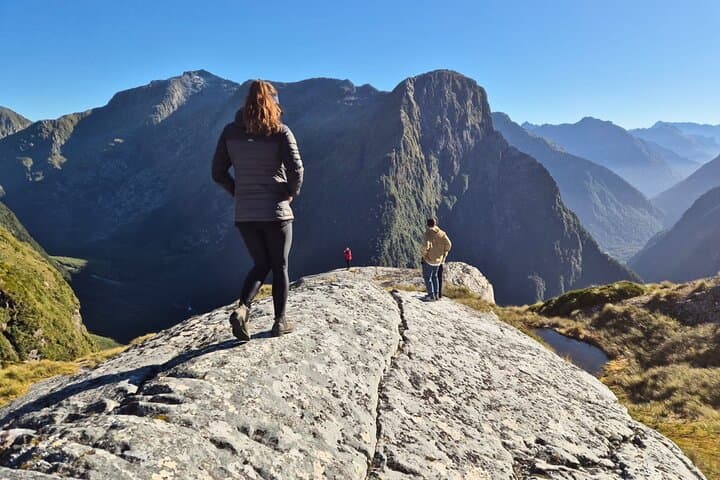
Prepare for quick alpine conditions: layers and a windproof jacket are recommended; sturdy footwear is useful for the short stint on the alpine landing. Bring a camera with a medium wide lens and a polarizer to cut glare; strap or secure loose items—the helicopter rotors and the open sense of space make for exhilarating but immediate photography. If you travel from Te Anau or Queenstown, build in extra time—roads into Milford Sound are scenic but can be slow.
This flight is concise but potent: thirty minutes of airborne access to Fiordland’s high drama, a rare landing above a towering waterfall, and the kind of perspective that reframes everything you’ve already imagined about New Zealand’s wild southwest.
easy.
30 minutes.
No special fitness required—suitable for all physical levels, though a short step up is required for the alpine landing.
The flight is approximately 30 minutes from takeoff to return to Milford Sound Airport.
Yes—flights require a minimum of four passengers to operate; operators will group smaller bookings when possible.
Infants are permitted but must sit on an adult’s lap; advise the operator at booking and follow any weight or safety guidance.
Flights are commonly cancelled for low visibility, high winds, or heavy rain; you’ll receive a refund if cancelled at least 24 hours beforehand or be rescheduled where possible.
Booking asks for passenger weights and any special requirements—this information helps with aircraft safety and loading; contact the operator if you have medical concerns.
Yes—you can step out briefly for photos on stable ground above Lake Quill, but follow crew instructions and stay in designated areas for safety.
The area is part of Fiordland National Park; Māori used coastal routes here and European explorers later established the Milford Track in the late 19th century, today a premier multi-day route.
Fiordland is a protected national park with strict biosecurity rules—visitors are asked to clean gear to prevent pest introductions and to follow Leave No Trace principles.
Milford Helicopters operates guided outdoor trips and adventures with an emphasis on safety, stewardship, and memorable experiences.
The helicopter lifts off the gravel apron at Milford Sound Airport and, within moments, the steep walls of the fiord lean away beneath you. The Arthur Valley opens like a cut in the mountain—green beech and silver rivers threading toward the Sound—and the chopper follows the line of the famed Milford Track, skimming Lake Ada before angling toward a thunderous drop: Sutherland Falls. From the air the falls do what they do best—throw themselves off the plateau in three dramatic tiers, 581 meters of water that seems to dare the valley to catch it.
The helicopter lifts off the gravel apron at Milford Sound Airport and, within moments, the steep walls of the fiord lean away beneath you. The Arthur Valley opens like a cut in the mountain—green beech and silver rivers threading toward the Sound—and the chopper follows the line of the famed Milford Track, skimming Lake Ada before angling toward a thunderous drop: Sutherland Falls. From the air the falls do what they do best—throw themselves off the plateau in three dramatic tiers, 581 meters of water that seems to dare the valley to catch it.
Fiordland is a place written in ice and time. Glaciers gouged the deep U-shaped valleys here during the last ice age, leaving sheer cliffs, hanging valleys, and alpine tarns such as Lake Quill that punctuate the high country. Māori first navigated these coasts and valleys, naming the Sound Piopiotahi; later European explorers and trampers turned the Milford Track into an internationally renowned route, the landscape remaining largely unchanged from the air.
The flight’s highlight is the circle over Sutherland Falls followed by a controlled alpine landing above Lake Quill—a rare perspective that feels equal parts scientific survey and private viewing. Return legs deliver views of Mackinnon Pass, where the Milford Track crests, and Joe’s River weaving through native forest back toward the Sound. On clear days the Tasman Sea glitters beyond the fiord mouth; on moody days cloud and spray wrap the valley like a moving curtain.
Practicalities are straightforward: the tour is a 30-minute shared flight based at Milford Sound Airport with a minimum of four passengers required to go ahead. Operators group parties when needed and provide live commentary over headsets. Weather governs everything in Fiordland—flights are frequently postponed or cancelled for safety and visibility, and a full refund is available for cancellations made at least 24 hours in advance.
Prepare for quick alpine conditions: layers and a windproof jacket are recommended; sturdy footwear is useful for the short stint on the alpine landing. Bring a camera with a medium wide lens and a polarizer to cut glare; strap or secure loose items—the helicopter rotors and the open sense of space make for exhilarating but immediate photography. If you travel from Te Anau or Queenstown, build in extra time—roads into Milford Sound are scenic but can be slow.
This flight is concise but potent: thirty minutes of airborne access to Fiordland’s high drama, a rare landing above a towering waterfall, and the kind of perspective that reframes everything you’ve already imagined about New Zealand’s wild southwest.