THE ADVENTURE COLLECTIVE® · Independent discovery and booking for outdoor travel

Trade London’s bustle for chalk cliffs and sleepy villages on a full-day trip to the South Downs. Visit Rottingdean, Alfriston and Litlington, then stand above the Seven Sisters’ dramatic white escarpments.
Trade London’s bustle for chalk cliffs and sleepy villages on a full-day trip to the South Downs. Visit Rottingdean, Alfriston and Litlington, then stand above the Seven Sisters’ dramatic white escarpments.
A brisk coach pulls out of London at dawn and, within an hour, the city’s skyline thins to chalky horizons and rolling downland. You step off at a village green where flint cottages and an ancient parish church keep watch, and the sea waits at the rim of the world: the Seven Sisters’ white faces dropping into surf.
Verified experiences and guided adventures in the surrounding area.
A brisk coach pulls out of London at dawn and, within an hour, the city’s skyline thins to chalky horizons and rolling downland. You step off at a village green where flint cottages and an ancient parish church keep watch, and the sea waits at the rim of the world: the Seven Sisters’ white faces dropping into surf.
The South Downs are Cretaceous chalk—soft, bright cliffs shaped by waves and wind. Small parishes like Rottingdean, Alfriston and Litlington grew around farming and fishing; their flint walls and thatched roofs reflect centuries of coastal life. Guides on this route point out local stories: smuggling routes, medieval wool wealth, and how grazing kept the chalk grasslands open and biodiverse.
Expectation here is sensory and practical: sharp coastal light, gull calls, and the crumbly edge of the cliffs that continue to retreat. The tour mixes short village strolls, viewpoint stops above the Seven Sisters, and brief cliff-top walks—ideal if you want dramatic views without committing to a multi-day trek.
Plan for a full day (roughly 9–10 hours total). Walks are short but can be exposed—windproof layers and firm footwear matter. Photography windows are best mid-morning or late afternoon for softer light; avoid cliff edges, especially after rain. Public transport links are strong—many visitors extend the day into Brighton or Eastbourne afterward. For a single-day escape from London, this tour delivers varied coastal history, geology, and village character with minimal planning on your part.
moderate.
9–10 hours.
Light to moderate fitness—suitable for anyone who can manage several 1–3 mile walks and short uphill sections.
The tour runs about 9–10 hours total (around 570 minutes) with return to London in the evening—check the operator’s schedule for exact pick-up and drop-off times.
Expect several short walks at viewpoints and through villages totaling roughly 2–4 miles on mostly easy terrain, with some short steep sections near cliffs.
According to the tour details, return train tickets are included—confirm specifics (departure station and class) with the operator before travel.
Yes, for most children and older travelers who are mobile; however, cliff-top paths are exposed and require supervision and sturdy footwear.
These villages grew from coastal fishing and the medieval wool trade; the South Downs’ chalk was laid down in the Cretaceous and later shaped by human grazing and sea erosion.
Erosion of the chalk cliffs is a natural process—stay on marked paths and use local facilities to limit trampling; many areas here are managed to protect rare chalk-grassland habitats.
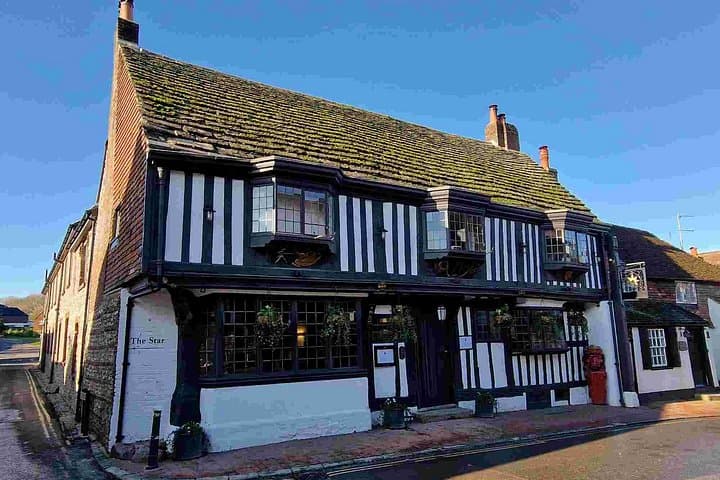
A brisk coach pulls out of London at dawn and, within an hour, the city’s skyline thins to chalky horizons and rolling downland. You step off at a village green where flint cottages and an ancient parish church keep watch, and the sea waits at the rim of the world: the Seven Sisters’ white faces dropping into surf.
A brisk coach pulls out of London at dawn and, within an hour, the city’s skyline thins to chalky horizons and rolling downland. You step off at a village green where flint cottages and an ancient parish church keep watch, and the sea waits at the rim of the world: the Seven Sisters’ white faces dropping into surf.
The South Downs are Cretaceous chalk—soft, bright cliffs shaped by waves and wind. Small parishes like Rottingdean, Alfriston and Litlington grew around farming and fishing; their flint walls and thatched roofs reflect centuries of coastal life. Guides on this route point out local stories: smuggling routes, medieval wool wealth, and how grazing kept the chalk grasslands open and biodiverse.
Expectation here is sensory and practical: sharp coastal light, gull calls, and the crumbly edge of the cliffs that continue to retreat. The tour mixes short village strolls, viewpoint stops above the Seven Sisters, and brief cliff-top walks—ideal if you want dramatic views without committing to a multi-day trek.
Plan for a full day (roughly 9–10 hours total). Walks are short but can be exposed—windproof layers and firm footwear matter. Photography windows are best mid-morning or late afternoon for softer light; avoid cliff edges, especially after rain. Public transport links are strong—many visitors extend the day into Brighton or Eastbourne afterward. For a single-day escape from London, this tour delivers varied coastal history, geology, and village character with minimal planning on your part.