THE ADVENTURE COLLECTIVE® · Independent discovery and booking for outdoor travel

Two hours on Cascais’ beaches teaches you to read Atlantic waves, with certified instructors, wetsuit and board provided. Lessons run at Carcavelos or wild Guincho depending on skill and conditions — ideal for first-timers and progressing surfers.
Two hours on Cascais’ beaches teaches you to read Atlantic waves, with certified instructors, wetsuit and board provided. Lessons run at Carcavelos or wild Guincho depending on skill and conditions — ideal for first-timers and progressing surfers.
The Atlantic hurls a clean, glassy line toward the sand and you feel it — a low, steady pull that promises motion. On a two‑hour lesson out of Cascais, the ocean greets you with a bruise of cool water, gulls quartering overhead and instructors scanning sets like cartographers of swell. Lessons rotate between Carcavelos’ forgiving beach breaks and Guincho’s raw, wind-formed waves depending on conditions and skill.
Verified experiences and guided adventures in the surrounding area.
Operated by Cascais Routes · Cascais, Lisbon
The Atlantic hurls a clean, glassy line toward the sand and you feel it — a low, steady pull that promises motion. On a two‑hour lesson out of Cascais, the ocean greets you with a bruise of cool water, gulls quartering overhead and instructors scanning sets like cartographers of swell. Lessons rotate between Carcavelos’ forgiving beach breaks and Guincho’s raw, wind-formed waves depending on conditions and skill.
Cascais grew from a fishing village into a royal retreat; its beaches have long been a meeting point of sailors, traders and surfers testing Atlantic power. The coastline sits on the edge of the Estoril embayment and the Sintra-Cascais natural park — a mix of sandy benches, rocky headlands and steep dunes carved from limestone and sandstone. Locals prize both the sheltered, consistent waves at Carcavelos and the wind-charged surf of Guincho, where the sea often demands respect.
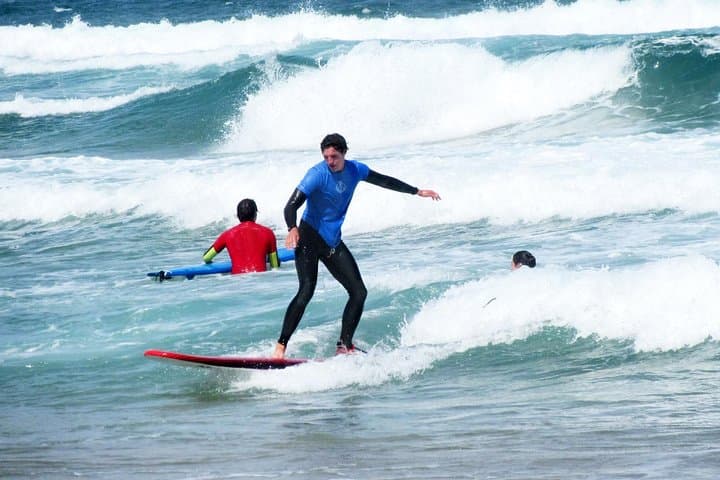
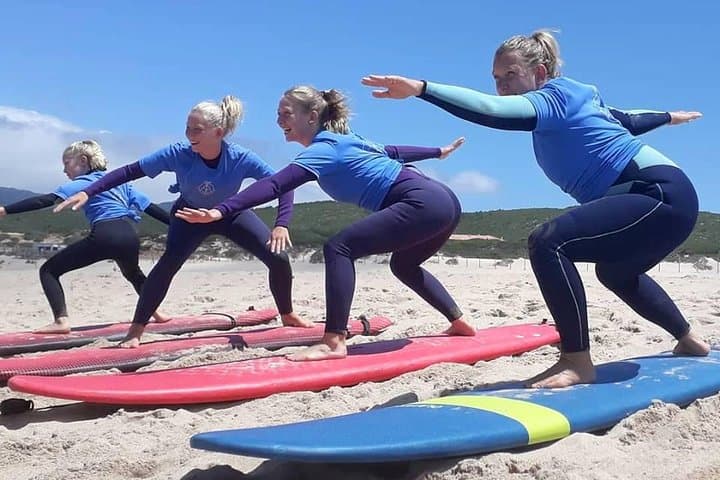
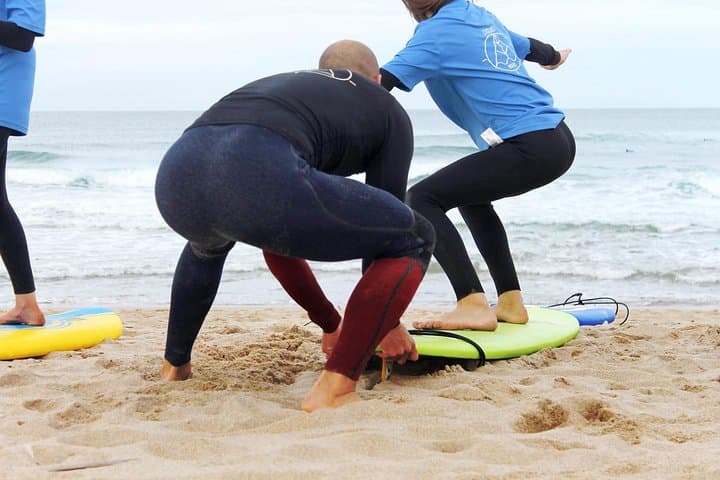
Expect a practical lesson: beach briefing, warm-up, paddling and take-off drills on sand, then supervised water time. Instructors provide wetsuits and boards and tailor coaching to your level — beginners get focused paddling and pop‑up practice; intermediate riders get wave selection and trim work.
Bring a swimsuit, towel, reef‑safe sunscreen and water. Be ready to learn to read the line-up: currents, rip channels and sets matter more than size. Early morning or late afternoon sessions reduce crowds and sun exposure. For first-timers, relax, follow the instructor’s signals and let the ocean do the rest — its rhythm will teach you when to push and when to wait.
easy.
2 hours.
Suitable for most active people; expect repeated paddling and pop‑ups — light to moderate upper‑body effort.
Two-hour session includes certified instructor, wetsuit, surfboard, basic insurance and structured beach and water coaching.
Yes — participants must be comfortable in the ocean and able to tread water; instructors supervise closely but you should be able to handle basic swimming.
Participants must be 6 years or older; children are taught with age‑appropriate boards and close supervision.
Full refund if you cancel at least 24 hours before the scheduled start time; lessons may run at either Carcavelos or Guincho depending on conditions.
Cascais evolved from a fishing port into a royal seaside retreat in the 19th century; the beaches later became popular with surfers from the mid‑20th century onward.
The nearby Sintra‑Cascais Natural Park protects dunes and coastal habitats — avoid trampling dune vegetation and use reef‑safe sunscreen to reduce chemical impacts.
Cascais Routes operates guided outdoor trips and adventures with an emphasis on safety, stewardship, and memorable experiences.
The Atlantic hurls a clean, glassy line toward the sand and you feel it — a low, steady pull that promises motion. On a two‑hour lesson out of Cascais, the ocean greets you with a bruise of cool water, gulls quartering overhead and instructors scanning sets like cartographers of swell. Lessons rotate between Carcavelos’ forgiving beach breaks and Guincho’s raw, wind-formed waves depending on conditions and skill.
The Atlantic hurls a clean, glassy line toward the sand and you feel it — a low, steady pull that promises motion. On a two‑hour lesson out of Cascais, the ocean greets you with a bruise of cool water, gulls quartering overhead and instructors scanning sets like cartographers of swell. Lessons rotate between Carcavelos’ forgiving beach breaks and Guincho’s raw, wind-formed waves depending on conditions and skill.
Cascais grew from a fishing village into a royal retreat; its beaches have long been a meeting point of sailors, traders and surfers testing Atlantic power. The coastline sits on the edge of the Estoril embayment and the Sintra-Cascais natural park — a mix of sandy benches, rocky headlands and steep dunes carved from limestone and sandstone. Locals prize both the sheltered, consistent waves at Carcavelos and the wind-charged surf of Guincho, where the sea often demands respect.
Expect a practical lesson: beach briefing, warm-up, paddling and take-off drills on sand, then supervised water time. Instructors provide wetsuits and boards and tailor coaching to your level — beginners get focused paddling and pop‑up practice; intermediate riders get wave selection and trim work.
Bring a swimsuit, towel, reef‑safe sunscreen and water. Be ready to learn to read the line-up: currents, rip channels and sets matter more than size. Early morning or late afternoon sessions reduce crowds and sun exposure. For first-timers, relax, follow the instructor’s signals and let the ocean do the rest — its rhythm will teach you when to push and when to wait.