THE ADVENTURE COLLECTIVE® · Independent discovery and booking for outdoor travel

Set out from Reykjavik in an oversized Super Jeep to chase aurora away from light pollution. This four-hour evening tour pairs off-road access with practical photography coaching while you wait for the sky to perform.
Set out from Reykjavik in an oversized Super Jeep to chase aurora away from light pollution. This four-hour evening tour pairs off-road access with practical photography coaching while you wait for the sky to perform.
A bruise-dark sky over the lava fields, headlights cutting through mist — that’s the opening frame of a Super Jeep northern lights hunt from Reykjavik. The ride jerks off the asphalt and higher-clearance tires chew through slush and gravel as the guide scans cloud-cover maps and KP-index forecasts. You wait in the wide quiet of Iceland’s outskirts, the city lights shrinking behind you, the horizon ready to leak green light.
Verified experiences and guided adventures in the surrounding area.
Operated by Geoadventures Iceland · Reykjavik, Capital Region
A bruise-dark sky over the lava fields, headlights cutting through mist — that’s the opening frame of a Super Jeep northern lights hunt from Reykjavik. The ride jerks off the asphalt and higher-clearance tires chew through slush and gravel as the guide scans cloud-cover maps and KP-index forecasts. You wait in the wide quiet of Iceland’s outskirts, the city lights shrinking behind you, the horizon ready to leak green light.
Iceland’s volcanic geology shapes more than scenery: basalt ridges and ice-scoured plains define viewing windows and local microclimates. The aurora itself is a solar wind conversation with Earth’s magnetosphere, a scientific show that Icelanders have watched since settlement-era farm communities recorded unusual skies. Guides often fold folklore and basic astrophysics into the wait, helping visitors understand why intensity and color shift night to night.
Practically, this is a flexible evening excursion: expect about four hours, remote pullouts, and long stretches standing outside in winter gear. The Super Jeep lets drivers access darker locations beyond road closures, increasing chances when cloud cover is patchy; still, the aurora is never guaranteed. Photographers will appreciate tips on manual exposure and using a tripod; guides usually assist with smartphone settings too.
Book from September–March, dress in layers, and plan for sudden cancellations if weather closes in. Bring charged batteries (cold kills them fast), a headlamp with a red mode, and a calm patience — the sky decides the finale.
easy.
3–5 hours.
Suitable for most fitness levels—requires ability to stand for extended periods and get in/out of a high-clearance vehicle
No — the aurora is a natural phenomenon dependent on solar activity and local cloud cover; guides maximize chances by moving to darker, clearer locations.
Typical departures are in the early evening with a total duration around four hours; exact times vary by season and booking.
Yes, the operator notes the trip is suitable for all fitness levels and offers infant seats; check age policies when booking.
You can receive a full refund if canceled at least 24 hours ahead; same-day cancellations for poor weather are typically refunded or rescheduled per the operator’s policy.
Icelandic communities have long read unusual sky phenomena in sagas and local lore; modern aurora tourism grew with improved night-time road access and photography techniques.
Operators emphasize staying on designated pullouts to avoid sensitive moss and lichen; minimize light pollution and pack out all waste to protect fragile tundra.
Geoadventures Iceland operates guided outdoor trips and adventures with an emphasis on safety, stewardship, and memorable experiences.
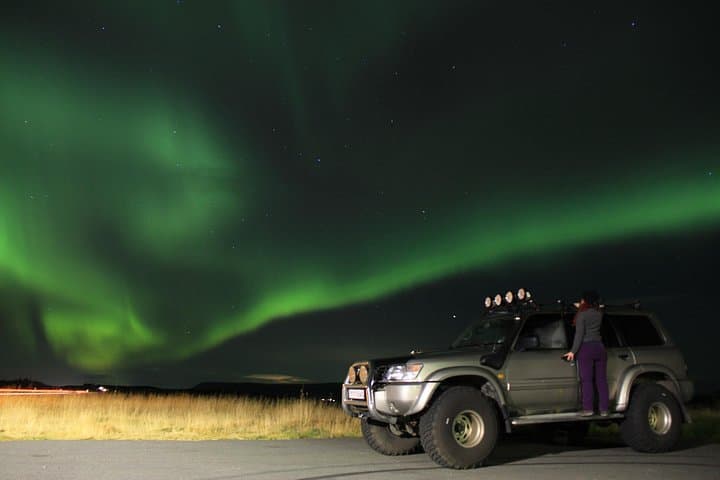
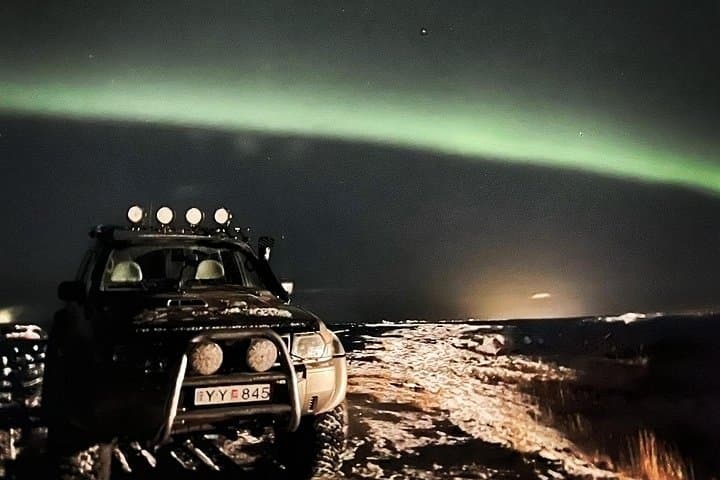
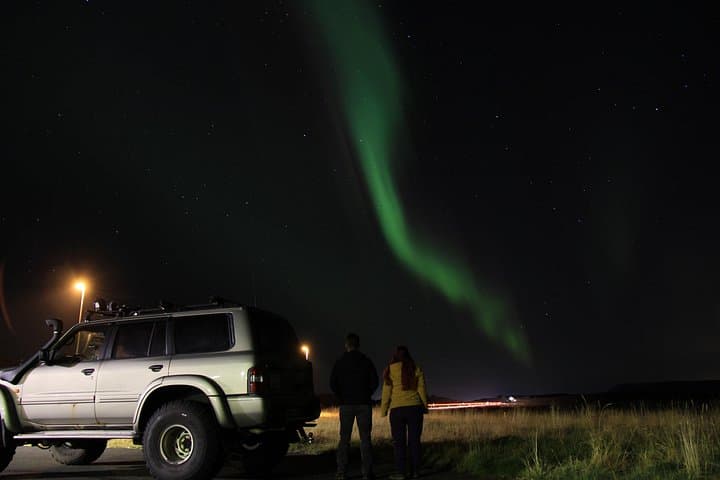
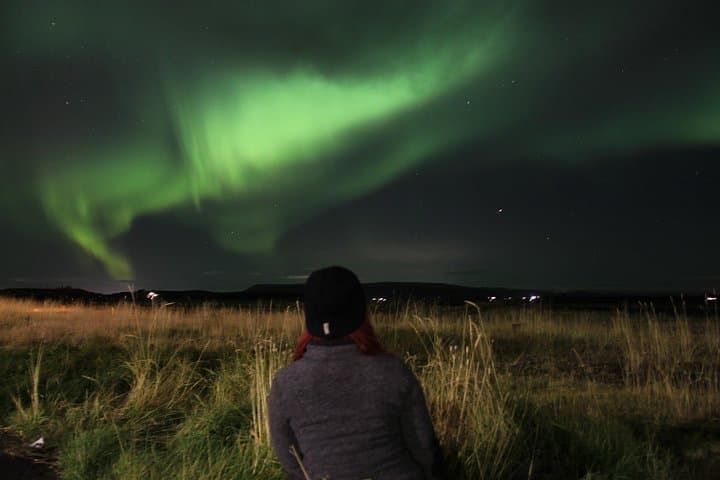
A bruise-dark sky over the lava fields, headlights cutting through mist — that’s the opening frame of a Super Jeep northern lights hunt from Reykjavik. The ride jerks off the asphalt and higher-clearance tires chew through slush and gravel as the guide scans cloud-cover maps and KP-index forecasts. You wait in the wide quiet of Iceland’s outskirts, the city lights shrinking behind you, the horizon ready to leak green light.
A bruise-dark sky over the lava fields, headlights cutting through mist — that’s the opening frame of a Super Jeep northern lights hunt from Reykjavik. The ride jerks off the asphalt and higher-clearance tires chew through slush and gravel as the guide scans cloud-cover maps and KP-index forecasts. You wait in the wide quiet of Iceland’s outskirts, the city lights shrinking behind you, the horizon ready to leak green light.
Iceland’s volcanic geology shapes more than scenery: basalt ridges and ice-scoured plains define viewing windows and local microclimates. The aurora itself is a solar wind conversation with Earth’s magnetosphere, a scientific show that Icelanders have watched since settlement-era farm communities recorded unusual skies. Guides often fold folklore and basic astrophysics into the wait, helping visitors understand why intensity and color shift night to night.
Practically, this is a flexible evening excursion: expect about four hours, remote pullouts, and long stretches standing outside in winter gear. The Super Jeep lets drivers access darker locations beyond road closures, increasing chances when cloud cover is patchy; still, the aurora is never guaranteed. Photographers will appreciate tips on manual exposure and using a tripod; guides usually assist with smartphone settings too.
Book from September–March, dress in layers, and plan for sudden cancellations if weather closes in. Bring charged batteries (cold kills them fast), a headlamp with a red mode, and a calm patience — the sky decides the finale.