THE ADVENTURE COLLECTIVE® · Independent discovery and booking for outdoor travel

Paddle a stable board through Hiroshima’s central river and see the Atomic Bomb Dome and Peace Memorial Park from the water. Instructor-led sessions suit beginners and families and provide a compact, historically charged urban outing.
Paddle a stable board through Hiroshima’s central river and see the Atomic Bomb Dome and Peace Memorial Park from the water. Instructor-led sessions suit beginners and families and provide a compact, historically charged urban outing.
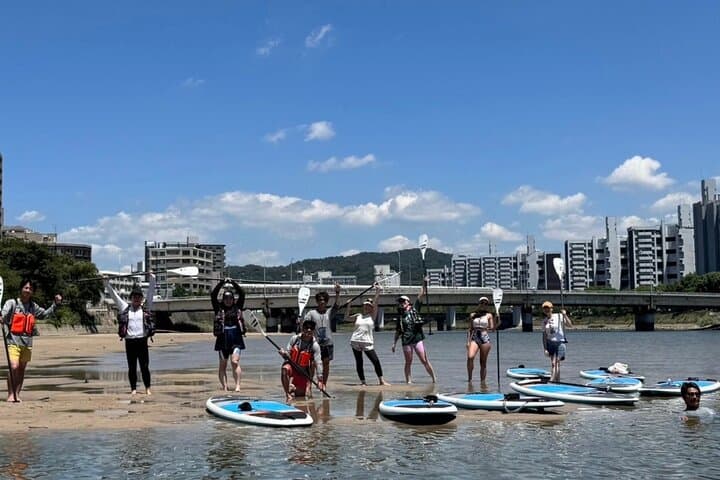
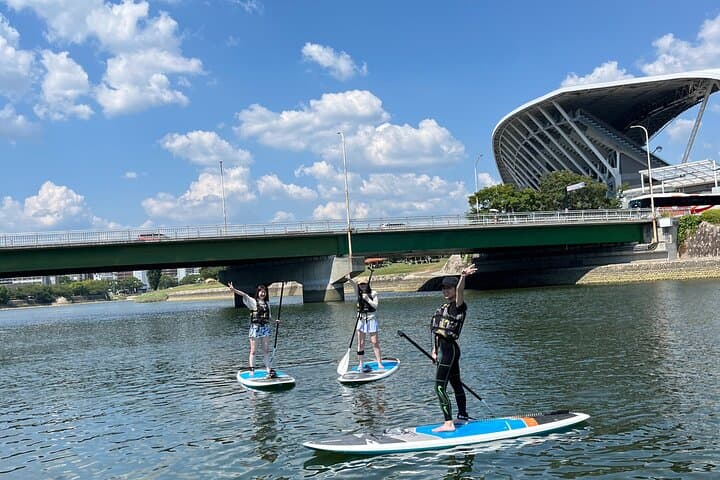
The river opens like a corridor through Hiroshima, water catching the city’s light as you step onto a board.
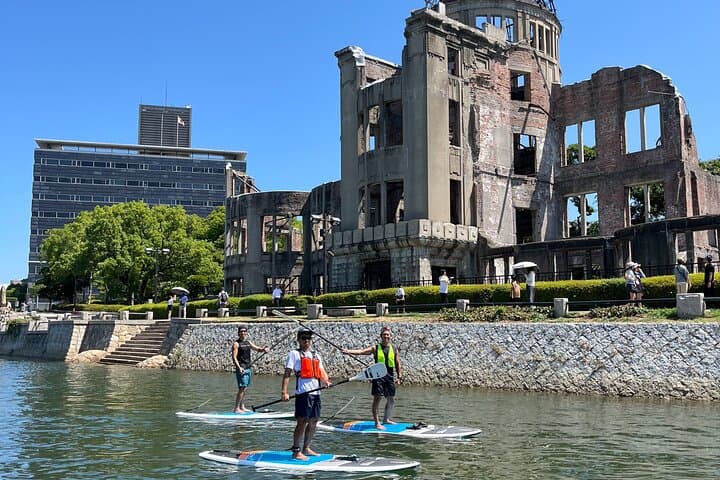
Paddling here is quiet but charged — the Atomic Bomb Dome and Peace Memorial Park rise from the banks, history visible on the skyline as currents nudge your board downstream.
Verified experiences and guided adventures in the surrounding area.
Operated by Beside Hiroshima By Utsuwa · Hiroshima, Hiroshima Prefecture
The river opens like a corridor through Hiroshima, water catching the city’s light as you step onto a board.
Paddling here is quiet but charged — the Atomic Bomb Dome and Peace Memorial Park rise from the banks, history visible on the skyline as currents nudge your board downstream.
This stretch of the Ota River system threads through Hiroshima’s flat delta, formed by volcanic and alluvial deposits from nearby ranges. The waterfront has been a transport and trade corridor for centuries; after 1945 the riverbanks became central to the city’s reconstruction and commemoration, so paddling here is also a glance into modern Japanese urban renewal.
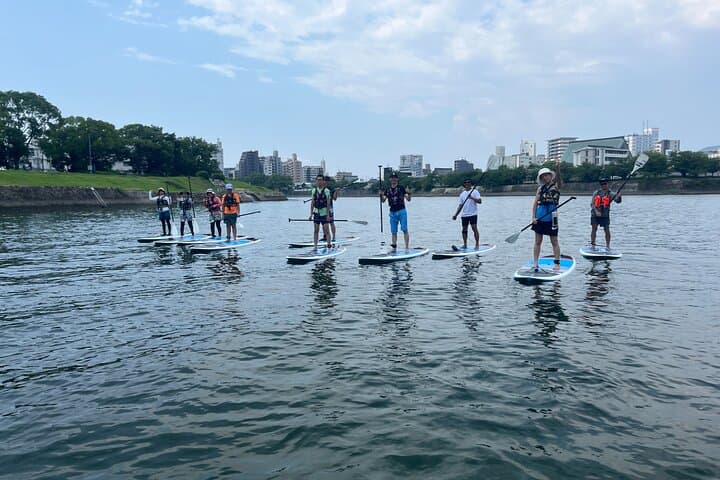
Instructors stay close during the session, teaching stroke technique, safety, and how to read small urban currents. Expect an instructor-led loop of roughly 45–60 minutes that favors stability and sightseeing over technical surfing. The activity is family-friendly and accessible to beginners, making it a compact urban adventure between museum visits and shrine walks.
Practicalities: wear quick-dry clothing and secure sunscreen — reflections from the water intensify sun exposure. Bring a small dry bag for your phone and a refillable water bottle; instructors usually provide boards, leashes, and life vests. Check tides and weather: tours cancel in heavy rain or strong winds. Arrive by tram or on foot from Peace Park; allow extra time for changing and a short safety briefing. This is a manageable, reflective way to see Hiroshima from a different perspective — one that puts history and the present side by side on the water.
easy.
1 hour.
Suitable for most fitness levels — basic balance and light core strength help but full athletic conditioning is not required
No — sessions are instructor-led and designed for beginners; basic balance is helpful but not required.
Yes — families with children can join, but age or weight minimums may apply; check operator rules when booking.
The operator typically cancels in heavy rain, strong winds, or unsafe river conditions and offers a refund if cancelled at least 24 hours prior to departure when applicable.
Yes — the provider supplies life vests and all necessary equipment; you can request sizes during booking.
The rivers through Hiroshima shaped commerce and reconstruction after WWII; the Peace Memorial Park and Atomic Bomb Dome occupy a rebuilt riverfront set aside for remembrance.
Stay on designated entry points and pack out all trash; non-motorized paddling is low-impact, but crowded banks and litter degrade water quality and wildlife habitat.
Beside Hiroshima By Utsuwa operates guided outdoor trips and adventures with an emphasis on safety, stewardship, and memorable experiences.
The river opens like a corridor through Hiroshima, water catching the city’s light as you step onto a board.
Paddling here is quiet but charged — the Atomic Bomb Dome and Peace Memorial Park rise from the banks, history visible on the skyline as currents nudge your board downstream.
The river opens like a corridor through Hiroshima, water catching the city’s light as you step onto a board.
Paddling here is quiet but charged — the Atomic Bomb Dome and Peace Memorial Park rise from the banks, history visible on the skyline as currents nudge your board downstream.
This stretch of the Ota River system threads through Hiroshima’s flat delta, formed by volcanic and alluvial deposits from nearby ranges. The waterfront has been a transport and trade corridor for centuries; after 1945 the riverbanks became central to the city’s reconstruction and commemoration, so paddling here is also a glance into modern Japanese urban renewal.
Instructors stay close during the session, teaching stroke technique, safety, and how to read small urban currents. Expect an instructor-led loop of roughly 45–60 minutes that favors stability and sightseeing over technical surfing. The activity is family-friendly and accessible to beginners, making it a compact urban adventure between museum visits and shrine walks.
Practicalities: wear quick-dry clothing and secure sunscreen — reflections from the water intensify sun exposure. Bring a small dry bag for your phone and a refillable water bottle; instructors usually provide boards, leashes, and life vests. Check tides and weather: tours cancel in heavy rain or strong winds. Arrive by tram or on foot from Peace Park; allow extra time for changing and a short safety briefing. This is a manageable, reflective way to see Hiroshima from a different perspective — one that puts history and the present side by side on the water.