THE ADVENTURE COLLECTIVE® · Independent discovery and booking for outdoor travel

Spend a half-day combining Lal Bagh’s botanical riches with the stonework and stories of Tipu Sultan’s fort. This guided outing pairs natural history and urban heritage with practical walking and sightseeing.
Spend a half-day combining Lal Bagh’s botanical riches with the stonework and stories of Tipu Sultan’s fort. This guided outing pairs natural history and urban heritage with practical walking and sightseeing.
Early morning light spreads across manicured lawns and glasshouse panes at Lal Bagh, the city’s green heart where ancient rock outcrops and avenue trees push back the urban noise. Walkways curve beneath towering jackfruit and banyan trunks while gardeners prune rose beds that give the garden its name—'Lal Bagh'—and the city slowly wakes beyond the hedges.
Verified experiences and guided adventures in the surrounding area.
Operated by Booking Crow · Bengaluru, Karnataka
Early morning light spreads across manicured lawns and glasshouse panes at Lal Bagh, the city’s green heart where ancient rock outcrops and avenue trees push back the urban noise. Walkways curve beneath towering jackfruit and banyan trunks while gardeners prune rose beds that give the garden its name—'Lal Bagh'—and the city slowly wakes beyond the hedges.
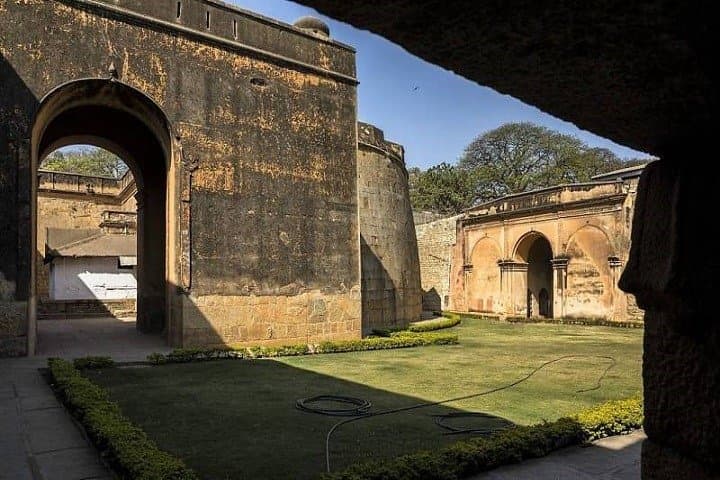
The route pairs botany with history: Lal Bagh began as an 18th-century botanical project under Hyder Ali and was later expanded by his son Tipu Sultan. A short transfer brings you to Tipu Sultan's Fort, where carved arches and military masonry recall a volatile era in Mysore’s history and the defenses once raised against colonial forces. The bedrock beneath Lal Bagh is Peninsular Gneiss—one of the oldest exposed rocks on Earth—so the ground itself feels storied.
Culturally, the tour threads civic pride and conservation; the garden doubles as a living classroom for botanists and students, while the fort stands as a city landmark bearing inscriptions and carved motifs.
Practical guidance: plan 3–4 hours, start early to avoid mid-day heat, and wear sturdy walking shoes—the paths vary from paved promenades to compacted soil near the rock outcrop. Carry water, a light rain layer in monsoon months, and a camera for close-up plant shots and architectural details. Respect signage, stay on paths, and allow extra time if visiting during the flower show or a weekend when both sites see peak crowds.
easy.
3–4 hours.
Suitable for most fitness levels; involves moderate walking with some stairs at the fort.
The guided tour typically lasts 3–4 hours, covering Lal Bagh and Tipu Sultan’s Fort with included entry and a lunch stop.
Yes—it's rated easy and suitable for most ages, though there are some stairs at the fort and uneven ground in parts of the garden.
The itinerary notes admission included for both Lal Bagh and Tipu Sultan Fort as part of the tour price.
Winter and the cooler post-monsoon months (November–February) offer comfortable temperatures and clearer skies, while flower shows in August bring seasonal displays.
Lal Bagh’s formal design dates to the late 18th century under Hyder Ali; Tipu Sultan and later rulers expanded botanical and defensive works around Bangalore.
Lal Bagh functions as an urban conservation hub for native and tropical plants; visitors are urged to stick to paths, avoid littering, and not disturb wildlife to reduce impact.
Booking Crow operates guided outdoor trips and adventures with an emphasis on safety, stewardship, and memorable experiences.


Early morning light spreads across manicured lawns and glasshouse panes at Lal Bagh, the city’s green heart where ancient rock outcrops and avenue trees push back the urban noise. Walkways curve beneath towering jackfruit and banyan trunks while gardeners prune rose beds that give the garden its name—'Lal Bagh'—and the city slowly wakes beyond the hedges.
Early morning light spreads across manicured lawns and glasshouse panes at Lal Bagh, the city’s green heart where ancient rock outcrops and avenue trees push back the urban noise. Walkways curve beneath towering jackfruit and banyan trunks while gardeners prune rose beds that give the garden its name—'Lal Bagh'—and the city slowly wakes beyond the hedges.
The route pairs botany with history: Lal Bagh began as an 18th-century botanical project under Hyder Ali and was later expanded by his son Tipu Sultan. A short transfer brings you to Tipu Sultan's Fort, where carved arches and military masonry recall a volatile era in Mysore’s history and the defenses once raised against colonial forces. The bedrock beneath Lal Bagh is Peninsular Gneiss—one of the oldest exposed rocks on Earth—so the ground itself feels storied.
Culturally, the tour threads civic pride and conservation; the garden doubles as a living classroom for botanists and students, while the fort stands as a city landmark bearing inscriptions and carved motifs.
Practical guidance: plan 3–4 hours, start early to avoid mid-day heat, and wear sturdy walking shoes—the paths vary from paved promenades to compacted soil near the rock outcrop. Carry water, a light rain layer in monsoon months, and a camera for close-up plant shots and architectural details. Respect signage, stay on paths, and allow extra time if visiting during the flower show or a weekend when both sites see peak crowds.