THE ADVENTURE COLLECTIVE® · Independent discovery and booking for outdoor travel

Board a semi‑covered catamaran at Victoria’s Inner Harbour for a three‑hour sunset tour that prioritizes direct travel to whale feeding grounds. Expect onboard naturalists, guaranteed whale sightings, and comfortable, weather‑ready service.
Board a semi‑covered catamaran at Victoria’s Inner Harbour for a three‑hour sunset tour that prioritizes direct travel to whale feeding grounds. Expect onboard naturalists, guaranteed whale sightings, and comfortable, weather‑ready service.
The catamaran slips away from Victoria’s Inner Harbour as late light lays a copper edge on the Salish Sea. Salt air moves through the semi‑covered decks and the city’s harbour lights begin to blink; out here the water has its own timetable. The tour pushes quickly to feeding grounds where dorsal fins and spray break the horizon and the sea seems to answer with low, rolling pulses.
Verified experiences and guided adventures in the surrounding area.
Operated by Eagle Wing Whale Watching Tours · Victoria, British Columbia
The catamaran slips away from Victoria’s Inner Harbour as late light lays a copper edge on the Salish Sea. Salt air moves through the semi‑covered decks and the city’s harbour lights begin to blink; out here the water has its own timetable. The tour pushes quickly to feeding grounds where dorsal fins and spray break the horizon and the sea seems to answer with low, rolling pulses.
This coastline is shaped by glaciation and the meeting of the Juan de Fuca Strait and the Salish Sea, which together create nutrient corridors that attract orcas, humpbacks, and porpoises. The Songhees and Esquimalt peoples have lived on these shores for millennia; modern whale watching in Victoria builds on a long local relationship with marine life and scientific monitoring.
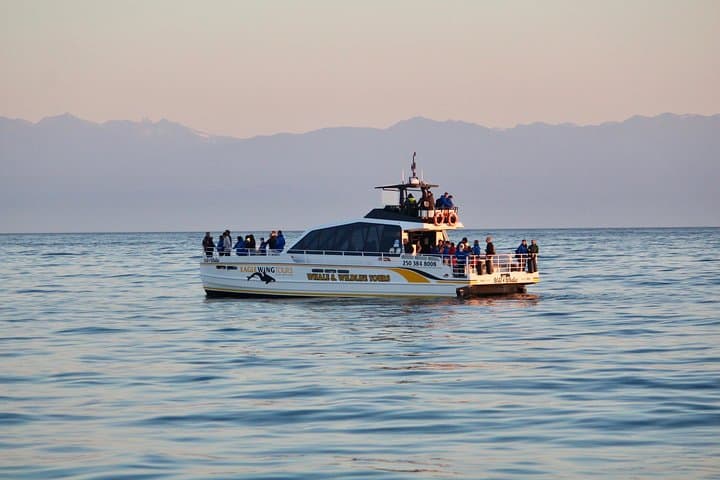
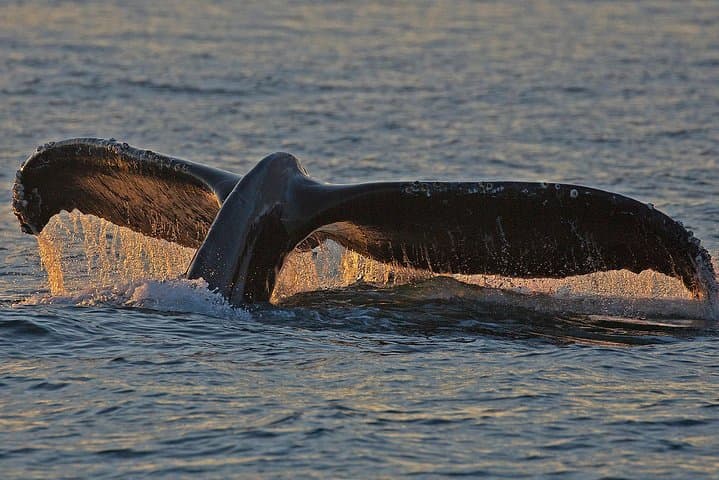
Expect a focused, three‑hour outing on a high‑performance, semi‑covered catamaran with live commentary from onboard biologists and naturalists. The operator provides jackets, blankets, and basic comforts; trips aim to minimize crowding by traveling straight to likely whale locations at sunset, improving sightlines and the light for photos. Watch for sudden blows and tail slaps—animals will set the pace.
Practical tips: dress in warm layers, bring sea‑sickness remedies if you’re sensitive, and reserve window or bow seats early. Tours often travel 10–30 nautical miles depending on sightings; photography benefits from faster shutter speeds and a steady hand. Cancellation policies typically require 24‑hour notice. This tour balances spectacle with science—ideal for travelers who want reliable sightings without sacrificing comfort.
easy.
3 hours.
Suitable for all fitness levels; requires steady balance for boarding and moving on deck
The trip is approximately three hours from departure to return to Victoria’s Inner Harbour.
This operator advertises a whale‑sighting guarantee; specifics depend on company policy—confirm at booking and ask about refund or rebooking terms.
Yes—vessels are wheelchair accessible and have onboard restrooms; contact the operator ahead for any special arrangements.
Tours welcome children and provide infant seats and blankets, but children must be accompanied by an adult and families should prepare for cool, windy conditions.
The waters around Victoria have been seasonal harvest and travel routes for the Songhees and Esquimalt peoples for thousands of years; modern whale watching developed here alongside marine research programs.
Operators work with local biologists to follow responsible viewing guidelines and support research; visitors are encouraged to avoid single‑use plastics and respect wildlife distance rules.
Eagle Wing Whale Watching Tours operates guided outdoor trips and adventures with an emphasis on safety, stewardship, and memorable experiences.
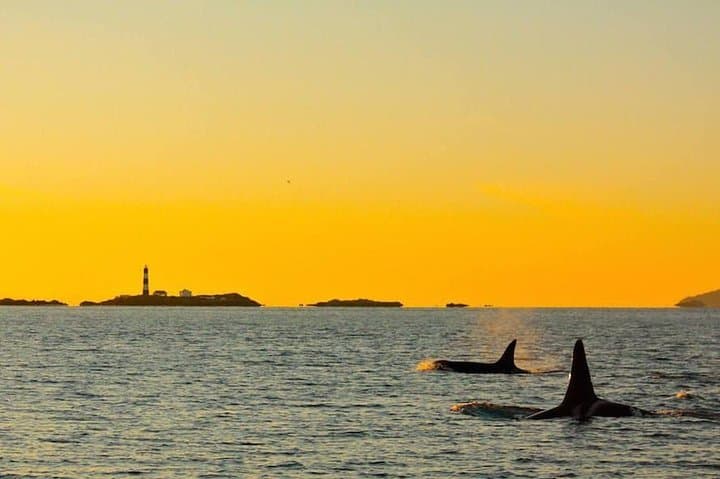
The catamaran slips away from Victoria’s Inner Harbour as late light lays a copper edge on the Salish Sea. Salt air moves through the semi‑covered decks and the city’s harbour lights begin to blink; out here the water has its own timetable. The tour pushes quickly to feeding grounds where dorsal fins and spray break the horizon and the sea seems to answer with low, rolling pulses.
The catamaran slips away from Victoria’s Inner Harbour as late light lays a copper edge on the Salish Sea. Salt air moves through the semi‑covered decks and the city’s harbour lights begin to blink; out here the water has its own timetable. The tour pushes quickly to feeding grounds where dorsal fins and spray break the horizon and the sea seems to answer with low, rolling pulses.
This coastline is shaped by glaciation and the meeting of the Juan de Fuca Strait and the Salish Sea, which together create nutrient corridors that attract orcas, humpbacks, and porpoises. The Songhees and Esquimalt peoples have lived on these shores for millennia; modern whale watching in Victoria builds on a long local relationship with marine life and scientific monitoring.
Expect a focused, three‑hour outing on a high‑performance, semi‑covered catamaran with live commentary from onboard biologists and naturalists. The operator provides jackets, blankets, and basic comforts; trips aim to minimize crowding by traveling straight to likely whale locations at sunset, improving sightlines and the light for photos. Watch for sudden blows and tail slaps—animals will set the pace.
Practical tips: dress in warm layers, bring sea‑sickness remedies if you’re sensitive, and reserve window or bow seats early. Tours often travel 10–30 nautical miles depending on sightings; photography benefits from faster shutter speeds and a steady hand. Cancellation policies typically require 24‑hour notice. This tour balances spectacle with science—ideal for travelers who want reliable sightings without sacrificing comfort.