THE ADVENTURE COLLECTIVE® · Independent discovery and booking for outdoor travel

Board a spacious catamaran at sunset for a half-day whale-watching cruise off Broome. Expect guided humpback viewing, expert commentary, a licensed bar, and memorable coastal sunsets—plus practical tips to get the most from your outing.
Board a spacious catamaran at sunset for a half-day whale-watching cruise off Broome. Expect guided humpback viewing, expert commentary, a licensed bar, and memorable coastal sunsets—plus practical tips to get the most from your outing.
The sun leans west over Roebuck Bay as a 50-foot catamaran named Orcaella eases away from Broome’s shoreline. Salt air and the low hum of engines set a deliberate pace; passengers spread across open decks, glasses in hand, eyes fixed on the horizon where dark shapes begin to surface. Humpback whales, moving along the Kimberley coast, cut through the water with purposeful grace that seems to measure time by migration.
Verified experiences and guided adventures in the surrounding area.
The sun leans west over Roebuck Bay as a 50-foot catamaran named Orcaella eases away from Broome’s shoreline. Salt air and the low hum of engines set a deliberate pace; passengers spread across open decks, glasses in hand, eyes fixed on the horizon where dark shapes begin to surface. Humpback whales, moving along the Kimberley coast, cut through the water with purposeful grace that seems to measure time by migration.
Broome’s coastline has long been shaped by tides and industry: Yawuru country, a pearling boom from the late 19th century, and broad tidal flats that produce dramatic sunsets and the Staircase to the Moon effect. Geologically, the shallow expanse of Roebuck Bay and the wide continental shelf combine to funnel whales close to shore during their seasonal journey—Broome is on a highway used by tens of thousands of humpbacks each year.
On this half-day sunset cruise guests can expect guided whale viewing from multiple vantage points around the catamaran, commentary on marine ecology, and the practical comforts of a licensed bar and onboard toilet. Boarding starts 20 minutes early; courtesy transfers are often available from Broome accommodations. Wildlife sightings are the highlight but not guaranteed—captains follow strict approach distances to keep whales undisturbed.
Practical tips: bring sun protection and a light jacket for the cooling evening, consider anti-nausea measures if you’re prone to seasickness, and keep a telephoto lens or binoculars ready. For photographers, shooting into the light at sunset yields silhouette drama; for naturalists, listening to crew notes about whale behavior deepens the experience. The cruise balances spectacle with stewardship—an accessible, memorable way to encounter Australia’s great migrants.
easy.
5–5.5 hours.
Minimal fitness required; must be able to step on/off the vessel and stand on deck for stretches of time.
Whale migration past Broome generally peaks between May and September, with many operators running regular sunset cruises during that window.
No—sightings are very likely during peak season but not guaranteed; operators provide commentary and will use multiple viewing points to maximize chances.
A licensed bar is available, and some operators allow BYO soft drinks; note that certain beverages (e.g., red wine or spirits) may be restricted—check the operator’s policy before boarding.
Most cruises are family-friendly and have toilet facilities, but accessibility varies—contact the operator about wheelchair access and special assistance in advance.
Broome sits on Yawuru land and grew into a pearling port in the late 19th and early 20th centuries; that maritime history still shapes its culture and bayside economy.
Operators follow marine mammal approach rules to reduce disturbance; visitors are encouraged to minimize noise and waste to protect the coastal ecosystem.
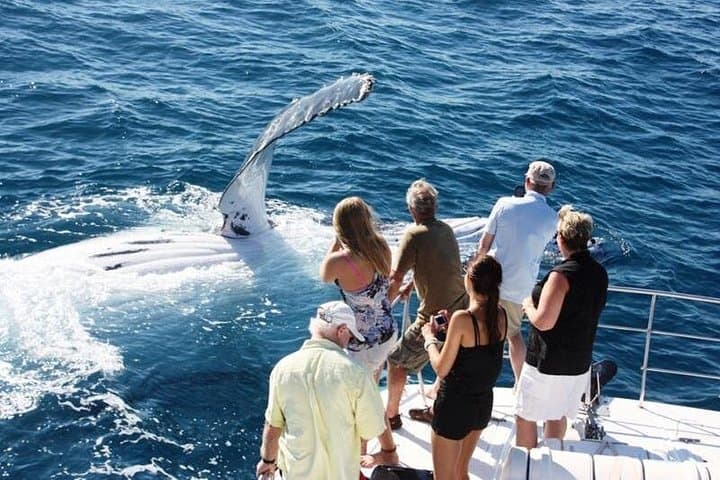
The sun leans west over Roebuck Bay as a 50-foot catamaran named Orcaella eases away from Broome’s shoreline. Salt air and the low hum of engines set a deliberate pace; passengers spread across open decks, glasses in hand, eyes fixed on the horizon where dark shapes begin to surface. Humpback whales, moving along the Kimberley coast, cut through the water with purposeful grace that seems to measure time by migration.
The sun leans west over Roebuck Bay as a 50-foot catamaran named Orcaella eases away from Broome’s shoreline. Salt air and the low hum of engines set a deliberate pace; passengers spread across open decks, glasses in hand, eyes fixed on the horizon where dark shapes begin to surface. Humpback whales, moving along the Kimberley coast, cut through the water with purposeful grace that seems to measure time by migration.
Broome’s coastline has long been shaped by tides and industry: Yawuru country, a pearling boom from the late 19th century, and broad tidal flats that produce dramatic sunsets and the Staircase to the Moon effect. Geologically, the shallow expanse of Roebuck Bay and the wide continental shelf combine to funnel whales close to shore during their seasonal journey—Broome is on a highway used by tens of thousands of humpbacks each year.
On this half-day sunset cruise guests can expect guided whale viewing from multiple vantage points around the catamaran, commentary on marine ecology, and the practical comforts of a licensed bar and onboard toilet. Boarding starts 20 minutes early; courtesy transfers are often available from Broome accommodations. Wildlife sightings are the highlight but not guaranteed—captains follow strict approach distances to keep whales undisturbed.
Practical tips: bring sun protection and a light jacket for the cooling evening, consider anti-nausea measures if you’re prone to seasickness, and keep a telephoto lens or binoculars ready. For photographers, shooting into the light at sunset yields silhouette drama; for naturalists, listening to crew notes about whale behavior deepens the experience. The cruise balances spectacle with stewardship—an accessible, memorable way to encounter Australia’s great migrants.