THE ADVENTURE COLLECTIVE® · Independent discovery and booking for outdoor travel

Walk the high slopes of Europe’s largest active volcano as sunset sharpens crater rims and lava caves reveal their anatomy. This guided trek combines volcano geology, local culture, and an easy but uneven walk to vantage points around 2,000 m.
Walk the high slopes of Europe’s largest active volcano as sunset sharpens crater rims and lava caves reveal their anatomy. This guided trek combines volcano geology, local culture, and an easy but uneven walk to vantage points around 2,000 m.
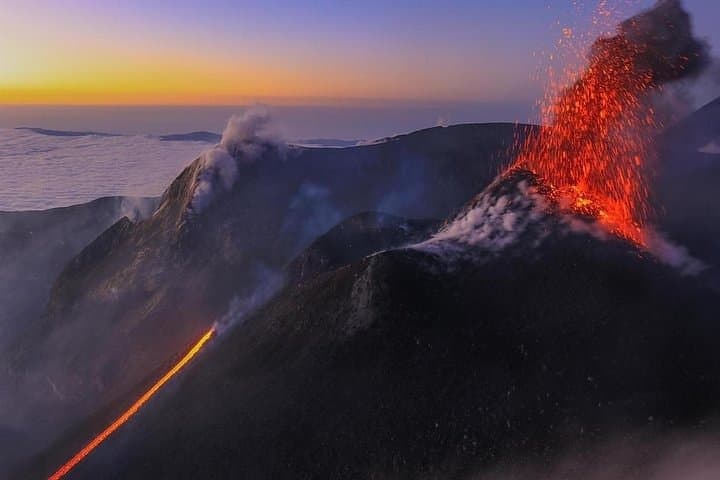
You step out of the air‑conditioned vehicle as the light thins and Mount Etna fills the horizon — a raw silhouette against a cooling sky. The trail climbs through vineyards and orchards of the lower slopes before the land changes: blackened flows, stubbled birch and pines, and the ragged rims of extinct craters that frame the sunset.
Verified experiences and guided adventures in the surrounding area.
Operated by Etna Sicily Tours · Catania, Sicily
You step out of the air‑conditioned vehicle as the light thins and Mount Etna fills the horizon — a raw silhouette against a cooling sky. The trail climbs through vineyards and orchards of the lower slopes before the land changes: blackened flows, stubbled birch and pines, and the ragged rims of extinct craters that frame the sunset.
Etna is both a living geological record and a cultural landscape. Centuries of eruptions have sculpted terraces for vineyards and given local villages distinct stony soils prized for wine. Your guide explains the volcano’s birth and the cycle of recent eruptions while you move along hardened lava and ash, crossing old flow margins and entering a lava tube with a helmet and torch to see how molten rock once moved like a river.
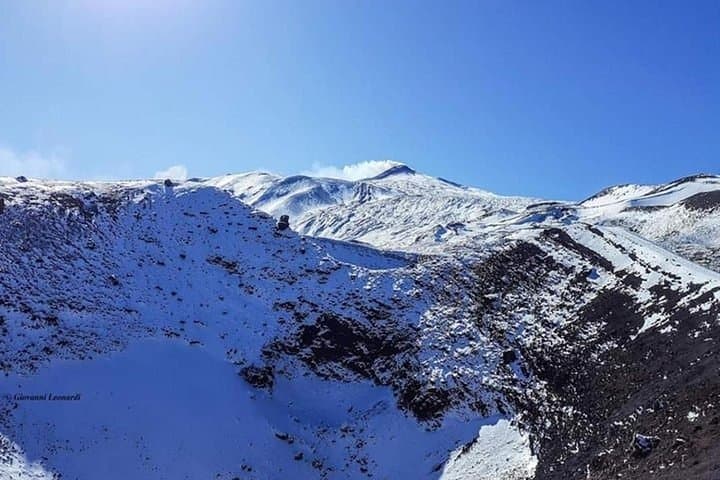
Expect wide, exposed views and sudden pockets of forest where oak and pine reclaim the slopes. The walk is soft underfoot but uneven—edges of crater bowls offer dramatic viewpoints at dusk, where the cooling air sharpens distant outlines and the light slides across fractured lava.
Practical guidance: wear sturdy hiking shoes, layered clothing for rapid temperature drop, and bring at least 1–1.5 liters of water. The operator supplies helmets and torches; in winter the route may be lowered in altitude if snow or ice blocks higher roads. Aim to arrive from Catania with time to spare — the transfer and trek together take around four hours — and let your guide set a steady pace so you can take in both the geology and the quieting light of Etna at sunset.
moderate.
4–5 hours.
Light to moderate fitness; suitable for regular walkers comfortable on uneven terrain and steady uphill stretches.
The route is described as soft and suitable for most fitness levels, but it involves uneven volcanic terrain and some steady uphill walking to around 2,000 m.
Yes — helmets and torches are supplied for visits to lava caves and speleological sections.
Yes, but operators may lower the route altitude or change the meeting point if snow or ice blocks higher roads for safety.
Private transport in an air‑conditioned vehicle is included; confirm pickup point when booking.
Etna’s eruptions have shaped local settlement and agriculture for millennia; villages on its slopes adapted stone terraces and volcanic soils for vineyards.
Visitors are asked to stay on marked paths to protect fragile pioneer plants on lava flows; local guides help minimize erosion and cultural site disturbance.
Etna Sicily Tours operates guided outdoor trips and adventures with an emphasis on safety, stewardship, and memorable experiences.

You step out of the air‑conditioned vehicle as the light thins and Mount Etna fills the horizon — a raw silhouette against a cooling sky. The trail climbs through vineyards and orchards of the lower slopes before the land changes: blackened flows, stubbled birch and pines, and the ragged rims of extinct craters that frame the sunset.
You step out of the air‑conditioned vehicle as the light thins and Mount Etna fills the horizon — a raw silhouette against a cooling sky. The trail climbs through vineyards and orchards of the lower slopes before the land changes: blackened flows, stubbled birch and pines, and the ragged rims of extinct craters that frame the sunset.
Etna is both a living geological record and a cultural landscape. Centuries of eruptions have sculpted terraces for vineyards and given local villages distinct stony soils prized for wine. Your guide explains the volcano’s birth and the cycle of recent eruptions while you move along hardened lava and ash, crossing old flow margins and entering a lava tube with a helmet and torch to see how molten rock once moved like a river.
Expect wide, exposed views and sudden pockets of forest where oak and pine reclaim the slopes. The walk is soft underfoot but uneven—edges of crater bowls offer dramatic viewpoints at dusk, where the cooling air sharpens distant outlines and the light slides across fractured lava.
Practical guidance: wear sturdy hiking shoes, layered clothing for rapid temperature drop, and bring at least 1–1.5 liters of water. The operator supplies helmets and torches; in winter the route may be lowered in altitude if snow or ice blocks higher roads. Aim to arrive from Catania with time to spare — the transfer and trek together take around four hours — and let your guide set a steady pace so you can take in both the geology and the quieting light of Etna at sunset.