THE ADVENTURE COLLECTIVE® · Independent discovery and booking for outdoor travel

Climb Stromboli at sunset to watch incandescent explosions flare against the sea. This guided trek covers ~400 m of elevation on loose volcanic terrain—perfect for hikers with moderate fitness who want a front-row seat to living geology.
Climb Stromboli at sunset to watch incandescent explosions flare against the sea. This guided trek covers ~400 m of elevation on loose volcanic terrain—perfect for hikers with moderate fitness who want a front-row seat to living geology.
The trail opens on black sand and loose scoria as the island exhales—hot bursts of orange light punctuate the dusk and the sea steels itself below. You walk toward the sound of explosions, the guide’s headlamp cutting across windswept bushes of Mediterranean scrub while the Tyrrhenian horizon takes the sun in a slow, decisive handoff.
Verified experiences and guided adventures in the surrounding area.
Operated by Sicilying SRL · Stromboli, Sicily
The trail opens on black sand and loose scoria as the island exhales—hot bursts of orange light punctuate the dusk and the sea steels itself below. You walk toward the sound of explosions, the guide’s headlamp cutting across windswept bushes of Mediterranean scrub while the Tyrrhenian horizon takes the sun in a slow, decisive handoff.
Stromboli is one of the world’s persistent volcanoes; its frequent Strombolian eruptions throw incandescent clots of lava that cool into the very slopes you’re climbing. The Aeolian Islands are volcanic siblings north of Sicily, built from basaltic flows and centuries of sea-forged weather. The island’s small settlements have long balanced fishing and volcanic tourism—local guides combine seafaring knowledge with volcanic training to keep visitors safe.
The ascent begins from San Vincenzo square roughly three hours before sunset, climbing about 400 meters over loose volcanic scree. Expect 2.5–3 hours up with frequent short rests, then 1.5–2 hours back down. Terrain alternates packed dirt, pumice, and sharper scoria; volcanic dust can sting the throat and wind can flip temperatures quickly.
Practical guide: go with a volcanological guide (helmet provided), wear sturdy boots, carry 1–1.5 L water, and bring a headlamp and a windproof layer. Cardiac or spinal conditions and pregnancy are contraindications; moderate fitness is required. Respect cordons—viewing distances are enforced for safety. Photographing eruptions is possible but use fast shutter settings and brace for sudden heat and ash. Leave no trace: volcanic ecosystems are fragile and slow to recover.
moderate.
5 hours (approx.).
Should be in good, regular cardio condition able to hike uphill for up to 3 hours on uneven terrain.
Moderate: about 2.5–3 hours up over 400 m of elevation on loose volcanic terrain—good cardiovascular fitness is required.
Guided visits stay outside designated exclusion zones; Stromboli is active but guides monitor conditions and provide helmets and safety briefings.
Typically about three hours before sunset so you reach viewing points at dusk; exact time varies by season.
Most groups meet at the church square of San Vincenzo in Stromboli village; ferries from Lipari and Milazzo connect to the island.
The Aeolian chain formed from submarine volcanism; Stromboli’s eruptions have been recorded since classical antiquity and gave rise to the term “Strombolian” for its explosive style.
Trails cross fragile volcanic soil and endemic scrub—stick to marked routes, pack out waste, and avoid collecting volcanic rocks to minimize long-term impact.
Sicilying SRL operates guided outdoor trips and adventures with an emphasis on safety, stewardship, and memorable experiences.
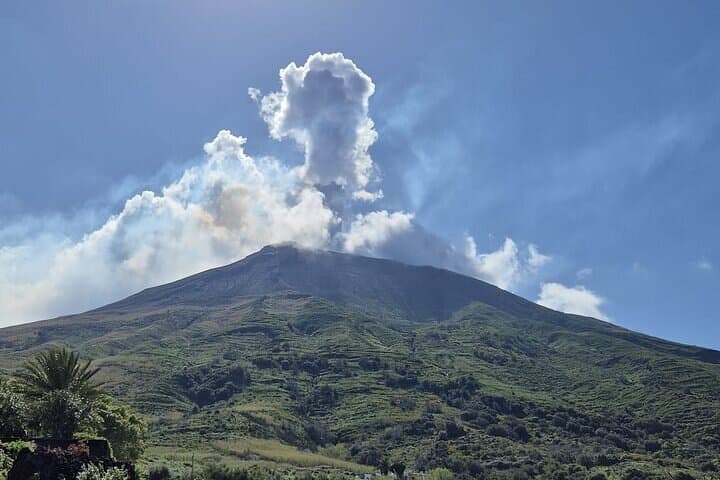
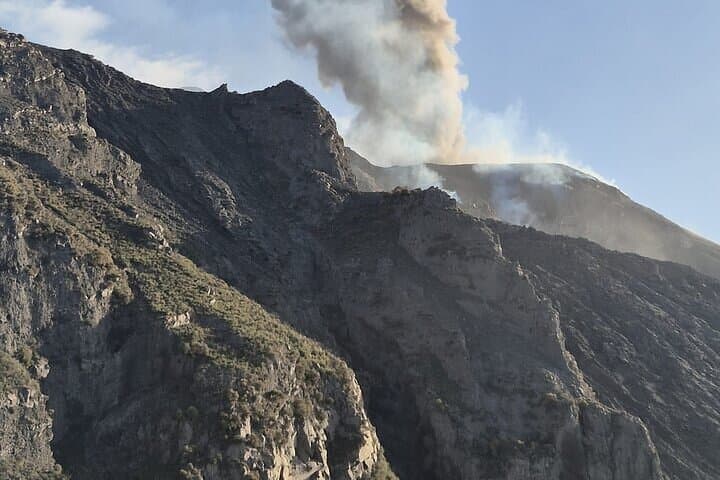
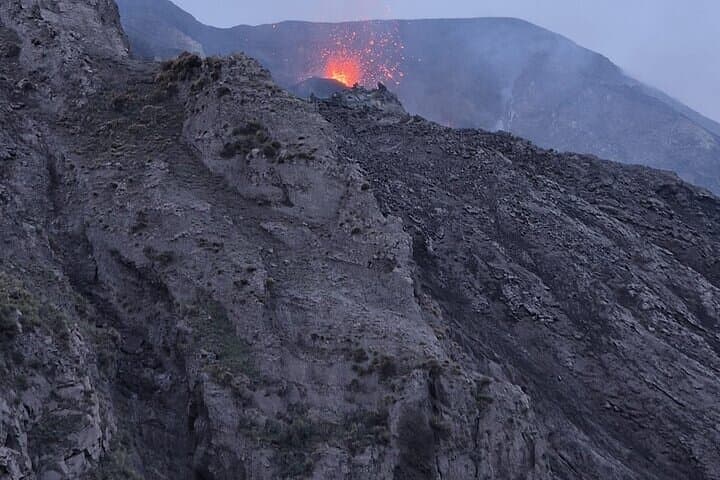
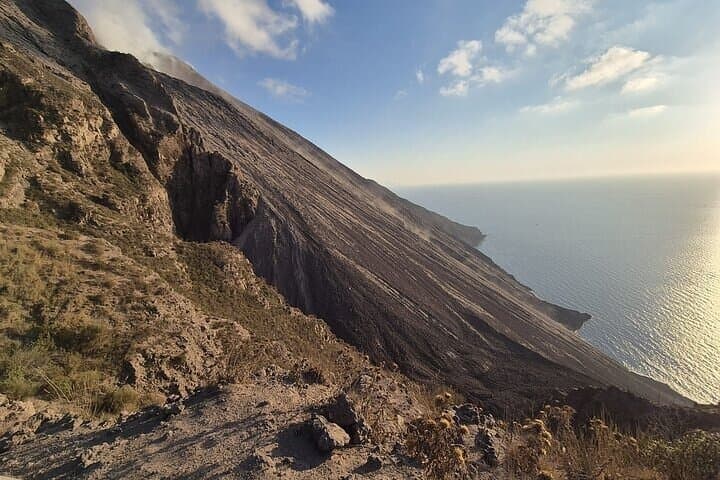
The trail opens on black sand and loose scoria as the island exhales—hot bursts of orange light punctuate the dusk and the sea steels itself below. You walk toward the sound of explosions, the guide’s headlamp cutting across windswept bushes of Mediterranean scrub while the Tyrrhenian horizon takes the sun in a slow, decisive handoff.
The trail opens on black sand and loose scoria as the island exhales—hot bursts of orange light punctuate the dusk and the sea steels itself below. You walk toward the sound of explosions, the guide’s headlamp cutting across windswept bushes of Mediterranean scrub while the Tyrrhenian horizon takes the sun in a slow, decisive handoff.
Stromboli is one of the world’s persistent volcanoes; its frequent Strombolian eruptions throw incandescent clots of lava that cool into the very slopes you’re climbing. The Aeolian Islands are volcanic siblings north of Sicily, built from basaltic flows and centuries of sea-forged weather. The island’s small settlements have long balanced fishing and volcanic tourism—local guides combine seafaring knowledge with volcanic training to keep visitors safe.
The ascent begins from San Vincenzo square roughly three hours before sunset, climbing about 400 meters over loose volcanic scree. Expect 2.5–3 hours up with frequent short rests, then 1.5–2 hours back down. Terrain alternates packed dirt, pumice, and sharper scoria; volcanic dust can sting the throat and wind can flip temperatures quickly.
Practical guide: go with a volcanological guide (helmet provided), wear sturdy boots, carry 1–1.5 L water, and bring a headlamp and a windproof layer. Cardiac or spinal conditions and pregnancy are contraindications; moderate fitness is required. Respect cordons—viewing distances are enforced for safety. Photographing eruptions is possible but use fast shutter settings and brace for sudden heat and ash. Leave no trace: volcanic ecosystems are fragile and slow to recover.