THE ADVENTURE COLLECTIVE® · Independent discovery and booking for outdoor travel

A five-hour evening trek from Ushuaia to Monte Susana that ends on a moonlit viewpoint over the Beagle Channel. Expect steady uphill walking through native lenga forest, hot drinks at summit, and a lantern-guided descent.
A five-hour evening trek from Ushuaia to Monte Susana that ends on a moonlit viewpoint over the Beagle Channel. Expect steady uphill walking through native lenga forest, hot drinks at summit, and a lantern-guided descent.
The trail begins as the city exhales its last light and the Beagle Channel glints like a cooling coin. You climb through coastal lenga forest, needle-like branches and moss damp with evening, the path rising steadily toward a panoramic saddle where Ushuaia’s lights sit nested against mountain ridgelines.
Verified experiences and guided adventures in the surrounding area.
Operated by TAUN USHUAIA · Ushuaia, Tierra del Fuego
The trail begins as the city exhales its last light and the Beagle Channel glints like a cooling coin. You climb through coastal lenga forest, needle-like branches and moss damp with evening, the path rising steadily toward a panoramic saddle where Ushuaia’s lights sit nested against mountain ridgelines.
Geology here is blunt and recent—glacially carved valleys, schist and peat soils that hold the damp of the Fuegian air. The area was long used by the Yámana people and later by settlers who built a town that learned to live with wind. Culture in Ushuaia still blends maritime life and mountain skills: guides read weather like sailors read seas, and menus after the hike favor rich, warming fare.
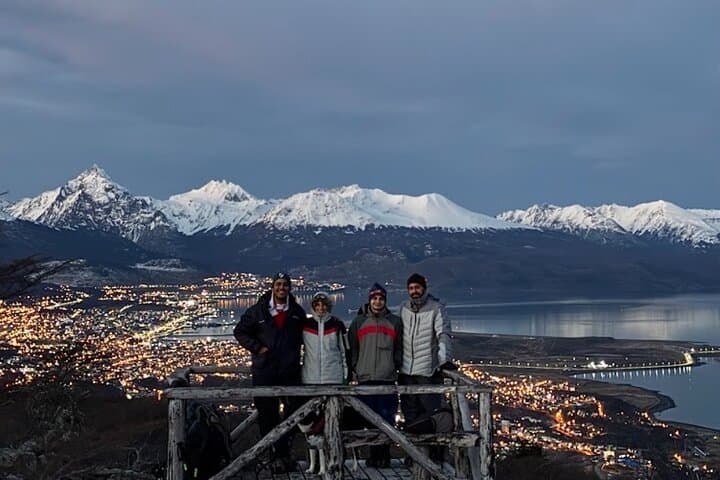
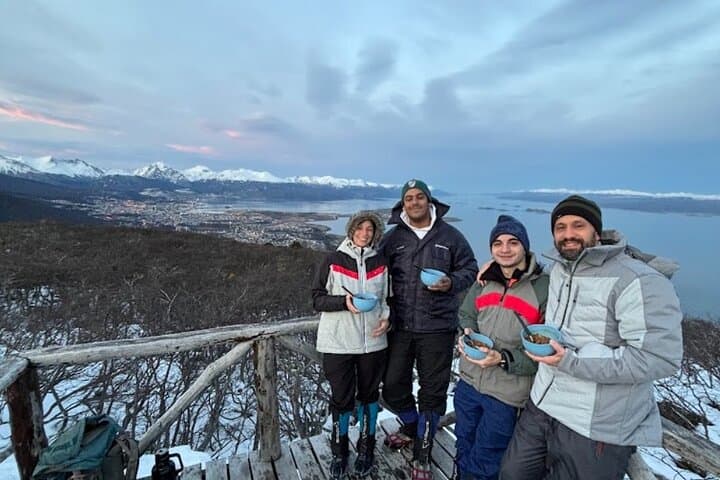
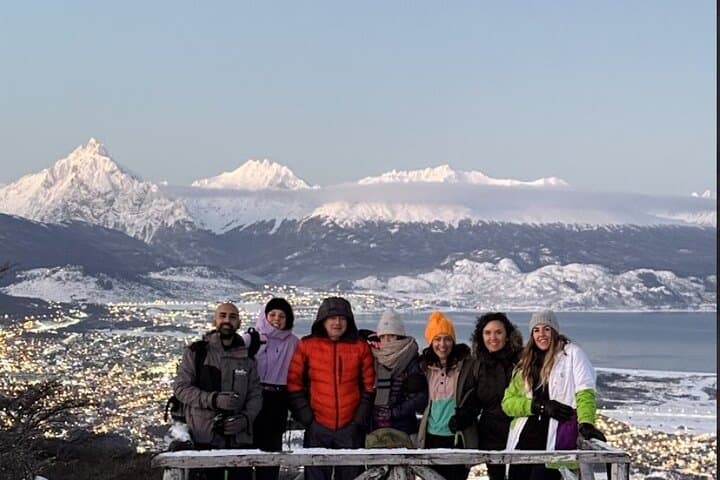
The planned viewpoint gives a wide stage: the Beagle Channel to the south, scattered islets, and the pocketed city below. On clear nights a full moon lifts silver off water; when clouds pass the forest feels intimate, almost expectant, as you descend with lantern light and steady footsteps.
Practical notes: the route is largely well-formed but includes continuous uphill sections—expect 300–400 meters of elevation gain—and variable footing where peat and rock meet. Guides provide crampons, helmets and poles; you should bring a warm waterproof shell, sturdy boots, and a charged headlamp. Hydrate before you start; evening temperatures can drop quickly. Tours typically include private transport from Ushuaia, hot drinks, and a sandwich at the top—comfort after effort. Aim to arrive with flexible clothing layers and a readiness to move slowly on the descent while your eyes adjust to lantern-lit trails.
moderate.
5 hours.
Moderate fitness: accustomed to sustained uphill walking and short sections of uneven terrain.
The route is rated moderate: well-formed trails with steady uphill sections—suitable for people with regular hiking experience and average fitness.
Guides supply technical gear like crampons, helmets and trekking poles when conditions require; bring your own boots, layers and headlamp.
Most tours include private transport from central Ushuaia and specify a pickup point—confirm exact location when booking.
You may spot birds along the coast and occasional guanaco in open areas; wildlife is more often observed from higher viewpoint clearings than on the forest trail.
The area around Ushuaia was inhabited by Yámana peoples long before European settlement; later it developed as a port and penal colony before becoming a gateway for Antarctic expeditions.
Subantarctic forests are fragile—stick to marked trails, avoid breaking branches, and pack out all waste to protect soil and understory habitats.
TAUN USHUAIA operates guided outdoor trips and adventures with an emphasis on safety, stewardship, and memorable experiences.
The trail begins as the city exhales its last light and the Beagle Channel glints like a cooling coin. You climb through coastal lenga forest, needle-like branches and moss damp with evening, the path rising steadily toward a panoramic saddle where Ushuaia’s lights sit nested against mountain ridgelines.
The trail begins as the city exhales its last light and the Beagle Channel glints like a cooling coin. You climb through coastal lenga forest, needle-like branches and moss damp with evening, the path rising steadily toward a panoramic saddle where Ushuaia’s lights sit nested against mountain ridgelines.
Geology here is blunt and recent—glacially carved valleys, schist and peat soils that hold the damp of the Fuegian air. The area was long used by the Yámana people and later by settlers who built a town that learned to live with wind. Culture in Ushuaia still blends maritime life and mountain skills: guides read weather like sailors read seas, and menus after the hike favor rich, warming fare.
The planned viewpoint gives a wide stage: the Beagle Channel to the south, scattered islets, and the pocketed city below. On clear nights a full moon lifts silver off water; when clouds pass the forest feels intimate, almost expectant, as you descend with lantern light and steady footsteps.
Practical notes: the route is largely well-formed but includes continuous uphill sections—expect 300–400 meters of elevation gain—and variable footing where peat and rock meet. Guides provide crampons, helmets and poles; you should bring a warm waterproof shell, sturdy boots, and a charged headlamp. Hydrate before you start; evening temperatures can drop quickly. Tours typically include private transport from Ushuaia, hot drinks, and a sandwich at the top—comfort after effort. Aim to arrive with flexible clothing layers and a readiness to move slowly on the descent while your eyes adjust to lantern-lit trails.