THE ADVENTURE COLLECTIVE® · Independent discovery and booking for outdoor travel

Ascend 200–300 feet into ancient Douglas‑fir at Silver Falls State Park during a guided sunset climb. Learn rope skills, savor canopy views, and rappel under headlamp light on this five‑hour small‑group experience.
Ascend 200–300 feet into ancient Douglas‑fir at Silver Falls State Park during a guided sunset climb. Learn rope skills, savor canopy views, and rappel under headlamp light on this five‑hour small‑group experience.
The forest closes around you as the group straps in: a wedge of sky, a ladder of rope, and trunks the width of small houses stretching up into the last light. You step off the ground and the understory falls away — fern fronds and the mossy shoulders of Douglas‑fir become a small, green world under your feet. At 200–300 feet the air thins, the wind starts to feel deliberate, and the sunset pours across the canopy like paint.
Verified experiences and guided adventures in the surrounding area.
Operated by AdventureTerra LLC · Silverton, Oregon
The forest closes around you as the group straps in: a wedge of sky, a ladder of rope, and trunks the width of small houses stretching up into the last light. You step off the ground and the understory falls away — fern fronds and the mossy shoulders of Douglas‑fir become a small, green world under your feet. At 200–300 feet the air thins, the wind starts to feel deliberate, and the sunset pours across the canopy like paint.
Silver Falls sits at the eastern edge of the Willamette Valley where Cascade foothills meet ancient basalt flows. The trees you climb are survivors of an old‑growth pocket: mostly coast Douglas‑fir, western hemlock, and bigleaf maple whose roots sink into volcanic soils and packed humus. Long before the park signs and stone steps, the Kalapuya peoples used the valley’s resources; in the early 20th century the Civilian Conservation Corps built much of the modern trail network that lets visitors access the waterfalls and forest respectfully.
Climbing here means more than altitude. It’s a vertical tour through the park’s geology and human history: rope techniques get you into a canopy shaped by centuries of wind, water, and light. Guides will point out lichen‑covered bark, drumming woodpeckers, and rare viewpoints where you can see the ridgeline that feeds the Silver Creek watershed.
Practically speaking, the Sunset Tree Climb is a five‑hour guided experience with a professional climbing guide and all necessary equipment included. The first hour is skills and safety—knots, harness fit, ascending and controlled descent—followed by a short hike to the Howard Creek trail area and multiple climbs into upper canopy positions timed for sunset. Headlamps are handed out for the hike and rappels back after dark.
What to expect on the route: exposed climbs with secure anchored lines, short non‑technical hiking between trees, and pauses for photography and wildlife watching. The tour caps at a small group size to protect the forest and enhance safety—expect hands‑on belays from your guide.
Prep tips: wear sturdy, closed‑toe footwear with good tread; layer up (temperatures drop quickly once the sun sets); bring a filled water bottle, snacks, and a small pack. If you have spinal or heart conditions, this experience is not recommended. Book early for weekend sunsets—slots are limited and cancellation requires 24‑hour notice.
By the time you return to the trailhead, the stars will be sharp above the canopy and the forest will feel both older and newly intimate. For glimpsing the forest from a perspective fewer than 0.01% of people will ever see, this climb is accurate, grounded, and memorable—an evening that trades flat horizon views for a vertiginous, up‑close conversation with the trees.
moderate.
5 hours.
Comfortable with short hikes and standing for climbs; basic stamina and no serious mobility limits required
Participants must be at least 8 years old; minors require guardian accompaniment and must meet safety briefings.
No—guides teach ascents, rappelling, and belay procedures in the introductory hour; the route is suitable for beginners.
Meet at the Tree Climbing at Silver Falls meeting point (Howard Creek area); search the experience name in maps—Howard Creek Trailhead may not show in Apple/Google Maps inside the park.
Yes, headlamps are provided for the return in low light, but bringing your own is recommended for redundancy.
Not recommended—participants with spinal injuries or poor cardiovascular health should avoid the climb and consult a physician before booking.
Full refunds are available if you cancel at least 24 hours before the scheduled departure; the operator may cancel for bad weather or low enrollment.
The park’s modern trails and stonework were developed in part by the Civilian Conservation Corps in the 1930s; the valley was historically used by the Kalapuya peoples.
Group sizes and anchored routes minimize impact on old‑growth trees—follow guides, avoid disturbing epiphytes, and pack out all trash.
AdventureTerra LLC operates guided outdoor trips and adventures with an emphasis on safety, stewardship, and memorable experiences.
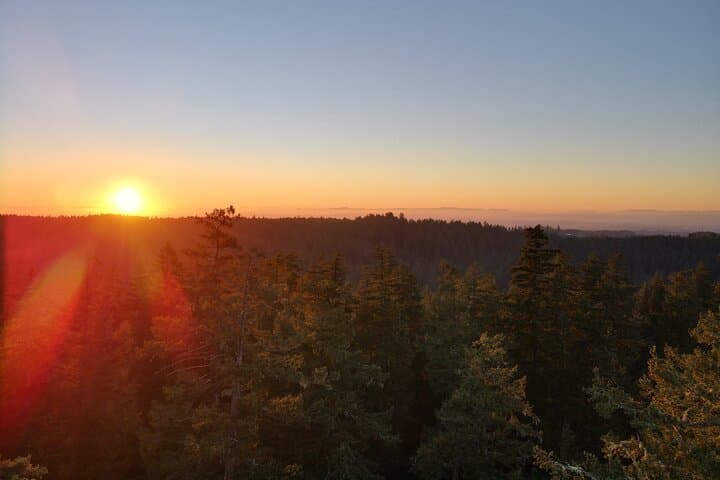
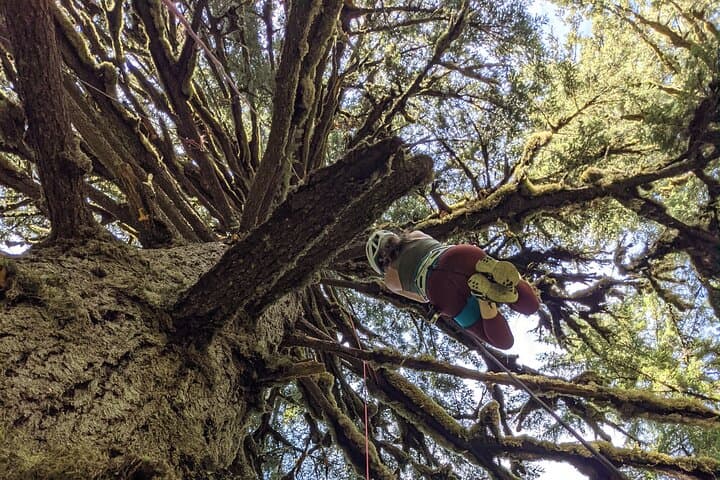
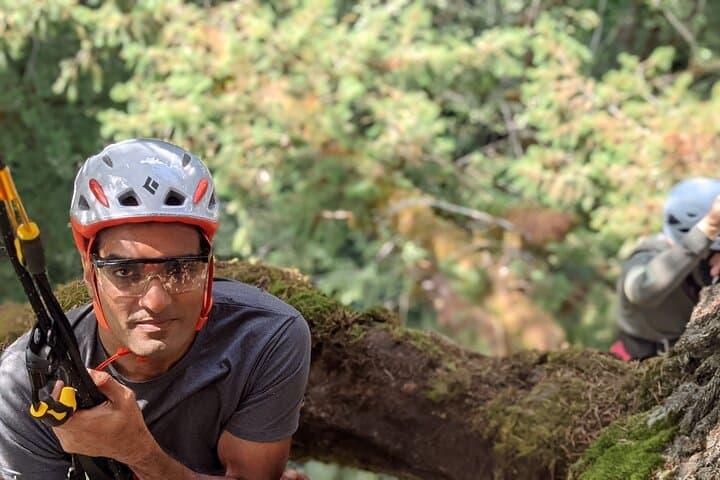
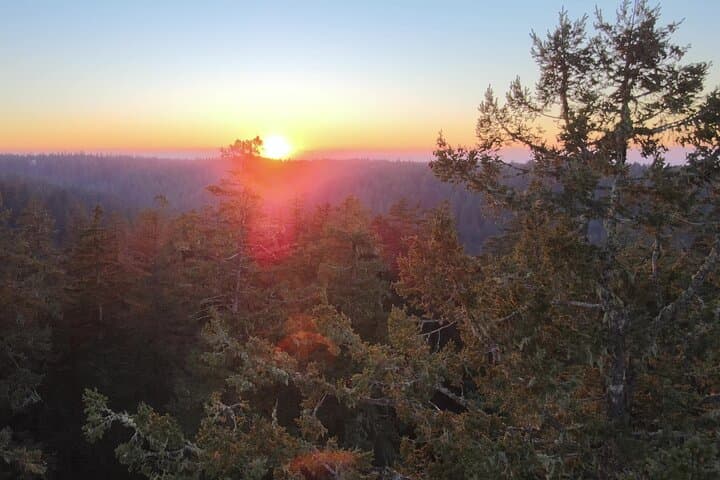
The forest closes around you as the group straps in: a wedge of sky, a ladder of rope, and trunks the width of small houses stretching up into the last light. You step off the ground and the understory falls away — fern fronds and the mossy shoulders of Douglas‑fir become a small, green world under your feet. At 200–300 feet the air thins, the wind starts to feel deliberate, and the sunset pours across the canopy like paint.
The forest closes around you as the group straps in: a wedge of sky, a ladder of rope, and trunks the width of small houses stretching up into the last light. You step off the ground and the understory falls away — fern fronds and the mossy shoulders of Douglas‑fir become a small, green world under your feet. At 200–300 feet the air thins, the wind starts to feel deliberate, and the sunset pours across the canopy like paint.
Silver Falls sits at the eastern edge of the Willamette Valley where Cascade foothills meet ancient basalt flows. The trees you climb are survivors of an old‑growth pocket: mostly coast Douglas‑fir, western hemlock, and bigleaf maple whose roots sink into volcanic soils and packed humus. Long before the park signs and stone steps, the Kalapuya peoples used the valley’s resources; in the early 20th century the Civilian Conservation Corps built much of the modern trail network that lets visitors access the waterfalls and forest respectfully.
Climbing here means more than altitude. It’s a vertical tour through the park’s geology and human history: rope techniques get you into a canopy shaped by centuries of wind, water, and light. Guides will point out lichen‑covered bark, drumming woodpeckers, and rare viewpoints where you can see the ridgeline that feeds the Silver Creek watershed.
Practically speaking, the Sunset Tree Climb is a five‑hour guided experience with a professional climbing guide and all necessary equipment included. The first hour is skills and safety—knots, harness fit, ascending and controlled descent—followed by a short hike to the Howard Creek trail area and multiple climbs into upper canopy positions timed for sunset. Headlamps are handed out for the hike and rappels back after dark.
What to expect on the route: exposed climbs with secure anchored lines, short non‑technical hiking between trees, and pauses for photography and wildlife watching. The tour caps at a small group size to protect the forest and enhance safety—expect hands‑on belays from your guide.
Prep tips: wear sturdy, closed‑toe footwear with good tread; layer up (temperatures drop quickly once the sun sets); bring a filled water bottle, snacks, and a small pack. If you have spinal or heart conditions, this experience is not recommended. Book early for weekend sunsets—slots are limited and cancellation requires 24‑hour notice.
By the time you return to the trailhead, the stars will be sharp above the canopy and the forest will feel both older and newly intimate. For glimpsing the forest from a perspective fewer than 0.01% of people will ever see, this climb is accurate, grounded, and memorable—an evening that trades flat horizon views for a vertiginous, up‑close conversation with the trees.