THE ADVENTURE COLLECTIVE® · Independent discovery and booking for outdoor travel

Trace the ancient stone steps to Mount Sinai’s 2,285 m summit, then descend to explore Saint Catherine’s 6th-century monastery. This day tour blends rugged hiking with deep history and panoramic desert vistas.
Trace the ancient stone steps to Mount Sinai’s 2,285 m summit, then descend to explore Saint Catherine’s 6th-century monastery. This day tour blends rugged hiking with deep history and panoramic desert vistas.
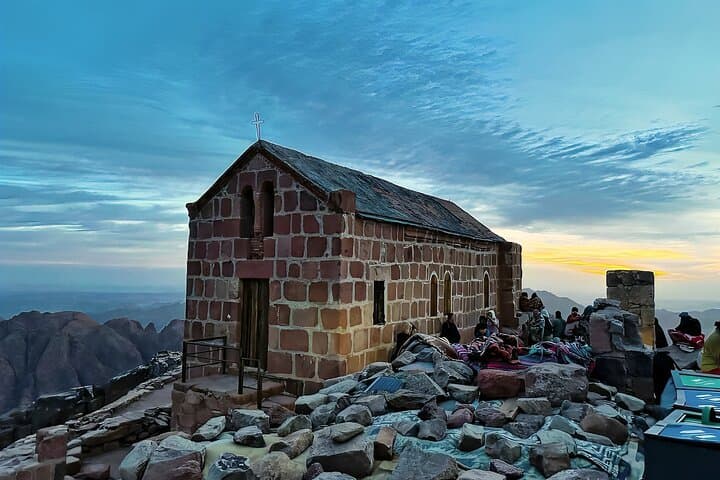
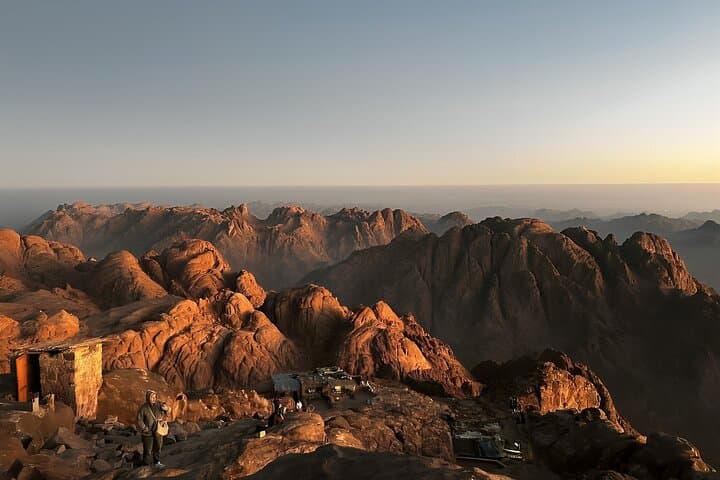
A low sun slides across a basin of granite and scrub as you step away from the monastery courtyard—candles guttering, bells calming—toward the climb. The path tightens, stone steps appear in long strings, and the air thins; by the time you reach the summit the sky is a burned edge of orange and violet, and the surrounding ridges respond with cool shadow.
Verified experiences and guided adventures in the surrounding area.
Operated by Cadence Seekers · Saint Catherine, South Sinai Governorate
A low sun slides across a basin of granite and scrub as you step away from the monastery courtyard—candles guttering, bells calming—toward the climb. The path tightens, stone steps appear in long strings, and the air thins; by the time you reach the summit the sky is a burned edge of orange and violet, and the surrounding ridges respond with cool shadow.
Mount Sinai (Jebel Mousa) rises to 2,285 m and has drawn pilgrims for millennia. Geologically, the massif is Precambrian granite: steep, wind-polished spires and broad cuestas carved by rare desert rains. At the mountain’s base, Saint Catherine’s Monastery — founded under Emperor Justinian in the 6th century — keeps Byzantine icons, a Fatimid-era mosque, and the legendary Burning Bush. In between are the Cave of Moses and Elijah’s Basin, small chapels and a scattering of ancient nodes of worship.
The route divides: the Sultan’s Steps (stone stairway of roughly 3,000–4,000 steps) for a direct push, or the gentler camel path for a longer, steadier ascent. Expect 2–4 hours one-way depending on pace and route, with compacted scree, uneven flagstones, and exposed sections. Hydrate often—water is precious here—and time your climb for sunset or sunrise to avoid midday heat.
Practically: bring a headlamp for dark sections, wear sturdy shoes for steps and talus, and carry layered clothing; wind and temperature swing dramatically between base and summit. Respect the monastery’s restricted areas and local customs, and give extra weight to slow, steady breathing on the final ridge—this place rewards patience.
moderate.
6–8 hours (full tour includes monastery visits).
Should be comfortable with sustained uphill walking, uneven steps, and several hours on feet; moderate aerobic fitness recommended.
Ascent time varies by route and fitness—plan for 2–4 hours one-way: the direct Sultan’s Steps are shorter and steeper, while the camel path is longer with gentler grades.
Yes—Saint Catherine’s Monastery is a working monastery and UNESCO site; visitors can see the Church of the Transfiguration and the Burning Bush, though some areas may be restricted at times.
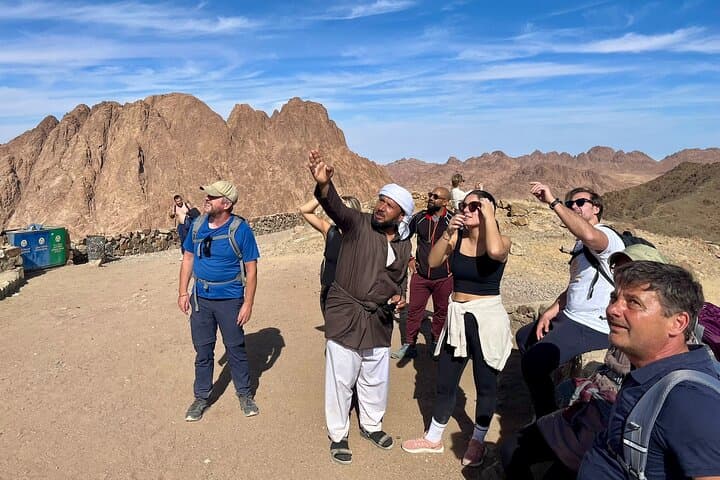
A guide adds historical and cultural insight and helps with logistics; many operators include a guide and it’s recommended, especially for first-timers.
This tour isn’t recommended for people with serious back problems or pregnancy; maintain moderate fitness and consult the operator for individual concerns.
Saint Catherine’s Monastery dates to the 6th century under Emperor Justinian and preserves Byzantine icons and manuscripts linked to early Christian pilgrimage.
Water scarcity and heavy foot traffic impact the fragile desert environment—stick to trails, minimize single-use plastic, and follow monastery rules to reduce wear.
Cadence Seekers operates guided outdoor trips and adventures with an emphasis on safety, stewardship, and memorable experiences.
A low sun slides across a basin of granite and scrub as you step away from the monastery courtyard—candles guttering, bells calming—toward the climb. The path tightens, stone steps appear in long strings, and the air thins; by the time you reach the summit the sky is a burned edge of orange and violet, and the surrounding ridges respond with cool shadow.
A low sun slides across a basin of granite and scrub as you step away from the monastery courtyard—candles guttering, bells calming—toward the climb. The path tightens, stone steps appear in long strings, and the air thins; by the time you reach the summit the sky is a burned edge of orange and violet, and the surrounding ridges respond with cool shadow.
Mount Sinai (Jebel Mousa) rises to 2,285 m and has drawn pilgrims for millennia. Geologically, the massif is Precambrian granite: steep, wind-polished spires and broad cuestas carved by rare desert rains. At the mountain’s base, Saint Catherine’s Monastery — founded under Emperor Justinian in the 6th century — keeps Byzantine icons, a Fatimid-era mosque, and the legendary Burning Bush. In between are the Cave of Moses and Elijah’s Basin, small chapels and a scattering of ancient nodes of worship.
The route divides: the Sultan’s Steps (stone stairway of roughly 3,000–4,000 steps) for a direct push, or the gentler camel path for a longer, steadier ascent. Expect 2–4 hours one-way depending on pace and route, with compacted scree, uneven flagstones, and exposed sections. Hydrate often—water is precious here—and time your climb for sunset or sunrise to avoid midday heat.
Practically: bring a headlamp for dark sections, wear sturdy shoes for steps and talus, and carry layered clothing; wind and temperature swing dramatically between base and summit. Respect the monastery’s restricted areas and local customs, and give extra weight to slow, steady breathing on the final ridge—this place rewards patience.