THE ADVENTURE COLLECTIVE® · Independent discovery and booking for outdoor travel

Trade crowded riverfront promenades for a low, small-boat perspective on Budapest. This two-hour sunset raft cruise follows the Danube past Parliament, historic bridges, and Buda’s ridges—stable boats, local stories, and a riverside bar finish.
Trade crowded riverfront promenades for a low, small-boat perspective on Budapest. This two-hour sunset raft cruise follows the Danube past Parliament, historic bridges, and Buda’s ridges—stable boats, local stories, and a riverside bar finish.
The raft slips away from the riverbank and the city exhales behind you—brick facades and ornate spires shrinking into a horizontal skyline as the Danube takes the lead. The guide gives a confident shove; paddles skim the water but the boat’s stability does the real work. You ride low and calm, the city’s famous architecture unfolding at eye level: the Parliament’s lacework of stone, bridges arcing like calligraphy, and the Buda hills rising with an old, steady patience.
Verified experiences and guided adventures in the surrounding area.
Operated by Gyorgy Kulcsar · Budapest, Budapest
The raft slips away from the riverbank and the city exhales behind you—brick facades and ornate spires shrinking into a horizontal skyline as the Danube takes the lead. The guide gives a confident shove; paddles skim the water but the boat’s stability does the real work. You ride low and calm, the city’s famous architecture unfolding at eye level: the Parliament’s lacework of stone, bridges arcing like calligraphy, and the Buda hills rising with an old, steady patience.
This is not a sightseeing boat crowded with selfie sticks. It’s an intimate, two-hour river run that threads the northern stretch of Budapest and follows the Danube’s southward twist past the city’s defining monuments. The river here has always been the city’s spine—Roman camps, medieval ports, and the great 19th-century urban plans that shaped Pest’s grand avenues all hinge on these waters. From the raft you see the evidence: industrial piers softened into promenades, neo-Gothic flourishes mirrored in quiet eddies, and bridges that have borne armies and celebrations alike.
Geology and watercraft intersect as you pass the Buda slopes—older volcanic and metamorphic bedrock giving the hills their rugged profile—while the Danube, restless for millennia, continues to shape the floodplain and pockets of riparian forest along its banks. Culture here is river-first; cafés and bars claim terraces above the high-water line, fishermen know their sections by unseen currents, and guides tell stories that stitch names and dates to each bend.
Practical notes: the trip is two hours, fully guided, and operates from a meeting point at the Rozmaring Restaurant parking lot on the Danube’s north side. Boats are stable white-water rafts retrofitted for sightseeing; life vests, dry bags and paddles are provided. You don’t need prior paddling experience—guides manage the rhythm and you’ll be asked to help at times for short bursts of paddling. The route ends at a riverside bar tucked behind a small nature reserve—a calm place to debrief over a cold drink in summer months.
Timing matters: aim to arrive 15 minutes early for a quick safety briefing and to catch golden-hour light as the city softens. Dress in layers—wind off the river chills faster than riverside air suggests—and bring a small waterproof camera or phone in a dry bag. Public transit reaches the meeting area; the operator recommends cancelling at least 24 hours in advance if plans change.
For travelers who want a different city vantage, this is the simplest exchange: swap the crowded promenades for a low, quiet line on the water where Budapest reveals itself in horizontal chapters—bridges, palaces, hills—and the Danube, ever insistent, dares you to look up and keep pace.
easy.
2 hours.
Suitable for most fitness levels; minimal exertion required with occasional paddling bursts handled by the guide.
No. The boats are very stable and the guide manages most of the navigation; guests may paddle for short periods but it’s not required.
Meet at the Rozmaring Restaurant parking lot on the Danube’s north bank; the trip finishes at a riverside bar further downstream (different end point).
Yes—this tour is family-friendly and suitable for all ages, but the operator requests age and weight info when booking so they can provide appropriate safety gear.
Trips are cancellable up to 24 hours before; the operator may cancel for heavy rain or unsafe river conditions and will offer refund options.
Yes—several tram and bus lines serve the northern riverfront near the Rozmaring meeting point; check local transit maps for the closest stop.
In summer months the riverside bar at the end point operates and offers light drinks and snacks; availability may be seasonal.
The Danube has shaped Budapest’s growth from Roman times through the 19th-century unification of Buda and Pest; many bridges you pass were rebuilt after World War II.
Tour operators emphasize low-impact practices—use provided dry bags, avoid throwing anything overboard, and follow guide instructions to protect riparian habitats.
Gyorgy Kulcsar operates guided outdoor trips and adventures with an emphasis on safety, stewardship, and memorable experiences.
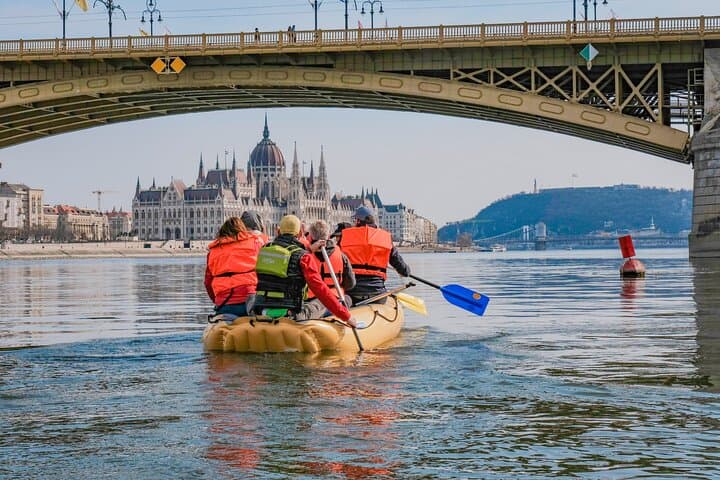
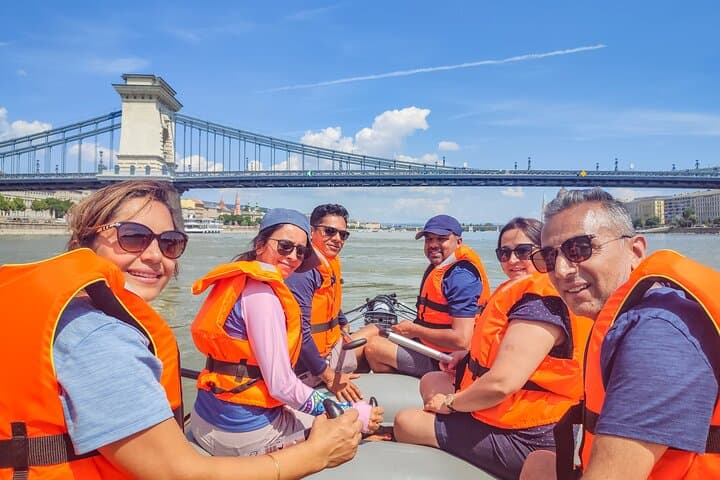
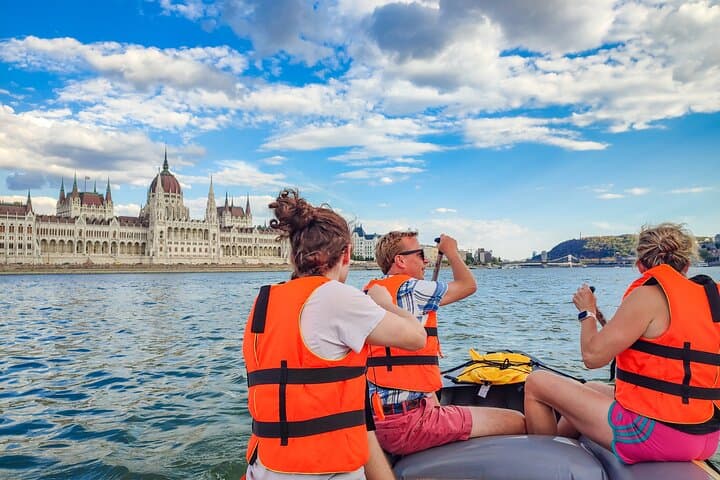
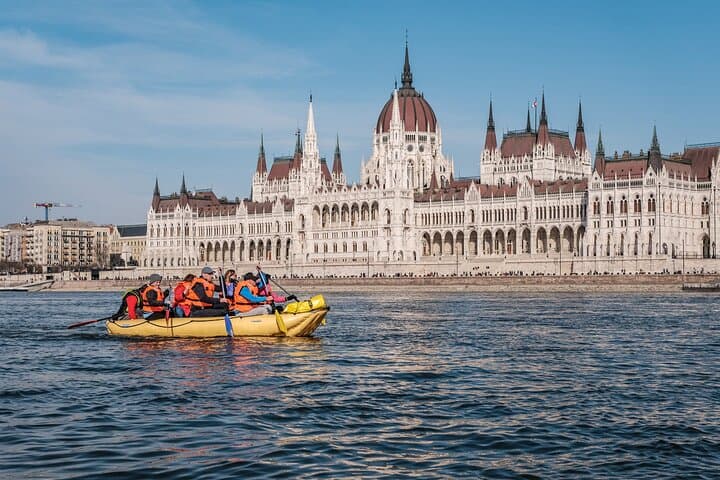
The raft slips away from the riverbank and the city exhales behind you—brick facades and ornate spires shrinking into a horizontal skyline as the Danube takes the lead. The guide gives a confident shove; paddles skim the water but the boat’s stability does the real work. You ride low and calm, the city’s famous architecture unfolding at eye level: the Parliament’s lacework of stone, bridges arcing like calligraphy, and the Buda hills rising with an old, steady patience.
The raft slips away from the riverbank and the city exhales behind you—brick facades and ornate spires shrinking into a horizontal skyline as the Danube takes the lead. The guide gives a confident shove; paddles skim the water but the boat’s stability does the real work. You ride low and calm, the city’s famous architecture unfolding at eye level: the Parliament’s lacework of stone, bridges arcing like calligraphy, and the Buda hills rising with an old, steady patience.
This is not a sightseeing boat crowded with selfie sticks. It’s an intimate, two-hour river run that threads the northern stretch of Budapest and follows the Danube’s southward twist past the city’s defining monuments. The river here has always been the city’s spine—Roman camps, medieval ports, and the great 19th-century urban plans that shaped Pest’s grand avenues all hinge on these waters. From the raft you see the evidence: industrial piers softened into promenades, neo-Gothic flourishes mirrored in quiet eddies, and bridges that have borne armies and celebrations alike.
Geology and watercraft intersect as you pass the Buda slopes—older volcanic and metamorphic bedrock giving the hills their rugged profile—while the Danube, restless for millennia, continues to shape the floodplain and pockets of riparian forest along its banks. Culture here is river-first; cafés and bars claim terraces above the high-water line, fishermen know their sections by unseen currents, and guides tell stories that stitch names and dates to each bend.
Practical notes: the trip is two hours, fully guided, and operates from a meeting point at the Rozmaring Restaurant parking lot on the Danube’s north side. Boats are stable white-water rafts retrofitted for sightseeing; life vests, dry bags and paddles are provided. You don’t need prior paddling experience—guides manage the rhythm and you’ll be asked to help at times for short bursts of paddling. The route ends at a riverside bar tucked behind a small nature reserve—a calm place to debrief over a cold drink in summer months.
Timing matters: aim to arrive 15 minutes early for a quick safety briefing and to catch golden-hour light as the city softens. Dress in layers—wind off the river chills faster than riverside air suggests—and bring a small waterproof camera or phone in a dry bag. Public transit reaches the meeting area; the operator recommends cancelling at least 24 hours in advance if plans change.
For travelers who want a different city vantage, this is the simplest exchange: swap the crowded promenades for a low, quiet line on the water where Budapest reveals itself in horizontal chapters—bridges, palaces, hills—and the Danube, ever insistent, dares you to look up and keep pace.